Daily Dose Of Jazz…
Oliver Edward Nelson was born on June 4, 1932 in St. Louis, Missouri. His brother played sax with Cootie Williams and his sister sang and played piano. He began playing the piano when he was six, the saxophone by eleven and by age 15 he was playing in territory bands around St. Louis. In 1950 he joined Louis Jordan’s big band, playing alto saxophone and arranging.
After military service Nelson returned to Missouri to study music composition and theory at Washington and Lincoln University graduating in 1958. He married, had a son, divorced, moved to New York City, and began playing with Erskine Hawkins and Wild Bill Davis, and arranged for the ApolloTheatre. In 1959 he briefly worked the West coast with Louie Bellson’s big band and played tenor for Quincy Jones.
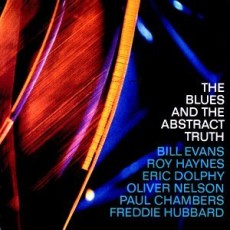
After six albums as leader between 1959 and 1961 for Prestige with Kenny Dorham, Johnny Hammond Smith, Eric Dolphy, Roy Haynes and others. Oliver’s big break came with his Impulse album The Blues and The Abstract Truth featuring his now classic standard “Stolen Moments”. Propelling him into prominence as a composer and arranger, it opened up opportunities to arrange for Cannonball Adderley, Irene Reid, Sonny Rollins, Billy Taylor, Wes Montgomery, Johnny Hodges and many others.
Moving to Los Angeles in 1967 Nelson spent a great deal of time composing for television shows like Colombo, Ironside, Bionic Woman and films like Death of a Gunfighter and Last Tango In Paris. He produced for Nancy Wilson, James Brown, the Temptations and Diana Ross.
Less well-known is the fact that Nelson composed several symphonic works, and was also deeply involved in jazz education, returning to his alma mater, Washington University, in the summer of 1969 to lead a five-week long clinic that also featured such performers as Phil Woods, Mel Lewis, Thad Jones, Sir Roland Hanna, and Ron Carter.
Oliver Nelson, saxophonist, clarinetist, pianist, arranger and composer died of a heart attack on October 28, 1975, aged 43.
Daily Dose Of Jazz…
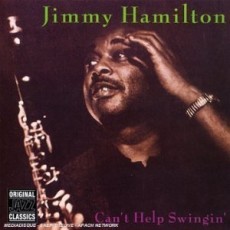
Jimmy Hamilton was born on May 25, 1917 in Dillon, South Carolina but grew up in Philadelphia. He learned to play piano and brass instruments and by the thirties he was playing the latter in local bands. He switched to clarinet and saxophone and by 1939 was playing with Lucky Millinder, Jimmy Mundy and Bill Doggett, then going to work for Teddy Wilson in 1940.
After a two-year stay with Wilson he played with Eddie Heywood and Yank Porter before replacing Barney Bigard in Duke Ellington’s orchestra in 1943. Over the next twenty-five years with Ellington his sound on saxophone had an R&B style while his clarinet was more precise, correct and fluent and it was during this time that he wrote some of his own material.
Leaving the Ellington orchestra, Hamilton played and arranged on a freelance basis, before spending the 1970s and 1980s in the Virgin Islands teaching music, occasionally returning to the U.S. for performances with John Carter’s Clarinet Summit. He retired from teaching but continued to perform with his own groups from 1989 to 1990.
The clarinetist, saxophonist, arranger, composer and music educator Jimmy Hamilton died in St. Croix, Virgin Islands at the age of seventy-seven on September 20, 1994.
Daily Dose Of Jazz…
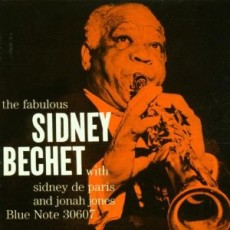
Sidney Bechet was born on May 14, 1897 in New Orleans, Louisiana to a wealthy Creole family. At age six he picked up his brother’s clarinet, learned to play by on his own, eventually playing at a family birthday party exhibited his new talent. Later he would study with renowned Creole clarinetists Lorenzo Tio, Big Eye Louis Nelson and George Baquet. He would be found improvising jazz in many New Orleans ensembles led by John Robichaux, Bunk Johnson and King Oliver.
By the time he was 17 Bechet was touring as far north as Chicago and two years later landed in New York playing with Marion Cook’s Syncopated Orchestra. This led him to Europe and the Royal Philharmonic Hall where he attracted attention with his playing. It was in London that Sidney found the straight soprano and quickly developed a style different from his warm clarinet.
Sidney became one of the first important soloists in jazz, eclipsing Louis Armstrong into the studio by several months, and was possibly the first notable jazz saxophonist. His forceful delivery and well-constructed improvisations characterized his distinctive and wide vibrato playing although his lively and unpredictable temperament did not gain him wide acclaim until well into the late forties.
Returning to New York in 1922 he began recording songs like “Wild Cat Blues” and “Kansas City Man’s Blues” with sessions led by pianist and songwriter Clarence Williams. Over the next three decades Bechet continued to record and tour although his success was intermittent. He relocated to France in 1950, got married and shortly before his death dictated his poetic autobiography “Treat It Gentle”. Sidney Bechet, clarinetist, saxophonist and composer died in Garches, France of lung cancer on May 14, 1959, his 62nd birthday.
Daily Dose Of Jazz…
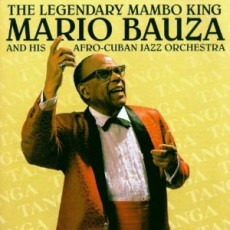
Mario Bauzá was born on April 28, 1911 in Havana, Cuba and was classically trained. By age nine he was playing clarinet in the Havana Philharmonic Orchestra and would stay there for the next three years. In 1925 he ventured to New York to record with Maestro Antonio Maria Romeu’s band “Charanga Francesca”. He was fourteen. Five years later he returned to New York and reputedly learned to play trumpet in two weeks to become a part of the Don Azpiazu Orchestra.
Bauzá became lead trumpeter and musical director for Chick Webb’s Orchestra by 1933, and it was during his time with Webb that Bauzá both met fellow trumpeter Dizzy Gillespie and discovered and brought into the band singer Ella Fitzgerald. 1938 saw Bauzá joining Cab Calloway’s band, later convincing Calloway to hire Dizzy as well, with whom Bauzá would continue to collaborate even several years after he left Calloway’s band in 1940. The fusion of Bauzá’s Cuban musical heritage and Gillespie’s advancements in bebop eventually culminated in the development of cubop, one of the first forms of what is commonly referred to as Latin jazz.
Bauzá became musical director of Machito and his Afro-Cubans in 1941, a band led by his brother-in-law, Frank Grillo, also known as Machito, and in 1942 he brought a young timbales player named Tito Puente into the fold. For the next 30 years Bauzá remained director of the band up until 1976 where he began working sparingly leading his own Afro-Cuban orchestra through the eighties and into the early 90s, where his last band made a guest appearance on The Cosby Show.
Mario Bauzá, who died in New York City on July 11, 1993, was one of the first musicians to introduce Latin music to the United States by bringing Cuban musical styles into the New York jazz scene. He was one of the most influential figures in the development of Afro-Cuban music, and his innovative work and musical contributions have many jazz historians to call him the “Founding Father of Latin Jazz”.

More Posts: bandleader,clarinet,trumpet
Daily Dose Of Jazz…
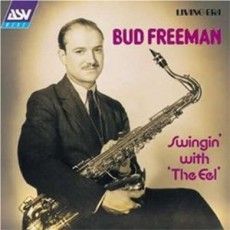
Lawrence “Bud” Freeman was born on April 13, 1906 in Chicago, Illinois and became one of the most influential and important jazz tenor saxophonists of the Big Band era. During high school in 1922 he became one of the original Austin High School Gang playing the C-melody saxophone alongside Jimmy McPartland and Frank Teschemacher. Two years later he switched to tenor and influenced by the New Orleans Rhythm Kings and Louis Armstrong the Gang would formulate their own style that would become part of the emerging Chicago jazz sound.
In 1927 Freeman moved to New York and worked as a session player and band member with Red Nichols, Roger Wolfe Kahn, Ben Pollack Joe Venuti and Eddie Condon in 1933 producing one of his most notable performances on the recording of “The Eel” which would later become Bud’s nickname for his long snake-like improvisations.
Bud’s smooth and full-tenor sax style with a heavy robust swing was the signature that got him gigs with the Tommy Dorsey and Benny Goodman orchestras along with leading his own Summa Cum Laude Orchestra. During WWII he joined the Army and led the band in the Aleutian Islands. Returning to New York after his discharge, for the next couple of decades he led his own groups, worked with Eddie Condon, Buck Clayton, ruby Braff, Vic Dickerson and Jo Jones. He was a member of the World’s Greatest Jazz Band off and on, moved to England in 1974, performing, touring and recording throughout Europe. He returned to Chicago and continued to work well into his eighties.
Tenor saxophonist, clarinetist, composer and bandleader Bud Freeman passed away on March 15, 1991 in his hometown of Chicago. He was posthumously inducted into the Big Band and Jazz Hall Of Fame in 1992.