

Requisites
For Basie ~ Paul Quinichette | By Eddie Carter
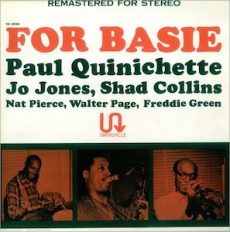
A few nights ago, with rain falling and a cold atmosphere outside, it felt like the ideal moment to listen to a favorite album by tenor saxophonist Paul Quinichette. For Basie (Prestige PRLP 7127), first released in 1958, is a great “blowing session” of the 1950s and a heartfelt homage to Count Basie, offering memorable tunes and lively arrangements by pianist Nat Pierce. The group features two alumni from Basie’s band, showing that these jam sessions were anything but rushed or lacking in artistic merit. Rounding out the sextet are Shad Collins on muted trumpet (tracks: A1, A2, B2) and trumpet (tracks: A3, B1, B2), Freddie Green on guitar, Walter Page on bass, and Jo Jones on drums. The copy I own is the 1963 remastered stereo reissue (Prestige Swingville SVST 2036).
Side One opens at a relaxing beat with Rock-a-Bye Basie by Count Basie, Shad Collins and Lester Young. Nat opens with a short introduction, segueing into Shad's leisurely-paced melody, with Paul playing behind him. Paul’s opening solo is cool and inviting, then Shad comes in on muted trumpet like a gentle breeze on a summer night. Nat sums it up with a friendly reading, returning to the theme’s restatement and a soft conclusion. Texas Shuffle by Herschel Evans and Edgar Battle turns up the heat significantly, beginning with Pierce and Jones’ quick introduction ahead of the ensemble’s speedy melody. Quinichette takes the lead first, then Collins, again using a mute, takes over for a quick run. Quinichette has a short conversation with Jones, and Pierce has the last word before the group ends softly.
Out The Window, by Count Basie and Eddie Durham, was first recorded by Basie’s band in 1937. The sextet pays homage, with the front line featuring Shad on the open horn, leading the mid-tempo melody. Shad struts boldly into the opening statement. Paul follows with a solo that soothes as it swings, then Nat strolls into the third reading with finesse, leading to a lengthy theme reprise with quick comments by Paul and Jo before the close. The group starts Side Two with Jive at Five by Count Basie and Harry Edison, which opens at an easygoing beat for Jones, Pierce, and Page’s introduction to the ensemble’s melody. Quinichette takes the lead here at an unhurried pace. Collins steps up next, still on the open horn with an easily flowing solo. Pierce continues moving along toward the sextet’s closing chorus.
Digging For Dex by Count Basie and Eddie Durham is their tribute to former “Down Beat” editor, Dave Dexter. Nat continues the easygoing pace, leading the rhythm section through the introduction, segueing to the sextet’s theme with Shad still on the open horn. Paul has the first say and makes the most of each note. Shad steps into the spotlight next for some muted work, then Nat takes over and cruises comfortably toward the ensemble’s laid-back climax. Bob
Weinstock supervised the session, and Rudy Van Gelder managed the recording console. I was pleasantly surprised by the reissue’s sound quality, especially for a remastered stereo album from the 50s. The soundstage is excellent, and brings the listener to the studio as the musicians perform.
In my opinion, For Basie captures the essence of Count Basie’s music, allowing each musician in the ensemble to shine. With Quinichette leading the sextet and his subtle homage to Lester Young in his playing, hence his nickname, The Vice Pres pays a respectful tribute to Basie’s legacy, blending nostalgia with innovative interpretations. The seamless chemistry between Collins, Pierce, Green, Page, and Jones elevates each tune into a stellar example of jazz artistry. If you enjoy swing, big band jazz, or have a soft spot for the tenor sax as I do, I invite you to check out Paul Quinichette’s For Basie on your next record-shopping trip. It’s a delightful album that’s perfect for listening to at any time of day or night, a real joy for jazz fans, and a title well worth adding to your library!
© 2026 by Edward Thomas Carter

More Posts: choice,classic,collectible,collector,history,instrumental,jazz,music,saxophone
Requisites
After The Morning ~ John Hicks | By Eddie Carter
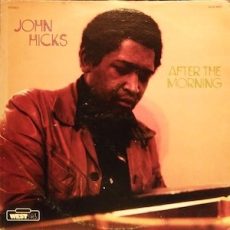
Feeling exhausted after a long week, I sought an album that offered a gentle, soothing escape. I went to the turntable, and put on After The Morning (West 54 WLW 8004) by John Hicks, and playing it was like a thoughtful act of self-kindness, gently easing my tension. Hicks’ piano work is both delicate and confident, creating a sense of tranquility reminiscent of a fresh morning. This album marks his third session as a band leader, but it was his first release. Joining him are Walter Booker, Jr. on bass (tracks: A1, A3, B1, B3), and Clifford Barbaro on drums (track: B1). The copy I own is the 1979 U.S. stereo release.
Side One opens with the title tune, After The Morning, by John Hicks. John is merry and playful as the melody is skillfully presented, and he continues swinging softly through the song’s only solo. Walter provides excellent support throughout, leaving the listener spellbound as the duo’s theme reprise gently closes. Serenata by Leroy Anderson and Avery Parrish provides Hicks with an unrestricted canvas in which to work in a solo performance. The song opens with a tranquil introduction and theme, then transitions into a breezy solo that captivates the listener, culminating in an exquisite ending.
Dierdre de Samba by Clifford Barbaro is a beautiful ballad that begins with a short introduction from the duo and unfolds into a lush, rich melody. John shines again as the song’s only soloist, playing with elegance and sensitivity ahead of a gorgeous reprise and a peaceful climax. Some Other Spring by Arthur Herzog, Jr. and Irene Kitchings is Hicks’ second solo performance, and a song he associated with the early morning of the day. Here, he delivers a delicately passionate and tender performance, and every note and phrase weaves a haunting spell ahead of the pianist’s return to take the song out softly.
The Duke by Dave Brubeck is a tribute to Duke Ellington, and John’s final solo performance of the first side. His introduction and melody feel like the calm of a new morning, showcasing his virtuosity in one of the album’s most beautiful moments. Impact by Charles Tolliver is the trio’s only appearance together and is the most adventurous song on the album. The cascading introduction rolls in like a severe, sudden thunderstorm, before Hicks takes charge of the theme ahead of a sizzling interpretation propelled by Booker’s bass and Barbaro’s brushwork, preceding a quick return to end on a sudden stop.
Until The Morning by John Hicks opens with a very pretty introduction that blossoms into a beautifully flowing theme of refined elegance. As the song’s only soloist, he offers an interpretation that’s both carefully crafted and deeply expressive, culminating in a touchingly delicate finale. Night Journey by Andrew “Tex” Allen wraps up the album with a delightful introduction by John and Walter into a vivacious theme. As the song’s only soloist, his tone is as airy as ever, and he explores several points of interest as the interpretation unfolds before the duo reprises the theme and brings the song to a graceful conclusion.
Roger Pola produced After The Morning, and Bob Cubbage was the recording engineer behind the dials. The album’s sound quality is excellent, with an outstanding soundstage. Your sweet spot will feel like you’re in the studio with the musicians as they’re recording. John Hicks recorded over 30 albums as a leader and contributed as a sideman to more than 300 releases. If you’re a fan of jazz piano and looking for something soothing, I offer After The Morning by John Hicks for your consideration on your next record-shopping trip. It’s a perfect album to begin your journey into his music, and after a tough day or week, a terrific companion to help you unwind and catch your breath!
© 2026 by Edward Thomas Carter
More Posts: choice,classic,collectible,collector,history,instrumental,jazz,music,piano
Requisites
Cunningbird ~ Jimmy Knepper Quintet | By Eddie Carter
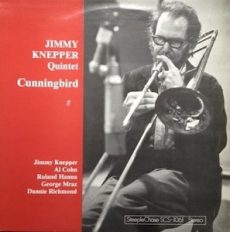
A few years back, during our anniversary trip to Honolulu, Hawaii, my wife and I took a walk along Bethel Street in Chinatown and found our way into Skull-Face Books and Vinyl. There, I came across an album by the Jimmy Knepper Quintet, which I listened to a few nights ago, inspiring me to feature it in this morning’s discussion. Cunningbird (SteepleChase Records SCS-1061) is a 1977 Danish release, the trombonist’s fourth as a bandleader. He’s best known for working with Charles Mingus, Gil Evans, the Mingus Dynasty, and the Thad Jones-Mel Lewis Orchestra. Here, he’s joined by Al Cohn on tenor saxophone, Roland Hanna on piano, George Mraz on bass, and Dannie Richmond on drums. The copy I own is the 1980 U.S. stereo reissue that shares the original catalog number.
Side One opens with Figment Fragment, the first of six originals by Jimmy Knepper. The opening ensemble is a spirited romp by the group with Knepper and Cohn at the forefront. Jimmy is up first and gives an energetic solo, then Al jumps in with a lively bounce. Roland follows with a delightful reading, and George walks with assurance next. Knepper and Cohn share a short workout ahead of the closing chorus. Languid is a lovely ballad that begins with a touchingly tender ensemble melody. Knepper’s opening solo is executed with warmth and intimacy. Hanna delivers a short statement, delicately leading to the group’s elegant reprise and ending.
Just Tonight is a fast bopper that gets busy right from the start of the ensemble’s speedy theme. Jimmy kicks things off with a fiery opening statement. Cohn takes over, pouring energy into every note. Roland builds the third reading with a compelling intensity next. George steps in last and walks briskly before the quintet wraps up with a vigorous restatement of the theme. Cunningbird, the title selection, opens the second side solemnly, then picks up the pace for Knepper to state the theme. Knepper cruises comfortably into the lead solo. Mraz follows and solos effectively. Cohn swings lightly next, and Hanna takes aim last, making a concise comment into the reprise and close.
Noche Triste is a haunting ballad with a Latin groove underpinning the ensemble’s graciously inviting melody. Jimmy leads the way with a thoughtfully tender solo. Al fills the next interpretation with a soft, elegant beauty. Roland etches a reading of lyrical grace next, and George gets the last words to deliver a wonderfully soothing statement preceding the group’s gentle reprise and fadeout. Spotlight Girl ends the album on an upbeat note with the quintet’s theme. Knepper gets to the point right away in the first solo. Mraz responds vigorously in the following reading. Hanna finds new avenues to explore in the third statement, and Knepper and Cohn have a brief conversation that leads back to the lively reprise and climax.
Nils Winther produced Cunningbird, and Elvin Campbell managed the recording console. The album’s sound quality is excellent with no harshness from top to bottom. The record is silent until the music starts, and the soundstage of each instrument is splendid. If you’re a hard bop fan and are in the mood for a great ensemble album, I invite you to consider Cunningbird by the Jimmy Knepper Quintet on your next record-shopping trip. It’s a terrific album by one of the unsung heroes of the slide trombone, who’s deserving of greater recognition and serves as a perfect introduction to his discography as a leader and sideman!
© 2026 by Edward Thomas Carter
More Posts: choice,classic,collectible,collector,history,instrumental,jazz,music,trombone
Requisites
Club Date ~ Yusef Lateef | By Eddie Carter
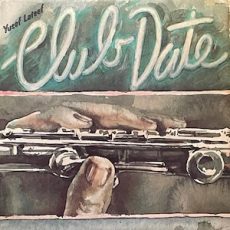
A few nights ago, I spent time with an album I hadn’t listened to in a while and thought it deserved discussing. Club Date (ABC Impulse ASD-9310), by multi-instrumentalist Yusef Lateef, was released in 1976 and showcases his live performance at Pep’s Lounge on June 29, 1964, first heard on Live at Pep’s. My introduction to Lateef’s artistry came through his work on Cannonball Adderley Sextet in New York, Nippon Soul, and Jazz Workshop Revisited. The tracks on Club Date were not available before this release. The group includes Richard Williams on trumpet; Yusef Lateef on flute (tracks B1, B3), oboe (track B1), and tenor saxophone (tracks A1 to A3, B2); Mike Nock on piano; Ernie Farrow on bass; and James Black on drums. The copy I own is the 1976 U.S. Stereo release.
The set opens with Oscarlypso by Oscar Pettiford, a lively tune featuring a Caribbean groove from the start of Ernie’s introduction to the quintet’s theme. Yusef takes the opening solo, as smooth as velvet. Richard follows with a cheerfully festive performance. Mike enters the spotlight last, with a relaxing reading, before both horns share a short exchange leading to the reprise and a vibrant finish. Gee Sam Gee by Yusef Lateef is a slow-moving ballad that begins with the saxophonist stating a hauntingly dreamy theme and opening solo. Williams and Nock follow with two delicately gentle statements preceding Lateef’s return for the closing chorus.
Richard Williams’ Rogi brings the beat way up to end the first side with the group’s collective melody. Yusef steps up first with a spirited performance, then Richard vigorously launches into the following solo. Mike has the last word with an energetic statement ahead of the theme’s return and climax. Brother John, Yusef Lateef’s tribute to John Coltrane, opens the second side with the rhythm section’s trio to Lateef’s switching to oboe for the melody and adventurous opening statement. Williams takes flight next in a scintillating solo. Nock keeps the listener captivated, sailing smoothly until the final note, while Yusef’s flute comments shadow him, before the quintet returns to take the song out.
Yusef Lateef introduces P-Bouk, a speedy original by the saxophonist that the ensemble takes out of the gate at a vigorous pace. Yusef soars upward into the sky on the opening solo with joyful exhilaration. Richard comes in cooking hard next, then Mike meets the challenge with a robust reading, leading to the theme’s restatement and the introduction of Nu-Bouk, also by Yusef Lateef, which he describes as a new blues. He’s back on the flute as he glides over the rhythm section for the soulful melody and lead solo. Williams makes his case in a short statement, returning to the theme and the group’s down-home ending.
Bob Thiele produced the initial session for Club Date, and Esmond Edwards supervised this release, but the identity of the engineer who recorded it remains unknown. The sound quality is very good for a ‘60s live date, with an excellent soundstage that transports the listener to the club’s audience. If you’re new to the music of Yusef Lateef, or are in the mood for a wonderful live album to listen to after a long day or week, I offer for your consideration Club Date by Yusef Lateef. It gives a glimpse into an incredible musician who transcended hard bop through music inspired by exotic locales. While the recording’s live atmosphere adds raw authenticity, it’s the interplay among the players that truly shines, making this record a rewarding listen for both longtime fans and newcomers to Lateef’s work!
~ Cannonball Adderley Sextet in New York (Riverside RLP-404/RLP-9404), Jazz Workshop Revisited (Riverside RM 444/RS 9444), Live at Pep’s (Impulse! A-69/AS-69), Nippon Soul (Riverside RM 477/RS 9477) – Source: JazzStandards.com
© 2026 by Edward Thomas Carter
More Posts: choice,classic,collectible,collector,history,instrumental,jazz,music,saxophone
Requisites
Jackie’s Bag ~ Jackie McLean | By Eddie Carter
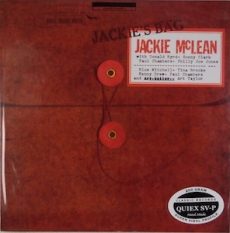
Alto saxophonist, Jackie McLean, enters this morning’s spotlight with an excellent 1961 hard bop album, Jackie’s Bag (Blue Note BLP 4051/BST 84051). It comprises two sessions from 1959 and 1960, and two all-star ensembles join him. Donald Byrd (tracks: A1-A3), Blue Mitchell (B1 to B3) on trumpet, Tina Brooks (B1 to B3) on tenor sax, Sonny Clark (A1 to A3), Kenny Drew (B1 to B3) on piano, Paul Chambers on bass, Philly Joe Jones (A1 to A3), and Art Taylor (B1 to B3) on drums. The copy I own is the 2008 Classic Records mono audiophile deep groove reissue, sharing the original catalog number.
Side One opens with Quadrangle, the first of five originals by Jackie McLean. It takes off straight into the stratosphere from the start of the quintet’s brisk melody. Jackie takes a sharp corner into an energetic opening solo, then Donald continues navigating traffic in the next lively statement. Philly Joe tackles the final solo vigorously, leading back into the closing chorus. Blues Inn begins with the ensemble’s relaxed theme. McLean opens with an easygoing solo, then Byrd compels the listener to leave their troubles behind in the following statement. Clark has an enjoyable interpretation next, and Paul’s short walk leads the group back into the theme’s restatement and close.
Fidel gets going with Philly Joe’s introduction to the group’s upbeat melody. Donald has the first solo and makes the most of every note. Jackie takes over and swings so passionately that the listener is sure to be tapping his toes and snapping his fingers. Sonny’s rhythmic agility in the closer flows efficiently into the closing chorus and ending. Appointment in Ghana starts the second side with the front line’s introduction segueing into the sextet’s lively melody. McLean leads off and shows he can cook with the best of them. Mitchell adds some bite to the second solo, then Brooks ignites the next reading with plenty of heat. Drew gets the last word ahead of the group’s tasty finale.
A Ballad For Doll is a heartfelt tribute from Jackie to his wife, Dolly. The sextet gently slows things down for a warm and affectionate opening chorus. Kenny shines in the solo spotlight with a delicately beautiful interpretation that builds into the group’s touching climax. Isle of Java by Tina Brooks brings the album to a close, picking up the tempo one last time for Brooks, setting the spirited melody in motion against the sextet. McLean comes out swinging first with a lively interpretation. Mitchell maintains the groove with an effervescent solo. Brooks responds with a statement full of zest. Drew is on the trail of the front line in the following reading, and Chambers gets a moment to shine, preceding the theme’s reprise and fadeout.
Alfred Lion produced Jackie’s Bag, and Rudy Van Gelder managed the recording console. The album’s sound quality is clean and crisp, leaping from the speakers with stunning fidelity and absolutely no background noise. Bernie Grundman mastered the audiophile reissue, and the record was pressed on 200-gram Quiex SV-P Hand Made Super Vinyl. The record is also silent until the music starts. If you’re in the mood for an excellent hard bop album, Jackie’s Bag, by Jackie McLean, is an outstanding entry point to his artistry and discography. The album also offers a vivid picture of the music landscape in the late 1950s and early 1960s, and should make a welcome addition to any jazz fan’s library!
© 2026 by Edward Thomas Carter
More Posts: choice,classic,collectible,collector,history,instrumental,jazz,music,saxophone