


Requisites
Dr. Jeckyle ~ Art Blakey & The Jazz Messengers | By Eddie Carter
Art Blakey’s impact on the jazz world as a bandleader and drummer offered a creative and unique perspective that helped shape the artistic style of Hard-Bop and Post-Bop for more than three decades. It was this vision that enabled The Jazz Messengers to become one of the greatest ensembles worldwide. Up next from the library is a recent acquisition titled Dr. Jeckyle (Paddle Wheel K28P 6462). Blakey and the band are performing the second of two performances that were recorded on the final two days of 1985 at Sweet Basil in Greenwich Village. Sharing the spotlight with the drummer is Terence Blanchard on trumpet, Tim Williams on trombone, Donald Harrison on alto sax, Jean Toussiant on tenor sax, Mulgrew Miller on piano, and Lonnie Plaxico on bass. My copy used in this report is the 1987 King Record Company Japanese Stereo album.
Fuller Love (also known as In Case You Missed It) by alto saxophonist Bobby Watson opens the album with an aggressive attack by Blakey preceding the speedy melody by the ensemble. Tim begins the solos with an exciting performance. Donald swings with a robust beat on the second statement. Jean takes the reins next for a rousing reading. Mulgrew charges into the last solo with an impeccably hip contribution before the ensemble takes the song out. Dr. Jeckyle comes next with the propulsive power of Blakey’s drums in full effect on the introduction leading to the melody. Blanchard sizzles on the lead solo, then Harrison gives an equally fierce statement. Williams heats things up on the following reading, then Toussiant contributes considerable energy on the fourth scintillating statement. Miller wraps it up with a tidal wave of compelling emotion.
81 by Ron Carter begins Side Two cooking at an easy groove during the ensemble’s opening chorus. Donald kicks off the solos laying down a lively rhythm. Tim moves into the second statement with an easy swing, followed by Jean who gives an intriguing improvisation. Mulgrew strolls into an enjoyable performance on the next reading. Lonnie takes the final spot with an exquisite solo before the close. One By One by Wayne Shorter picks up the pace one final time with the septet at an optimum level on the melody. Harrison flies right out of the gate with a speedy lead statement. Williams steps up next for a heated interpretation, then Toussiant responds with radiant intensity. Blanchard drives into the next reading ferociously, and Miller delivers a closing chorus of incandescent fury ahead of the ensemble’s finale and audience’s ovation.
Dr. Jeckyle was produced by Shigeyuki Kawashima and Horst Liepolt. It was recorded by Kazunori Sugiyama and the album was mixed at King Studio, Japan by Hatsuro Takanami and mastered by Akira Makino. This is a digital recording with a superb soundstage possessing a bright treble, vibrant midrange, and deep bass that’s fun to listen to. Though released three years before Art’s passing in 1990, Dr. Jeckyle is an exhilarating, exciting live album by Art Blakey & The Jazz Messengers that still stands up very well over three decades later and belongs in every jazz fan’s library!

More Posts: choice,classic,collectible,collector,drums,history,instrumental,jazz,music
Requisites
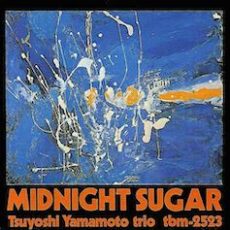
Midnight Sugar ~ Tsuyoshi Yamamoto Trio | By Eddie CarterThis morning’s choice from the library is one of my absolute favorites because each time I hear it, I’m transported back to one of my happiest memories as a young adult. If any of you lived in Cleveland, Ohio during the seventies and eighties, Audio Craft at 3915 Carnegie Avenue was the place to go if you wanted to purchase a quality entry-level, mid-level, or high-end audio system. My uncle Bob Franks was the manager there for many years and I got to help him on Monday and Thursday evenings, and each Saturday. He was instrumental in teaching me about excellent audio equipment, helping me put together my first system, and introducing me to The Tsuyoshi Yamamoto Trio.
Midnight Sugar (Three Blind Mice TBM-23) is the group’s 1974 debut for the Japanese jazz label and has long been a favorite to demonstrate high-end audio equipment at audio shows and audio salons worldwide. It’s also become a collector’s item, a mint original LP or the 1977, 1979, and 1982 Stereo reissues can cost a few hundred dollars. Joining the pianist are two giants in their own right, Isoo Fukui on bass and Tetsujiro Obara on drums. My copy used for this report is the 1977 Japanese Stereo reissue (Three Blind Mice TBM-2523) and LP collectors take note. Only the 1977, 1979 (TBM(P)-2523) and 1982 (Trio Records – Three Blind Mice PAP-2006) reissues list the group’s name as Tsuyoshi Yamamoto Trio. All other LP reissues and the original release show the pianist’s last name first.
Midnight Sugar is a slow tempo blues beginning Side One with a brief bowed bass introduction by Isoo before Yamamoto takes over on the melody. Tsuyoshi is the only soloist and is at his best on a lengthy interpretation that’s sublimely soulful and one of the highlights on the album, thanks to the rhythmic harmony provided by his colleagues. I’m A Fool To Want You was written in 1951 by Frank Sinatra, Jack Wolf, and Joel Herron. Sinatra recorded the song for Columbia Records, making it a hit. It opens with a graceful introduction and wistful delivery of the melody. The pace moves to midtempo for Yamamoto’s solo performance and he responds with a mesmerizing display and emotional depth preceding the closing chorus ending with fingertip delicacy.
The Nearness of You starts Side Two and was written in 1937 by Hoagy Carmichael and Ned Washington. It became a hit for Ray Eberle who recorded it with The Glenn Miller Orchestra in 1940. The trio dresses up this timeless evergreen with a blissful theme treatment and a sentimental swing on the song’s only interpretation by Yamamoto drawing the listener into this beautiful standard at a leisurely pace. It Could Happen To You is by Jimmy Van Heusen and Johnny Burke, this popular song was written in 1943 and was first recorded by vocalist Jo Stafford with the Paul Weston Orchestra. Its first film appearance was in the 1944 musical comedy And The Angels Sing. The trio’s interaction is stunning on the dreamy melody. Tsuyoshi’s reading is skillfully constructed with tender lyricism on one of the most beautiful ballads ever written.
The album closes with Yamamoto’s Sweet Georgia Blues, an uptempo original sharing some similarities with the 1925 jazz and pop classic, Sweet Georgia Brown by Ben Bernie, Ken Casey, and Maceo Pinkard. It opens with a vivacious theme by the trio, then a brief comment preceding Obara giving a short workout of explosive fireworks. Tsuyoshi wraps up the album with a few final remarks of fun leading to the lively closing chorus.
Three Blind Mice began in 1970 with the premise of showcasing emerging jazz artists. The label produced one-hundred thirty albums over thirty years and was known for their outstanding sound. TBM also was instrumental in the development of Japanese jazz. Many of the stars from Japan now known around the world recorded their debut albums on the label. The album was produced by Takeshi Fujii who ran TBM for many years and recorded by Yoshihiko Kannari, the distinguished Japanese engineer who worked for TBM at the time, and now runs his own organization, Studio Lion since 2000.
The sound on Midnight Sugar is spectacular and a perfect choice to demonstrate any mid-level or high-end audio system. Your sweet spot is right in the studio with the musicians because of the incredible lifelike detail coming from the piano, bass, and drums. Tsuyoshi Yamamoto has an incredible discography of music, is still performing today and all of his albums on Three Blind Mice are worth occupying a spot in your library. If you’re looking for a jazz trio album for the library or are a fan of piano jazz specifically, I happily submit for your approval, Midnight Sugar by Tsuyoshi Yamamoto Trio. An album that’s quite a value for the music, sound quality, and a title that’ll provide its owner many hours of listening pleasure.
~ I’m A Fool To Want You (Columbia 39425); It Could Happen To You (Capitol Records 158) ~ The Nearness of You (Bluebird B-10745) – Source: Discogs.com ~ It Could Happen To You, The Nearness of You – Source: JazzStandards.com ~ I’m A Fool To Want You, Sweet Georgia Brown, Three Blind Mice – Source: Wikipedia.org © 2021 by Edward Thomas Carter
More Posts: choice,classic,collectible,collector,history,instrumental,jazz,music,piano
Requisites
To Diz With Love ~ Dizzy Gillespie | By Eddie Carter
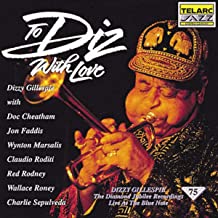
For this morning’s choice from the library, I’ve chosen a CD-album to honor a true pioneer. John Birks Gillespie, known throughout the world by his nickname Dizzy was a renowned bandleader, composer, singer, teacher, and trumpet player. He, alongside Charlie Parker, changed the face of jazz forever by creating and becoming the inspirational voice of Bebop. At the time of this CD-album’s release in October 1992, he was celebrating his 75th Birthday. The folks at Telarc Jazz recognized this significant achievement with their first release performed earlier in the year at The Blue Note in New York City. Forty-seven shows in all were recorded by Telarc over an entire month resulting in one of the best live albums that year. To Diz With Love (Telarc Jazz CD-83307) also features the talents of Doc Cheatham, Jon Faddis (track: 3), Wynton Marsalis (tracks: 2 & 4), Claudio Roditi, Wallace Roney (tracks: 1 & 5), and Charlie Sepulveda (track: 4) on trumpet, Red Rodney (track: 2) on fluegelhorn, Junior Mance on piano, Peter Washington on bass, and Kenny Washington on drums.
The opener, Billie’s Bounce by Charlie Parker was composed in 1945 and dedicated to Gillespie’s agent, trumpet player, Billy Shaw. Shaw was also the inspiration for Gillespie’s composition, Shaw ‘Nuff, written a year later. The ensemble starts this standard with a vivacious introduction by the rhythm section that grows into a rapid run of the opening chorus led by the front line. Claudio kicks off this uptempo cooker with a high-energy drive that builds its emotional level enthusiastically. Wallace produces a very hot flame of exhilarating verses on the second solo. Dizzy takes the next statement for a sizzling uptempo ride. Then, Junior takes charge, swinging with an intense and passionate feeling on the fourth interpretation. Peter keeps the ingredients stirring on the next performance with a soulful groove, and Kenny wraps up the solos with a fierce attack on the finale preceding the closing chorus and climax.
Parker’s Confirmation, written in 1946 adds Marsalis on trumpet and Rodney on flugelhorn to join Dizzy. The rhythm section provides a medium beat for the horns to strut comfortably during the melody. Marsalis solos first with full-toned ease at a relaxing momentum. Dizzy is up next using the mute to offer an endearing whispery reading. Rodney follows with a subtle tone and cool modality that winks to “Bird”. The front line provides a few more statements, then Mance delivers a soft, dreamy solo preceding the climax. Up next is Mood Indigo by Duke Ellington, Barney Bigard, and Irving Mills featuring Cheatham and Jon Faddis. It was written in 1930 for a radio broadcast and originally titled Dreamy Blues. The public went wild after hearing it, Mills renamed the song Mood Indigo and wrote the lyrics for it. Doc leads off the solos with a profoundly sensitive statement. Jon conveys an emotional impact on the next reading and Dizzy delivers the blues with subtle elegance. Junior expresses delight in a brief statement before the ensemble wraps it up.
Thelonious Monk’s Straight, No Chaser was written in 1951 and is given a spirited treatment with Marsalis and Sepulveda as the featured soloists. Wynton starts swiftly on the lead solo with phenomenal energy, then Charlie burns strongly on the next scintillating statement. Dizzy shows the depth of his intensity on the third interpretation, followed by Junior who says a mouthful on the next reading. Peter provides some powerful brushwork on the closing statement.
A Night In Tunisia is Gillespie’s signature and most famous tune. It was written in 1942 and opens with an invigorating theme by the ensemble collectively. Claudio is ablaze right from the start of the first interpretation. Dizzy lights an intense fire on the second solo, then Wallace responds with a torrid reading that burns fiercely. Junior embarks on an aggressive performance that’s executed beautifully. Kenny puts the final stamp on the standard with a fierce groove on the drums. The treat though, comes at the end when during the closing chorus, Dizzy brings Lew Soloff up from the audience to lead the group into the song’s conclusion.
Telarc has created a sonic masterpiece that’s a joy to listen to by engineers Jack Renner (one of the founders of the iconic label) and Michael Bishop. To Diz With Love is not just a celebration, but an exceptional musical performance by one of the undisputed masters of Bebop. It’s also the first of three final Gillespie performances recorded before his passing and is highly recommended for any jazz fan’s collection. The other two releases are To Bird With Love, and Bird Songs: The Final Recordings!
~Bird Songs: The Final Recordings (Telarc Jazz CD-83421); To Bird With Love (Telarc Jazz CD-83316) – Source: Discogs.com ~ Billie’s Bounce – source: JazzStandards.com ~ Mood Indigo – source: Wikipedia.org © 2020 by Edward Thomas Carter
More Posts: choice,classic,collectible,collector,history,instrumental,jazz,music,trumpet
Requisites
Dear Old Stockholm ~ John Coltrane | By Eddie Carter
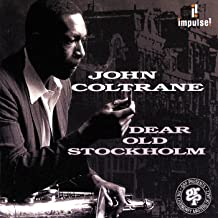
Fans of modern Jazz know that during his lifetime, John William Coltrane redefined the sound of jazz on the tenor sax, making some of his most important contributions while recording for Impulse Records from 1961 to his passing in 1967. It’s with one of the lesser-known releases in his discography that I begin this first report of 2021. Dear Old Stockholm (Impulse GRD-120) is a 1993 CD-album featuring Coltrane playing to the beat of a different drummer, Roy Haynes. Roy replaced the quartet’s regular drummer, Elvin Jones on the two sessions comprising this delightful album, April 29, 1963 (tracks: 1 and 2), and May 26, 1965 (tracks: 3 to 5). McCoy Tyner on piano, and Jimmy Garrison on bass complete the quartet.
Dear Old Stockholm is a traditional Swedish folk song that Miles Davis liked enough to record several times. John adapts this tune as easily as if it were created for jazz with a very impressive opening statement, weaving gracefully in unison with Jimmy’s bass and Roy’s assertive timekeeping. McCoy contributes some stirring solo work on the finale before the foursome takes the song out.
After The Rain is one of the most beautiful compositions Coltrane ever wrote and opens with a passionate gracefulness by the saxophonist on the melody. He continues with an intimate reading conveying a refined elegance leading to a hauntingly beautiful climax. The quartet returns to uptempo on the saxophonist’s One Down, One Up. John charges into the lead solo of this fire-breathing cooker with an incandescent performance relentlessly. McCoy continues the aggressive beat with a dynamic high-octane reading that’ll leave the listener’s ears sizzling. The tenor man gives a few final exhilarating statements before the song’s closing moments. After The Crescent opens with an introduction to the children’s song, Ring Around The Rosie. The similarity ends there because Trane and his bandmates take us on an exuberant joyride with two ferocious readings from Tyner and Coltrane. The walloping tones from Garrison’s bass and the brilliant brushwork by Haynes give both soloists a propulsive lift that’s exciting preceding the ensemble’s closing chorus.
The closer is a mid~tempo tune by John titled Dear Lord. This song is a perfect vehicle for a passionate performance by John Coltrane who shows his lyrical side on the first solo with charming simplicity. McCoy makes an indelible impression on the closing statement with a delicately tender interpretation, ahead of John’s return for the emotionally touching coda. The album was originally recorded by Rudy Van Gelder and digitally remastered by Robert Stoughton.
In my opinion, he did a fantastic job because the sound quality is superb with a stunning soundstage that brings the musicians into your listening room for your enjoyment. To some fans, this CD-album may not have the infinitely explosive spirit of the classic Coltrane quartet with Elvin Jones that so many are acquainted with. However, in my opinion, Dear Old Stockholm is an enticing invitation to explore and enjoy a fascinating album showing John Coltrane’s versatility as one of the legendary masters of jazz! Do your ears a favor and check it out, it’s sure to become a welcome addition to your jazz collection!
Dear Old Stockholm – Source: Wikipedia.org © 2020 by Edward Thomas Carter
More Posts: choice,classic,collectible,collector,history,instrumental,jazz,music,saxophone
Requisites
‘More’ Live ~ The Phil Woods Quartet | By Eddie Carter
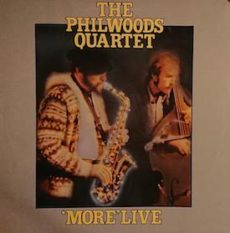
Alto saxophonist Phil Woods was one of the unsung heroes of jazz, he was equally adept at Cool Jazz, and Hard-Bop with a gorgeous tone, and speed of execution that never failed to please his fans. ‘More’ Live (Adelphi Records Inc. AD 5010) is the second live session that The Phil Woods Quartet performed at The Armadillo World Headquarters in Austin, Texas during 1978 and 1979. It hit the stores in 1981, following their 1980 album, The Phil Woods Quartet Live, Volume One, featuring Mike Melillo on acoustic piano, Steve Gilmore on acoustic bass, and Bill Goodwin on drums. My copy used in this report is the 1981 US Stereo album.
Side One opens with Miles Davis’ Milestones. Phil is excellent on the lead solo, backed only at first by Steve and Bill. Mike joins them, then takes over on the second interpretation. Steve’s bass dances brightly on the third reading and Bill has the last word in an exchange with Phil and Mike before the reprise and close. Eiderdown by Steve Swallow kicks off with a five-minute performance by Gilmore who solos impressively. Woods launches into the next statement with inspired exuberance and Melillo takes care of business on the closing chorus.
Horace Silver’s Strollin’ begins Side Two in a relaxed vein for the ensemble’s theme. Mike kicks off the solos with a vivaciously spirited interpretation. Phil moves into the spotlight next with a soulful tone and agility that builds to a compelling conclusion. Steve shines on the closing statement with a quiet intensity ahead of the foursome taking the song out. Mike Melillo’s See Hunt and Liddy begins with a lovely introduction by the pianist developing into the quartet’s sprightly mood on the melody. Melillo lays down a solid groove on the opening statement that delivers the goods. Gilmore’s bass takes a brisk trip through the next reading, and Woods turns up the heat with a vigorous, energetic closing chorus culminating with the group’s climax. The engineers for See Hunt and Liddy are Jim Finney, Mark LeBaron, and Hank Allrich. The men behind the dials of the remaining tracks are Cliff Carter, Fletcher Clark, and LeBaron. The ensemble is tight, the music is terrific, the album has an exceptionally good soundstage, and I’m very impressed with the sound quality.
In addition to playing the alto sax, Phil Woods was also proficient on the clarinet. Woods was married to Chan Parker for seventeen years, and Stepdad to her daughter, Kim. His discography is extensive with sixty records as a leader and many others as a sideman performing with some elite jazz musicians and pop vocalists. His final live performance was a tribute to Charlie Parker with Strings on September 4, 2015. He passed away from emphysema twenty-five days later on September 29 at the age of eighty-three. Now that I’ve found this one, I’ll certainly be on the lookout for its companion album. If you’re in the mood for some Post-Bop and are a fan of any LP’s by Phil Woods, I offer for your consideration, ‘More’ Live by The Phil Woods Quartet. An album of sumptuous jazz that’s sure to satisfy almost any jazz appetite!
~ The Phil Woods Quartet Live, Volume One (Clean Cuts CC 702) – Source: Discogs.com
~ Milestones – Source: JazzStandards.com © 2020 by Edward Thomas Carter
More Posts: choice,classic,collectible,collector,history,instrumental,jazz,music,saxophone