

Daily Dose Of Jazz…
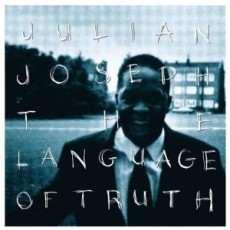
Julian Joseph was born May 11, 1966 in London, England. As a jazz pianist, bandleader, composer, arranger and broadcaster he has worked solo, in his all-star big band, trio, quartet, forum project band or electric band.
Joseph’s style combines a respect for the modern developments in jazz piano with its history and works in both contemporary and traditional situations with his music. He is also active in jazz education helping to form the jazz syllabus for the Associated Board of the Royal Schools of Music in Great Britain.
Starting with his first album The Language of Truth in 1991, Julian has a total of seven albums to date, one single, and a soundtrack to his credit, and a baker’s dozen as a sideman. He has focused on live performance such as, at the London Jazz Festival, also broadcasting as he hosts several radio shows on BBC Radio 3, including Jazz Line-up and the celebrated Jazz Legends as well as composing and teaching.
He has also made two jazz television series for Meridian, a jazz series for Sky TV’s Artsworld Channel and the documentary A Festival of Jazz Piano for the BBC in Wales directed by Celia Lowenstein. He continues to perform and record.

Jazz Is Global – Share
More Posts: arranger,broadcaster,composer,educator,piano
Daily Dose Of Jazz…
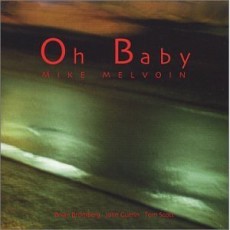
Mike Melvoin was born on May 10, 1937 in Oshkosh, Wisconsin and began playing piano at age three. He studied English at Dartmouth College but after graduating decided to pursue a career in music.
In 1961 he moved to Los Angeles and began playing with Frank Rosolino, Leroy Vinnegar, Gerald Wilson, Paul Horn, Terry Gibbs, Joe Williams, Peggy Lee, Tom Waits and others.
He worked extensively as a studio musician, in addition to playing Los Angeles clubs, accompanying singer Bill Henderson and playing with Herb Ellis and Plas Johnson on concord Jazz releases. As a composer he lent his scoring talents to the Partridge Family, Fame and MacGyver.
Pianist, composer and arranger Mike Melvoin served as chairman and president of The Recording Academy, was nominated for a Grammy for Best Jazz Instrumental Solo from his album It’s Always You, played between the jazz, rock and pop genres. A prolific studio musician he associated with among numerous others Frank Sinatra, Natalie Cole, The Jackson 5, The Beach Boys, Barbra Streisand, John Lennon, and The Wrecking Crew, passed away at the age of 74 in Burbank, California on February 22, 2012.
Put A Dose In Your Pocket
Daily Dose Of Jazz…
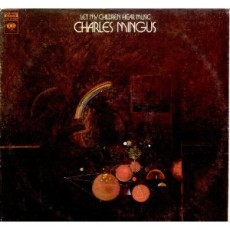
Charles Mingus Jr. was born on April 22, 1922 in Nogales, Arizona of Chinese, English, African and Swedish heritage. His mother allowed only church-related music in their home, but Mingus developed an early love for jazz, especially the music of Duke Ellington. He first studied trombone, later adding cello, which prepared him for the double bass in high school. He studied five years with H. Rheinshagen, principal bassist of the New York Philharmonic and compositional techniques with Lloyd Reese.
Beginning in his teen years, Mingus was writing quite advanced pieces incorporating elements of classical music. A number of them were recorded in 1960 with conductor Gunther Schuller and released as “Pre-Bird”, referring to Charlie “Bird” Parker. Mingus was one of many musicians whose perspectives on music were altered by Parker into “pre- and post-Bird” eras.
Gaining a reputation as a bass prodigy, his first major professional job was playing with former Ellington clarinetist Barney Bigard. This followed by a tour with Louis Armstrong in 1943 that led to his recording in a band led by Russell Jacquet that included Teddy Edwards and Chico Hamilton. He went onto record with Howard McGhee and into the late ‘40s played with Lionel Hampton’s band performing several of his pieces.
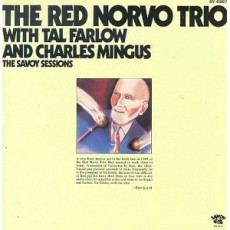
A popular Mingus trio had Red Norvo and Tal Farlow in tow in the early 50s with considerable acclaim but his mixed heritage caused problems with club owners and he left the group. Charles was briefly a member of Ellington’s band until his temper got him fired. He went on to record and play with Max Roach, Bud Powell, Dizzy Gillespie, Charlie Parker, Pepper Adams, Jaki Byard, Horace Parlan, Booker Ervin, John Handy, Charles McPherson, Eric Dolphy and Johnny Coles among others through the Sixties and into the next decade. By the mid-1970s, Mingus was suffering from Lou Gehrig’s disease that eventually stopped his playing, leaving him to continue composing and supervising recordings prior to his death on January 5, 1979 at age 56 in Cuernavaca, Mexico.
Composer, bandleader, bassist and civil rights activist Charles Mingus left a legacy of an autobiography, Mingus Big Band, Mingus Dynasty, Mingus Orchestra, the Charles Mingus High School Competition, the catalogue of Mingus compositions in the Music Division of the New York Public Library and the collected papers of Charles Mingus housed at the Library of Congress in Washington, DC.
Take A Dose On The Road
More Posts: bandleader,bass,composer
Daily Dose Of Jazz…
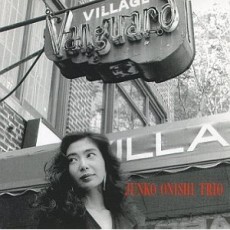
Junko Onishi was born April 16, 1967 in Kyoto, Japan and studied piano at Berklee College of Music. She then moved to New York City where she played with Joe Henderson, Betty Carter, Kenny Garrett and the Mingus Dynasty but has also worked with Jackie McLean, Holly Cole, Billy Higgins and many others.
Primarily playing in the post-bop genre, Junko cites her influences as Duke Ellington, Thelonious Monk and Ornette Coleman but one can hear McCoy Tyner, Kenny Kirkland and Mulgrew Miller’s influences in her playing. As a leader she has recorded nine albums on Blue Note Records label Somethin’ Else.
Choosing to study and practice she stopped performing in the late Nineties and when her mentor, Jaki Byard passed away she stopped playing completely for two years. Redeveloping her technique Onishi returned to playing and started a gym regimen to help her cope with the physical rigors of playing.
She appears in the 1997 documentary “Blue Note: A Story Of Modern Jazz playing the song “Trinity” and “Quick” from her album Play, Piano, Play: Junko Onishi Trio in Europe. In 2009 she released her Blue Note album “Musical Moments” followed by her Verve large band project “Baroque”. She continues to perform, record and tour worldwide.
Give The Gift Of Knowledge
More Posts: bandleader,composer,piano
Daily Dose OF Jazz…
Red Norvo was born Kenneth Norville on March 31, 1908 in Beardstown, Illinois. It is said that he sold his pet pony to help pay for his first marimba. He began his career in 1925 in Chicago playing with a band called “The Collegians”, in 1925. He played with many other bands, including an all-marimba band on the vaudeville circuit along with the bands of Paul Whiteman, Benny Goodman, Charlie Barnet and Woody Herman.
By 1933 he had recorded two sessions for Brunswick under his own name including two of the earliest, most modern pieces of chamber jazz: Bix Beiderbecke’s “In A Mist” and his own “Dance of the Octopus”. For these he put aside the xylophone for the marimba yet outraged the label’s head that tore up his contract and threw him out, though the album remained in print throughout the 30s.
From 1934-35 Red recorded 8 modern swing sides for Columbia followed by 15 sides of Decca and their short-lived Champion label series in 1936. From there he formed a Swing Orchestra and recorded for ARC, Vocalion and Columbia featuring brilliant arrangements by Eddie Sauter and often vocals by Mildred Bailey.
In 1938, Red Norvo and His Orchestra reached number one with their recordings of “Please Be Kind” and “Says My Heart”. He went on to record with Benny Goodman, Charlie Parker, Dizzy Gillespie in 1945, hit the West Coast in ’47, helped Charles Mingus rise to prominence in his trio, recorded for Savoy, recorded with Sinatra in Australia and released by Blue Note, appeared on the Dinah Shore Chevy Show and appeared in the movie Screaming Mimi as himself.
Red Norvo, helped to establish the xylophone, marimba and vibraphone as a viable jazz instrument continued to record and tour throughout his career until a stroke in the mid-1980s forced him into retirement. He died at a convalescent home on April 6, 1999 in Santa Monica, California at the age of 91.
More Posts: composer,marimba,vibraphone,xylophone