

Daily Dose Of Jazz…
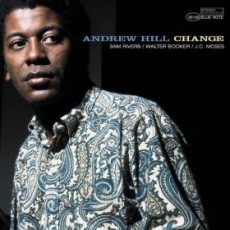
Andrew Hill was born June 30, 1931 in Chicago, Illinois and took up the piano at the age of thirteen, and was encouraged by Earl Hines. He studied informally until 1952. While a teenager he performed in rhythm and blues bands and toured with jazz musicians, including Charlie Parker and Miles Davis.
Hill first recorded as a sideman in 1954, but made his reputation recording as a leader for Blue Note from 1963 to 1970, featuring important post-bop musicians including Joe Chambers, Richard Davis, Eric Dolphy, Bobby Hutcherson, Joe Henderson, Freddie Hubbard, Elvin Jones, Woody Shaw and Tony Williams.
Hill is recognized as one of the most important innovators of jazz piano in the 1960s but rarely worked as a sideman after the 1960s, preferring to play his own compositions, which may have limited his public exposure.
As an educator he held positions at Portland State University, held residencies at Colgate University of Hamilton, Wesleyan University, University of Michigan, University of Toronto, Harvard University and Bennington College.
Returning to New York City in 1990, composer and pianist Andrew Hill, whose unique idiom of chromatic, modal and free improvisation, made his final public appearance on March 29, 2007 at Trinity Church. Suffering from lung cancer during his later years he died in his home on April 20, 2007. In May 2007, he became the first person to receive a posthumous honorary doctorate from Berklee College of Music.

Give The Gift Of Knowledge
Daily Dose Of Jazz…
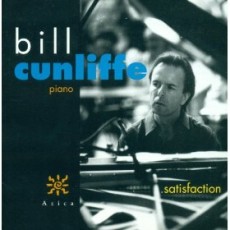
Bill Cunliffe was born June 26, 1956 in Andover, Massachusetts. His musical introduction began as a child listening to his mother play piano and listening to Sixties and Seventies music, especially the jazz oriented music.
Attending Phillips Academy he played in rock and roll bands, spent several years at Wesleyan University, heard an Oscar Peterson record and overnight converted to jazz. Graduating from Duke University he received his masters from Eastman School of Music where he studied with Mary Lou Williams.
Over the course of his career taught music at Central State University at Wilberforce, Ohio, toured as pianist and arranger with the Buddy Rich Big Band, worked with Frank Sinatra, played piano in various hotels and wrote jingles for several music production houses. A move to Los Angeles gave him the opportunity to work with such jazz notables as Ray Brown, Joe Henderson, Freddie Hubbard, Benny Golson and James Moody and joined the Clayton Brothers band.
Pianist and composer Bill Cunliffe, has received several Emmy, Grammy and Down Beat awards, has written several books on jazz, has delved into the music of Latin America and Brazil and in between recording and performing, he teaches at California State University.
Give A Gift Of Jazz – Share
Daily Dose Of Jazz…
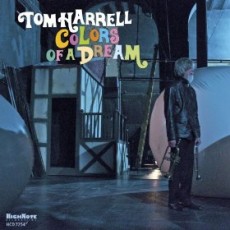
Tom Harrell was born on June 16, 1946 in Urbana, Illinois but by 5 was growing up in San Francisco. He started playing trumpet at eight and within five years, started playing gigs with local bands. Graduating from Stanford University with a music composition degree, he joined Stan Kenton’s orchestra, touring and recording with them throughout 1969.
After leaving Kenton, the post-bop trumpeter played with Woody Herman, Azteca, Horace Silver, the Sam Jones-Tom Harrell Big Band, the Lee Konitz Nonet, George Russell and the Mel Lewis Orchestra. Through the ‘80s he became a pivotal member of the Phil Woods Quintet making seven albums with the group.
Harrell is also plays flugelhorn and is a composer and arranger who has collaborated and recorded albums with Bill Evans, Dizzy Gillespie, Ronnie Cuber, Bob Brookmeyer, Lionel Hampton, Bob Berg, Bobby Shew, Joe Lovano, Charlie Haden’s Liberation Orchestra, Art Farmer, Charles McPherson and Kathleen Battle among others.
Since 1989 Harrell has led his own groups, usually quintets but has expanded ensembles such as chamber orchestra with strings and big bands. He has appeared at virtually every major jazz club and festival venues, and recorded under his own name for such record labels as RCA, Contemporary, Pinnacle, Blackhawk, Criss Cross, Steeplechase, Chesky and HighNote Records.
The Grammy-nominated artist has arranged and composed for Carlos Santana, Arturo O’Farrill, Metropole Orchestra and other big bands as well as his compositions being recorded by Ron Carter, Kenny Barron, Tom Scott, Chris Potter, Steve Kuhn and Hank Jones to name a few. In recent years he has formed and recorded with piano-less sextet “Colors Of A Dream” and piano-less quartet TRIP.
Despite his well-documented schizophrenia, Tom Harrell has successfully coped with the illness through medication and has become an influential figure in the jazz world. Throughout his career he has won numerous awards and grants, including multiple Trumpeter of the Year awards from Down Beat magazine, SESAC Jazz Award, BMI Composers Award, and Prix Oscar du Jazz. He has amassed a recorded discography of over 260 albums and continues to actively compose, record and tour extensively around the world.
Put A Dose In Your Pocket
More Posts: arranger,composer,flugelhorn,trumpet
Daily Dose Of Jazz…
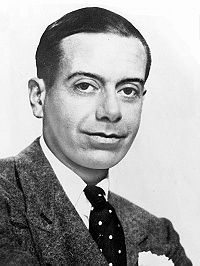
Cole Albert Porter was born into wealth on June 9, 1891 in Peru, Indiana. His musical training began at an early age, learning the violin at age six, the piano at eight and wrote his first operetta, with help from his mother at 10. His father, an amateur poet, may have influenced his son’s gifts for rhyme and meter. He matriculated through Yale writing student songs went on to Harvard law, switched to the music faculty, where he studied harmony and counterpoint.
Classically trained, he was drawn towards musical theatre. After a slow start, he began to achieve success in the 1920s, and by the 1930s he was one of the major songwriters for the Broadway musical stage. Unlike most successful Broadway composers, Porter wrote both the lyrics and the music for his songs.
After a serious horseback riding accident in 1937, Cole was left disabled and in constant pain, but he continued to work. His shows of the early 1940s did not contain the lasting hits of his best work of the 1920s and 30s, but in 1947 he made a triumphant comeback with his most successful musical, Kiss Me Kate.
Porter wrote numerous songs that have come to be jazz standards such as Night and Day, Anything Goes, I Get A Kick Out Of You and I’ve Got You Under My Skin, It’s De-Lovely, Begin the Beguine, Just One of Those Things and In The Still of the Night. He also composed scores for films from the 1930s to the 1950s.
Cole Porter, composer and lyricist, noted for his sophisticated, suggestive lyrics, clever rhymes and complex forms, contributed to the great American songbook, passed away of kidney failure on October 15, 1964.
Put A Dose In Your Pocket
More Posts: composer,songwriter
Daily Dose Of Jazz…
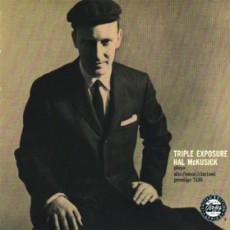
Hal McKusick was born on June 1, 1924 in Medford, Massachusetts. Hal moved with his family at age 3 to nearby Newton and at age 8, Hal’s mother bought him a clarinet as a Christmas present, insisting first on a vow of daily practice sessions and weekly lessons. With clarinet in hand, Hal practiced relentlessly and took lessons from schoolteacher Frank Tanner, who used him in the school band on clarinet and alto saxophone at age 9. Sight-reading came quickly to Hal, and by age 15, he was playing Boston’s burlesque house, the Old Howard Theater.
By the 40s and WWII McKusick was playing with Les Brown and moved through the decade playing with Boyd Raeburn and then Claude Thornhill. In the early 1950s he worked with Terry Gibbs and Don Elliott and in 1957 released his first album as a leader for Prestige titled Triple Exposure. As a sideman he sat in on recording sessions with groups led by George Russell and Jimmy Giuffre; worked with Bill Evans, Art Farmer, Paul Chambers, Connie Kaye, Lee Konitz and John Coltrane.
During the 60s he joined the CBS orchestra playing alongside the likes of Hank and Thad Jones, playing Carnegie Hall and Lincoln Center behind Judy Garland, Sarah Vaughan, Peggy Lee, Nat King Cole and Barbara Streisand. In the 70s he moved east to New York and throughout the 70s and 80s he produced weekend performances at Jazz At Moon in Easthampton that led to forming his nonet featuring Clark Terry, Art Farmer, Percy Heath, Jim Hall, Mike LeDonne, Hank Jones, Jim McNeely Jerry Dodgion and others.
Hal McKusick, alto saxophonist, clarinetist, flautist, composer and educator taught at the Ross School in East Hampton, New York and also restored and sold antiques, restored and built Shaker furniture both for Bloomingdales and private commissions. On April 11, 2012 he passed away of natural causes at the age of 87.
Jazz Is Global – Share