

Daily Dose Of Jazz…
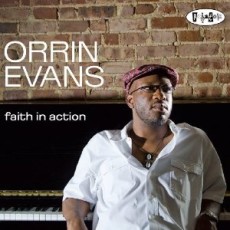
Orrin Evans was born on March 28, 1976 in Trenton, New Jersey but was raised in Philadelphia, Pennsylvania. Nurtured in a household filled with music due to his classical singer mother who surrounded him with the melodies of Puccini to the pulsating rhythms of Basie and Ellington.
Evans graduated from high school in the early 90s and studied at Rutgers University before going on to study piano privately with Kenny Barron and be employed as a sideman by Bobby Watson, Ralph Peterson, Duane Eubanks, Lenora Zenzalai-Helms and others.
Evans recorded his first session as a leader, The Orrin Evans Trio, for his own Black Entertainment label in 1994. After that, he signed with Criss Cross and between 1997-99 he recorded Justin Time, Captain Black and Grown Folks Bizness. Into the new millennium Orrin recorded prolifically releasing “Listen to the Band”, “Blessed Ones” and “Meant to Shine”, continuing his yearly release schedule up to his latest “Flip The Script”.
Influenced greatly by McCoy Tyner, Horace Silver, Bud Powell and Thelonious Monk among others, he remains in the hard bop genre but occasionally detours into soul-jazz and R&B when backing vocalists Denise King and Dawn Warren. In 2010 he was awarded a Pew Fellowship in the Arts. He continues to perform, record and tour.
Daily Dose Of Jazz…
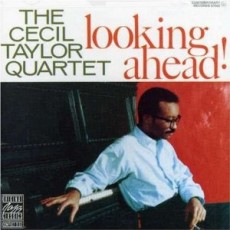
Cecil Percival Taylor was born March 25, 1929 in New York City and began playing piano and classical training at age six. He studied at the New York College of Music and New England Conservatory. After first steps in R&B and swing-styled small groups in the early 1950s, he formed his own band with soprano saxophonist Steve Lacy in 1956, in which he release his first recording Jazz Advance.
Throughout the 1950s and 1960s, Taylor’s music grew more complex and moved away from existing jazz styles. Gigs were often hard to come by, and club owners found Taylor’s approach to performance (long pieces) unhelpful in conducting business. Forming his group The Unit in 1961 with Jimmy Lyons, Sunny Murray and later Andrew Cyrille produced landmark recordings, like “Unit Structures” in 1966, they continued to record although sporadically and many of his recording sessions remained unreleased for sometimes decades.
By the 70s he was performing solo concerts and Taylor’s work began to be released for the next two decades, garnering critical if not popular acclaim. He began lecturing at universities, was awarded the Guggenheim Fellowship, performed a White House lawn concert for President Jimmy Carter, was awarded a MacArthur Fellowship, returned to the trio setting, collaborated with ballet companies and as an accomplished poet often incorporates his poems into his musical performances.
He is the co-founder of the Jazz Composers Guild to enhance the working possibilities of avant-garde musicians. Acknowledged as one of the pioneers of free jazz, his music is characterized by an extremely energetic, physical approach, producing complex improvised sounds, frequently involving tone clusters and intricate polyrhythms. His piano technique has been likened to percussion, described as “eighty-eight tuned drums” referring to the number of keys on a standard piano. He continues to perform, compose and record.
More Posts: bandleader,composer,piano,poet
Daily Dose Of Jazz…
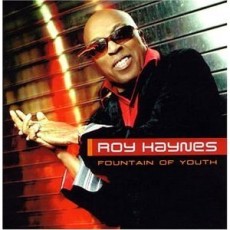
Roy Owen Haynes was born March 13, 1925 in the Roxbury section of Boston, Massachusetts and made his professional debut at the age of seventeen in his native Boston. He began his full time professional career in 1945. From 1947 to 1949 he worked with Lester Young, and from 1949 to 1952 was a member of Charlie Parker’s quintet. He recorded at the time with Bud Powell, Wardell Gray and Stan Getz.
In 1953 Roy toured with Sarah Vaughan for the next five years and then went on to work with more experimental musicians, like John Coltrane, Eric Dolphy, Andrew Hill and Chick Corea.
Haynes extracted the rhythmic qualities from melodies and created unique new drum and cymbal patterns in an idiosyncratic, now instantly recognizable style. Rather than using cymbals strictly for effect, Haynes brought them to the forefront of his unique rhythmic approach. He also established a distinctively crisp and rapid-fire sound on the snare; this was the inspiration for his nickname, “Snap Crackle”.
Over the course of his 60+ career of hard swinging since 1944, Roy is among the most recorded drummers in jazz playing in a wide range of styles ranging from swing and bebop to jazz-fusion and avant-garde. He has recorded or performed with Gary Burton, Miles Davis, Dizzy Gillespie, Christian McBride, Jackie McLean, Pat Metheny, Thelonious Monk, Gerry Mulligan, Art Pepper, Sonny Rollins, Horace Tapscott and many, many others.
As a bandleader Haynes has also led his own groups, some performing under the name Hip Ensemble and his most recent recordings as a leader are “Fountain of Youth” and “Whereas”, both of which have garnered Gammy nominations. In 2010, the National Academy of Recording Arts and Sciences bestowed upon him a Grammy Lifetime Achievement Award. Drummer, percussionist and bandleader Roy Haynes continues to record and perform worldwide.
More Posts: composer,drums,percussion
Daily Dose Of Jazz…
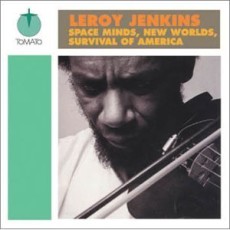
Leroy Jenkins was born on March 11, 1932 in Chicago, Illinois and began playing violin at eight years old, often in church. Another graduate of DuSable High under the tutelage of Walter Dyett, Leroy also played alto saxophone. He went on to graduate from Florida A&M, where he dropped the alto to concentrate on violin.
He returned to Chicago and divided his time from 1965 to 1969 between being involved in the Association for the Advancement of Creative Musicians (AACM) and teaching in the public school system. By the end of the decade he gave up Chicago for Europe and while in Paris, along with Anthony Braxton, Leo Smith and Steve McCall, he founded the creative Construction Company. Jenkins followed this with the Revolutionary Ensemble and formed a trio with Anthony Davis and Andrew Cyrille.
During 1987 he toured Europe as part of Cecil Taylor’s group. He gained recognition for music-theatre works such as “The Mother of Three Sons” and “The Negros Burial Ground”, two collaborations with Ann T. Greene, also “Fresh Faust”, and “The Three Willies”.
Leroy has played with Archie Shepp, Alice Coltrane and Rahsaan Roland Kirk; was a driving force in the free jazz circles and has written numerous pieces for soloists, small groups and large ensembles. Leroy Jenkins, composer, violist and free jazz violinist passed away February 24, 2007.
Daily Dose Of Jazz…
Michel Jean Legrand was born February 24, 1932, in Bécon-les-Bruyères outside Paris, France into a musical family. His father Raymond, a conductor and composer best known for the film score “Irma La Douce”. A virtuoso jazz and classical pianist, Michel studied at the Paris Conservatory for nine years from age 11, graduating with top honors as both composer and pianist.
In the early 1950s, Legrand was one of the first Europeans to work with jazz innovators such as Dizzy Gillespie and Stan Getz. While visiting the U.S. in 1958, Legrand collaborated with among others Miles Davis, John Coltrane, Bill Evans, Phil Woods, Ben Webster, Hank Jones and Art Farmer in an album of inventive orchestrations of jazz standards titled “Legrand Jazz”.
The following year he recorded an album of Paris-themed songs arranged for jazz piano trio, titled Paris Jazz Piano and nearly a decade later in 1968, he recorded At Shelly’s Manne-Hole a live trio session with bassist Ray Brown and drummer Shelly Manne, in which four of the compositions were improvised on the spot.
His piano style is reminiscent of Art Tatum, Erroll Garner, Oscar Peterson and Bill Evans from whom he has drawn influence. Throughout a prolific career Legrand has mixed jazz recordings with varied orchestral projects and film and television scores that number well above two hundred.
A number of his songs, including “What Are You Doing the Rest of Your Life”, “Watch What Happens”, “The Summer Knows”, “The Windmills Of Your Mind” and “You Must Believe In Spring” have become jazz standards covered frequently by other artists.
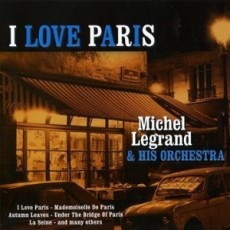
The composer, arranger, conductor, and pianist has won three Oscars out of 13 nominations, five Grammys and has been nominated for an Emmy. His first album “I Love Paris” at age 21 has become one of the best-selling instrumental albums ever released.
Always creative he has conducted orchestras in St. Petersburg, Vancouver, Montreal, Atlanta and Denver; has recorded over 100 albums collaborating with Phil Woods, Ella Fitzgerald, Ray Charles, Lena Horne, Perry Como, Johnny Mathis, Aretha Franklin, Frank Sinatra, Barbra Streisand, Sarah Vaughan, Shirley Bassey and the list grows as he continues to divide his time between America and France.