

Daily Dose Of Jazz…
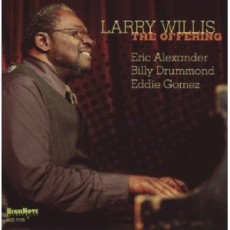
Lawrence Elliott Willis was born December 20, 1942 in Harlem, New York. He first got into music as a voice major at New York’s High School of Music and Art for gifted students and in his senior year he recorded an opera with the Music and Arts Chorale Ensemble under the direction of Leonard Bernstein.
Due to the barriers presented to Blacks in finding work in the classical arena, Willis changed directions, replacing voice with piano and concentrating on jazz. He taught himself to play piano and by the end of the winter was playing in a jazz trio with two of his classmates, Al Foster and Eddie Gomez.
He then entered and studied music theory at the Manhattan School of Music, was heard by Hugh Masekela and sent to John Mehegan for his first piano lessons ever, and by 19 began gigging regularly with altoist Jackie McLean and after graduating made his jazz recording debut on McLean’s “Right Now!” for Blue Note that featured two of Larry’s compositions.
Throughout his illustrious career pianist Larry Willis has performed and recorded as a leader and sideman on more than 300 recordings of bebop, avant-garde, jazz-fusion and rock with a wide range of musicians, Dizzy Gillespie, Lee Morgan, Carmen McRae, Clifford Jordan, Art Taylor, Shirley Horn, Stan Getz, Cannonball Adderley, Art Blakey, Woody Shaw and a stint of seven years beginning in 1972 as the keyboardist for Blood, Sweat & Tears.
He has composed and arranged for orchestras, big bands and symphonies for the Brooklyn Symphony with the Grammy-nominated Fort Apache Band, Roy Hargrove’s Grammy-winning Crisol Band, Vanessa Rubin and Joe Ford among others. He received the Don Redman award in 2011, and the Benny Golson Jazz Master Award at Howard University in 2012. He is currently still recording and touring around the world.
Daily Dose Of Jazz…
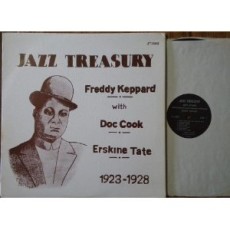
Erskine Tate born on December 19, 1895 in Memphis, Tennessee played violin and studied music at Lane College in Jackson, Tennessee. He moved to Chicago in 1912, studied at the American Conservatory and took his first professional gig at 17. By 1918 he was an early figure in the jazz scene and leading his band the Vendome Orchestra providing music during intermission and for the silent films that were shown in the Vendome Theatre at 31st and State streets.
The band was originally a nine-piece outfit but by the mid 20s had grown to 15. Among the members were Louis Armstrong, Freddie Keppard, Stomp Evans, Buster Bailey, Fats Waller and Teddy Wilson. They recorded during the period for Okeh and Vocalion Record labels.
By 1928 Erskine left the orchestra and led a band at the Metropolitan Theatre and then the Michigan Theatre. He had a long residency at the Cotton Club and continued to lead orchestras and play for dance marathons throughout the 1930s. In 1945 he retired from active performance, opened his own studio, began teaching music and became one of the city’s top instructors throughout the 50s and 60s.
Violinist, composer, conductor and bandleader Erskine Tate passed away on December 17, 1975 in Chicago, Illinois.
More Posts: bandleader,composer,conductor,violin
Daily Dose Of Jazz…
Raymond Stanley Noble was born on December 17, 1903 in Brighton, England and studied music at the Royal Academy. He became the leader of the HMV Records studio band, known as the New Mayfair Dance Orchestra that featured popular vocalist Al Bowlly and many musicians of the top hotel bands.
The Bowlly/Noble recordings achieved popularity in the United States, however, union bans prevented Noble from bringing British musicians to America so he arranged for Glenn Miller to recruit American musicians. Bowlly returned to England but Noble continued to lead bands in America, moving into an acting career portraying a stereotypical upper-class English idiot in films like Top Hat and Slumming On Park Avenue. He also played the “dense” character in love with Gracie Allen, or with his orchestra in an Edgar Bergen vehicle. Noble also provided music for many radio shows of the times like The Charlie McCarthy Show. His last major success as a bandleader came with Buddy Clark in the late 1940s.
Ray Noble arranged hits in the 1930s such as “Easy to Love”, “Mad About the Boy”, “Paris in the Spring”, wrote both lyrics and music for now jazz standards “Love Is The Sweetest Thing”, “Cherokee”, “The Touch of Your Lips”, “I Hadn’t Anyone Till You” and “The Very Thought Of You” and co-wrote “Goodnight, Sweetheart” and “You’re So Desirable”, recorded by Billie Holiday, Teddy Wilson and in 1990 by Robert Palmer.
Ray Noble, bandleader, composer, arranger, pianist, singer and actor passed away on April 3, 1978 at the age of 74.
More Posts: arranger,bandleader,composer
Daily Dose Of Jazz…
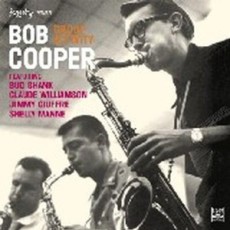
Bob Cooper was born on December 6, 1925 in Pittsburgh, Pennsylvania. He began to study the clarinet in high school and the following year he began working on the tenor saxophone. By 1945 he was joining Stan Kenton’s outfit when he was just 20, and as the new tenor saxophone player played alongside vocalist June Christy on “Tampico” that was to be a Kenton million-selling record. He would marry Christy two years later in Washington, DC.
Coop, as he was affectionately known, stayed with Kenton until he broke up the band in 1951. A naturally swinging jazz musician, Cooper and some other ex- Kenton men were hired to play at the Lighthouse Cafe in Los Angeles by the bassist Howard Rumsey. The Lighthouse became one of the most famous jazz clubs in the world, and the band, Howard Rumsey’s Lighthouse All Stars made history.
With a steady job he could work from home and he expanded his study of the oboe and English horn. While at the Lighthouse he made many momentous recordings, unique amongst them oboe and flute with Bud Shank, and composing a 12-tone octet for woodwind. Bob would go on to lead record sessions as part of a series of long-playing albums under “Kenton Presents” for Capitol Records.
His writing and playing on the album and its successor, “Shifting Winds” in 1955, were seminal in the creation of what was to become known as West Coast jazz. Imaginative writing and a well lubricated polish characterized the session and Cooper’s singing and stomping tenor style on his arrangement of “Strike Up The Band” boosted the record sales considerably.
Cooper would go on to tour Europe, South Africa and Japan with Christy, work as a studio musician in Hollywood, further develop his writing and compose film scores, join Kenton’s huge Neophonic Orchestra and have his composition ‘Solo For Orchestra’ premiered at one of its concerts. Much in demand for his beloved big-band work, he played regularly in other Los Angeles orchestras led by Shorty Rogers, Terry Gibbs, Bill Holman, Bill Berry, Bob Florence and Frankie Capp / Nat Pierce.
Bob Cooper, the West Coast jazz musician known primarily for playing tenor saxophone was also one of the first to play solos on oboe, passed away on August 5, 1993 in Los Angeles, California. Though maturing into one of the finest but least praised tenor saxophonists, he easily ranked with Stan Getz, Zoot Sims and Al Cohn in his talents. His last studio recording, released the year of his death, was on Karrin Allyson’s album Sweet Home Cookin on which he played tenor saxophone.
More Posts: arranger,composer,english horn,oboe,saxophone,vocal
Daily Dose Of Jazz…
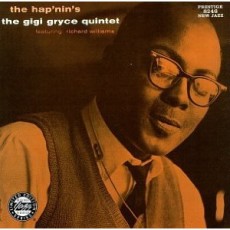
Gigi Gryce was born George General Grice, Jr. on November 28, 1925 in Pensacola, Florida but grew up in Hartford Connecticut. He studied classical composition at the Boston Conservatory, studied with private teachers, then won a Fulbright scholarship and continued his studies in Paris.
His performing career was relatively short in comparison to other musicians of his generation, his work little known, however, several of his compositions have been covered extensively – “Minority,” “Social Call,” and “Nica’s Tempo” are frequently heard in mainstream jazz venues. Gigi’s compositional bent includes harmonic choices similar to those of Benny Golson, Tadd Dameron and Horace Silver in the contemporaneous period. Gryce’s playing, arranging, composing is consonant with the hard bop classic period was generally considered to be 1953-1965.
During the 1950s he achieved some renown for his innovative bebop playing, his primary instrument being the alto saxophone. Among the musicians with whom Gryce performed were Thelonious Monk, Tadd Dameron, Lionel Hampton, D, Howard McGhee, Clifford Brown, Art Farmer, Lee Morgan, Max Roach, Oscar Pettiford, Teddy Charles and Benny Golson. In 1955, Gryce formed the Jazz Lab Quintet, which included trumpeter Donald Byrd.
In the mid-1950s he converted to Islam and adopted the name Basheer Qusim. By the 60s he stopped using the name Gigi Gryce partly due to personal problems that took their toll on his financial and emotional state, withdrawing from performing. During this last period of his life he taught at a series of public schools in Long Island and New York City and the Community Elementary School 53 on 168th Street in the Bronx, the last school renamed the Basheer Qusim School in his honor.
Gigi Gryce, saxophonist, flautist, clarinetist, composer, arranger, educator, and big band leader died of an apparent epileptic seizure on March 14, 1983 in Pensacola, Florida.