

Daily Dose Of Jazz…
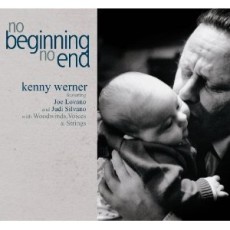
Kenny Werner was born on November 19, 1951 in Brooklyn, New York and by four was a member of a song and dance group. He started piano lessons at seven and by the time he turned 11, he recorded a single with a fifteen-piece orchestra and appeared on television playing stride piano. He attended the Manhattan School of Music as a concert piano major and later transferred to the Berklee School of Music.
Upon graduation he travelled working in Brazil and Bermuda before returning to New York where he formed a trio with drummer Gary Berkowitz and bassist Alex Peglise. In 1977 he recorded first LP that featured of the music of Bix Beiderbecke, Duke Ellington, James P. Johnson and George Gershwin and later that year with Charles Mingus on “Something Like A Bird”.
By the early 80s he toured extensively and recorded with Archie Shepp, recorded his own solo album of original compositions titled “Beyond the Forest of Mirkwood”, followed by a recording of the sounds heard coming from his Brooklyn-based studio – a hotbed of late-night jam sessions, titling the record after his address, 298 Bridge Street. In 1984 he joined the Mel Lewis Orchestra, began performing more in Europe and New York City as a leader and in duos with such notables as Rufus Reid, Ray Drummond, Jaki Byard also doing stints in the groups of Eddie Gomez, Tom Harrell, Joe Lovano and many others.
Since 1989 he has served as pianist, arranger and musical director for the noted film, television and Broadway star, Betty Buckley, has performed and recorded with Toots Thielemans mostly in duo settings but in trio with Oscar Castro-Neves and quartet with Airto Moreira. He has been nominated for a Grammy, has received performance grants from the NEA, a Guggenheim Fellowship Award for the 2010 release “No Beginning No End”, was commissioned to compose and conduct a memorial piece for Duke Ellington, and has been honored with the distinguished Composer award.
Kenny has a catalogue of twenty albums and another six as a sideman composer chops have had him writing compositions for the Mel Lewis Orchestra, the Vanguard Jazz Orchestra, Cologne Radio Jazz Orchestra, the Danish Radio Jazz Orchestra, the Metropole Orchestra and the Umo Jazz Orchestra and most recently has joined Quincy Jones. He is a published author of “Effortless Mastery” that features the physical, technical, psychological and spiritual aspects of being an artist and this publication has garnered him requests as a teacher and clinician from universities around the world, while maintaining an Artist-in-Residence at New York University.
Daily Dose Of Jazz…
Roswell Rudd, born Roswell Hopkins Rudd, Jr. on November 17, 1935, grew up in Sharon, Connecticut. Graduating from Yale University where he had played and recorded two albums of boisterous trad-jazz with Eli’s Chosen Six, a Dixieland band of Yale students that Rudd joined in the mid-’50s. But his landmark collaborations with Cecil Taylor, Archie Shepp, John Tchicai and Steve Lacy grew out of the lessons learned while playing rags and stomps in college.
In the 1960s, Rudd participated in key free jazz recordings with his ultra avant-garde New York Art Quartet, the soundtrack of the 1964 film New York Eye and Ear Control, Michael Mantler & Carla Bley’s 1968 Jazz Composer’s Orchestra-Communications with Cecil Taylor; and has collaborations with Don Cherry, Pharoah Sanders, Larry Coryell and Gato Barbieri. A major factor in his career has been his lifelong friendships with saxophonists Archie Shepp and Steve Lacy, recording and performing the music of Thelonious Monk numerous times with the later.
Roswell is skilled in a variety of jazz genres but is best known for his avant-garde contributions. Rudd has taught ethnomusicology at Bard College and the University of Maine. Over a period of three decades he has assisted with world music song style – Cantometrics and Global Jukebox projects. He has collaborated and recorded with Malian, Mongolian and with Hispanic New Yorkers.
The Grammy Award-nominated jazz trombonist and composer Roswell Rudd conducts master classes and workshops around the world and since 1962 Rudd has worked extensively with saxophonist Archie Shepp.

Inspire A Young Mind
Daily Dose Of Jazz…
David S. Ware was born on November 7, 1949 in Plainfield, New Jersey and began playing at age ten due to his father’s admiration for the saxophone and his large record collection. While in high school he played in the bands and ventured into New York as a teenager to listen to jazz. He had informal practice sessions with Sonny Rollins as a youth in the ’60s; then as part of the fertile NYC Loft Jazz era of the ’70s.
During this decade, he joined the Cecil Taylor Unit and Andrew Cyrille’s Maono. He also worked together with drummers Beaver Harris and Milford Graves. In the early ’80s he toured Europe with both Andrew Cyrille and his own trio. In mid-decade, Ware purposefully engaged himself in a period of extensive woodshedding – in order to further develop both his personal sound and his visionary group concept.
The ’90s saw the full-on actualization of this group, and the recognition of David S. Ware as a true saxophone colossus. A series of groundbreaking albums by the David S. Ware Quartet were released on the Silkheart, DIW, Homestead, AUM Fidelity, and Columbia Jazz labels. Perhaps the most highly acclaimed group of the last decade, David’s efforts were rewarded by being one of the very few jazz musicians whose work was appreciated by an audience outside the narrow confines of the jazz world. In an unprecedented coup, the ‘Cryptology’ album garnered the lead review slot in Rolling Stone Magazine.
Over the course of his career, tenor saxophonist David Ware has recorded for Columbia, Black Saint, DIW, Silkheart, Homestead, AUM Fidelity and Thirsty Ear record labels. He has performed with a host of musicians and was responsible for bringing the young pianist Matthew Shipp to the attention of the jazz environment. David S. Ware, who has played the most prestigious clubs and festivals around the globe passed away on October 18, 2012 ar age 62 in New Brunswick, New Jersey.
More Posts: bandleader,composer,saxophone
Daily Dose Of Jazz…
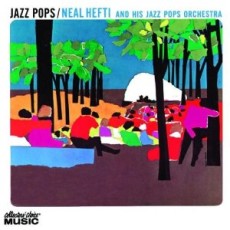
Neal Hefti was born on October 29, 1922 in Hastings, Nebraska, outside Omaha and was a child of the jazz age. His mother, a music teacher, started piano lessons at the age of 3, becoming well versed in theory and harmony by the time he took up the trumpet at 11. He was already writing arrangements, having taught himself by trial and error in high school and was supplying local dance bands with music well before he graduated. After winning several school prizes, he was to start making a living as a jazz trumpeter in the big bands of Charlie Barnet and Charlie Spivak.
After travelling to California with Spivak to make a film, Hefti stayed on the West Coast, joined Woody Herman’s band as a trumpeter in 1944 and his arranging began to take precedence over his playing. Hefti married, moved back to New York and began writing in every genre and for all sizes of ensembles, becoming adept at using small forces to create a big sound. He arranged for Count Basie both in octet and big band configurations making Neal became one of his principal writers. He went on to write numerous compositions for Harry James in the late 40s and 50s designed to feature the leader’s trumpet and the band’s star drummer Buddy Rich.
Hefti fronted his own band in the Fifties, contributed to some of Frank Sinatra’s most popular albums, including “Frank Sinatra and Swinging Brass”, which he also produced. From the early 1960s onwards, he was increasingly involved in the world of films and television, winning a Grammy award for his Batman theme. Hefti was a brilliant composer and arranger who created the scores for many other television shows and films, notably the two Neil Simon movies The Odd Couple and Barefoot in the Park. His score for Harlow included the song “Girl Talk” that has become a jazz standard.
However, in 1978 after his wife’s passing, he ceased to write and record new music. Nevertheless, because Basie continued to commission other writers to replicate his style, his effect on big band arranging and on film scores remained extremely influential. Trumpeter, composer, songwriter and arranger Neal Hefti, who contributed to the genres of swing and big band along with scores for the film and television industries, passed away in Toluca Lake, California on October 11, 2008.
Daily Dose Of Jazz…
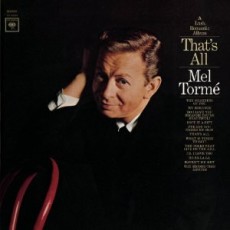
Melvin Howard Tormé was born on September 13, 1925 in Chicago, Illinois to Russian-Jewish parents whose surname was Torma but was changed to Torme as they came through Ellis Island. A child prodigy, his first professional engagement was singing “You’re Driving Me Crazy” with the Coon-Sanders Orchestra at the Blackhawk at age 4. Between 1933 and 1941, he acted in the network radio serials “The Romance of Helen Trent” and “Jack Armstrong, the All-American Boy”.
Mel wrote his first song at 13, and three years later, his first published song, “Lament to Love,” became a hit recording for Harry James. He played drums in Chicago’s Shakespeare Elementary School drum and bugle corps in his early teens. While a teenager, he sang, arranged, and played drums in a band led by Chico Marx of the Marx Brothers. His formal education ended in 1944 with his graduation from Chicago’s Hyde Park High School.
In 1943, Tormé made his movie debut in Sinatra’s first film, the musical “Higher and Higher” and an appearance in the 1947 film musical “Good News” made him a teen idol for a few years. He went on to sing and act in many films and television episodes throughout his career, even hosting his own television show in 1951–52.
In 1944 he formed one of the first jazz-influenced vocal groups, a quintet called “Mel Tormé and His Mel-Tones.” They had several hits on his own and fronting Artie Shaw’s band and blazed a path that was later followed by the Hi-Lo’s, The Four Freshman and The Manhattan Transfer. A solo act by 1947, Mel hit New York’s Copacabana and a local disc jockey in the audience, Fred Robbins, gave him the nickname “The Velvet Fog” for his smooth vocals and high tenor, a name detested by Tormé.
Mel went on to have a long and prosperous career recording for Decca, Musicraft, Capitol and Bethlehem; worked with Marty Paich in the fifties; “Blue Moon” became his signature tune; helped pioneer cool jazz; in the 60s wrote songs and musical arrangements for Judy Garland; co-wrote “The Christmas Song” with Bob Wells; and weathered the drought of vocal jazz until fertile ground reappeared in the 70s, a period that for him, lasted nearly to the end of his life.
Mel Tormé, vocalist, drummer, actor, author, composer and arranger passed away after suffering a stroke on June 5, 1999.