

Daily Dose Of Jazz…
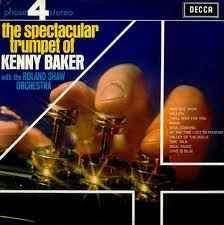
Kenny Baker was born on March 1, 1921 in Withernsea, East Riding of Yorkshire, England. Joining a brass band, by the age of 17 he had already become a professional musician. After leaving his home town for London, he met and began performing with George Chisholm. He was first heard on record in a British public jam session in 1941 and quickly established a strong reputation in London clubs.
After serving in the Royal Air Force during WWII, the young Baker was lead trumpeter with Ted Heath’s post war orchestra, with Bakerloo Non-Stop recorded for the Decca record label in 1946. He played a tenor saxophone solo on Johnny Gray, the piece recorded by both Baker and the drummer Jack Parnell. During the 1950s, he led his own group called Baker’s Dozen and performed on the first regular jazz show, the BBC Light Programme series Let’s Settle For Music.
During this period he regularly recorded as a quartet for Parlophone, and in the Sixties and Seventies, he was on call for film and studio work. He shared top billing with comedy variety acts, continued to appear on BBC shows, and formed the Best of British Jazz show with Don Lusher and Betty Smith. He went on to play with Frank Sinatra, Petula Clark, Sammy Davis, Jr. and Tony Bennett, as well as performing on James Bond soundtracks, with The Beatles and The Muppet Show among numerous other television shows.
Trumpeter, cornetist, flugelhornist and composer Kenny Baker, who was titled three times as best trumpet player and awarded the MBE title, died in Felpham, West Sussex on December 7, 1999 after suffering from a viral infection. He was 78.

More Posts: bandleader,composer,cornet,flugelhorn,history,instrumental,jazz,music,trumpet
Daily Dose Of Jazz…
Moto Fukushima was born in Kobe, Japan on February 23, 1978 and received the Outstanding Performer Award before graduating Summa Cum Laude from Berklee College of Music. His musical style is a unique combination of Western classical music, Japanese traditional music, and African-inspired music of South America, which is evident in his jazz improvisation. His playing is characterized by a remarkable blend of finesse, subtlety, and power.
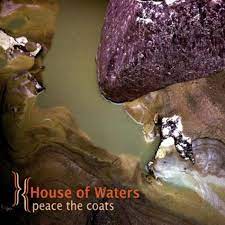
He is a co-leader of the Brooklyn-based power trio, House of Waters. The band has released two albums on the Grammy Award-winning group Snarky Puppy’s GroundUp label, with the first album reaching #2 on the iTunes World Music chart, and the second album hitting #4 on the iTunes Jazz chart.
His music has been featured in the Sports Emmy Award-winning piece on ESPN’s E60, and he won 3rd place in the International Songwriting Competition in 2014. He has also been the recipient of the ASCAP Plus Award.
Moto has collaborated with Mike Stern, Leni Stern, Karsh Kale, Dave Weckl, Dave Eggar, Big Apple Circus, Alex Skolnick, and Gil Goldstein. Six-string bass player, composer, and shamisen player Moto Fukushima, currently based in New York City, continues to perform and record.

More Posts: bass,composer,history,instrumental,jazz,music,shamisen
Daily Dose Of Jazz…
Kathleen Gorman was born on February 18, 1967 and grew up in Halifax, Nova Scotia in a musical family where creative expression was encouraged. Piano lessons started at age six, and years of classical studies gave her a solid musical foundation. She began performing and writing in her teens and after composing a theme for CTV for the Winter Olympics, she moved to Montreal, Canada to pursue jazz piano, arranging and composition studies. Completing a Bachelor of Fine Arts at Concordia University, Montreal she followed this by McGill for advanced study in composition and orchestration.
She continuously worked as a pianist/vocalist for several years in Montreal clubs before settling in Toronto, Canada where she began performing weekly, and set up a home studio, for recording projects and teaching. She is a Toronto based pianist/vocalist, as well as a composer/arranger and jazz educator, teaching jazz piano, theory and composition. She has trained with Jan Jarczyk, Jon Ballantyne, Hilario Duran, Sheila Jordan, Barry Harris, Kurt Elling, and Jeri Brown.
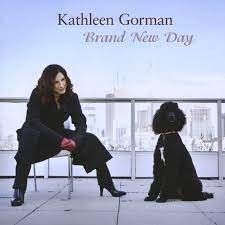
Pianist, vocalist and bandleader Kathleen Gorman continues to record, arrange, compose and educate, performing often in Toronto.
More Posts: arranger,composer,history,instrumental,jazz,music,piano,vocal
Daily Dose Of Jazz…
John Francis Coates Jr. was born February 17, 1938 in Trenton, New Jersey to a full-time performing musician and bandleader father, and his mother a dancer and actress. He attended Ewing High School and began his formal study in New York City at age eight with Urana Clarke at the Mannes College of Music on full scholarship. His earliest influences were credited to listening to Symphony Sid on his AM radio.
From age 11 to 14 he played clarinet with his father at the Trenton YMCA dance hall night, where he learned to improvise. His father began teaching him jazz piano at twelve and influenced by Jack Weig he joined the Trenton musicians union the same year. By 14 he was playing gigs two nights a week, as well as weekends and at sixteen he was gigging six nights a week during the summer at the Deer Head Inn where Savoy Records discovered him.
He recorded his debut Savoy album, Portrait, with bassist Wendell Marshall and drummer Kenny Clarke during his senior year of high school. He performed on the Steve Allen, Mike Douglas, and Merv Griffin tv shows in support of that album. From 1956 to 1958 he toured with Charlie Ventura, then while in college John played with Barry Miles, Eddie Gomez, Ron Carter, Woody Shaw, Harry Leahey, Al Cohn, Zoot Sims, Kai Winding, Urbie Green, and Pepper Adams.
Attending Rutgers University he graduated with a degree in romance languages in 1962. After graduating Coates returned to Deer Head where he again played six nights a week, four alone and two as bandleader. He took a position with Shawnee Press as an arranger and editor. He began performing at Henderson’s Club 50, where he had a six night per week gig and played with Coleman Hawkins, Clark Terry, Doc Severinsen, Phil Woods, Marvin Stamm and Bill Watrous among others.
Moving to Mountain Lake, New Jersey in 1966 and began working as an editor at Shawnee Press, arranged on his own time on a royalty basis, and playing at the Deer Head year round where he became an early inspiration for Keith Jarrett, who would listen and sit in occasionally. His arrangement for Amazing Grace has sold more than 750,000 copies and remains one of the publishing company’s best sellers.
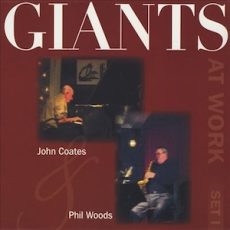
John recorded nine albums for the record label Omnisound, toured briefly with bassist Paul Langosch, then began recording for Pacific St Records, including two albums with Phil Woods. In the 1990s, he became homeless and attempted suicide, then moved to Coney Island and began playing again around the year 2000.
Pianist, composer and arranger John C. Coates Jr., who occasionally played vibraphone and clarinet, died on November 22, 2017.
More Posts: arranger,composer,history,instrumental,jazz,music,piano,vibraphone
Daily Dose Of Jazz…
Lennie Hayton was born Leonard George Hayton on February 14, 1908 in New York City into a Jewish family. He developed a penchant for the piano when he was six years old, showing unusual interest in the early classics from the rolls of the family player piano. His parents disliked jazz, so it wasn’t until he was sixteen that he really discovered it. He left high school to become pianist with the Broadway Hotel Orchestra of Cass Hagen, a boyhood friend.
While playing at the Park Central, Hayton was heard by Paul Whiteman and immediately engaged by him in 1928 as second pianist, playing piano and celeste as well as acting as a part-time arranger. Whilst with the orchestra, he played with Frankie Trumbauer, Bix Beiderbecke, Red Nichols, Joe Venuti and became friendly with Bing Crosby, then a member of The Rhythm Boys. However, by 1930 due to the impact of radio on audiences, Whiteman released ten members of the band. Hayton then joined the Charles Previn Orchestra.
Rejoining Crosby he embarked on a cross-country tour, landing in Hollywood. 1932 saw Hayton leading an orchestra for his first recordings of Cabin in the Cotton, Love Me Tonight, Brother, Can You Spare a Dime? and Some of These Days all became Bing hits. The following year , Hayton became the musical director for the Chesterfield radio series Music That Satisfies which again featured Crosby and ran for 13 weeks.
His involvement with Crosby continued as musical director for the singer’s 1933 film Going Hollywood at Metro-Goldwyn-Mayer. This led to a major career for Hayton who continued to work with Crosby and became a musical director for MGM and guided it through its prime years as foremost producer of movie musicals. Up until his retirement from the post in 1953, Lennie racked up four Oscar nominations: The Harvey Girls, The Pirate, Singin’ in the Rain and Star! He won the Academy Award for music for On the Town and Hello, Dolly!.
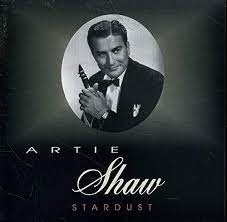
He arranged for Frank Sinatra, composed Apple Blossoms with Joe Venuti, Frankie Trumbauer, and Eddie Lang, and his other compositions included Flying Fingers, The Stage is Set, Mood Hollywood with Jimmy Dorsey, and Midnight Mood. Hayton also co-arranged the Hoagy Carmichael composition Stardust with Artie Shaw for Bluebird Records.
His first marriage to Helen Maude Gifford ended in her death in 1943. Three years later he married Lena Horne whom he met on the MGM lot. Throughout the marriage, Hayton also acted as Horne’s music director. Facing the stresses and pressures of an interracial relationship, they had a tumultuous marriage, first based upon her desire to advance her career and cross the color-line in show business, but she had learned to love him very much.
Pianist, composer, conductor and arranger Lennie Hayton, whose trademark was a captain’s hat worn at a rakish angle, died of a heart attack while separated from Horne, in Palm Springs, California on April 24, 1971.
More Posts: arranger,composer,conductor,history,instrumental,jazz,music,piano