

Daily Dose Of Jazz…
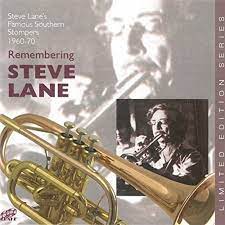
Steve Lane was born on November 7, 1921 in London, England where his father was a concertina player who recorded with the Rio Grande Tango Orchestra in the 1920s. Having heard his first jazz in the Rhythm Clubs of the late 1930s, his first choice of instrument was guitar, but, following wartime service, he switched to the cornet on which he soon developed a jazz style based on the hot trumpeters of the 1920s he so much admired, with particular emphasis on his role leading the collective ensemble.
A gifted composer of vocal and instrumental pieces, he deftly incorporated female vocalists as an integral part of the band, thus presenting a range of songs carefully chosen to showcase the singer, and the supporting musicians strictly trained in the art of accompaniment. A taskmaster offering little compensation and weekly rehearsals, his personnel changed often but allowed him the ability to discover young talent such as pianists Martin Litton and Bruce Boardman and trombonist Bob Hunt.
Steve led his own Southern Stompers jazz band in the early 1950, and also led and recorded with his Red Hot Peppers and the VJM Washboard Band for over 50 years. In 1952 he established the Ealing Jazz Club, and in the Sixties establishe the West End Jazz Club and was a founding partner of VJM Records.
Cornetist, guitarist, composer, arranger and bandleader Steve Lane, who was a traditional jazz player, passed awya on August 22, 2015 at age 93.

More Posts: arranger,bandleader,composer,cornet,guitar,history,instrumental,jazz,music,vocal
Daily Dose Of Jazz…
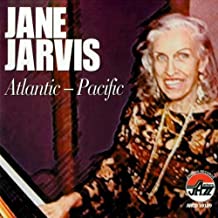
Jane Jarvis, née Louella Jane Nossette on October 31, 1915 in Vincennes, Indiana, to Charles and Luella Nossette. She was recognized as a piano prodigy at the age of five and she studied under a Vincennes University professor as a young girl.
A family move to Gary, Indiana in 1927 soon put her in place to be hired to play the piano at radio station WJKS in Gary. Orphaned at 13 when her parents perished in a train-auto wreck, she returned to Vincennes, graduating from high school in 1932. She continued her studies at the Chicago Conservatory of Music, the Bush Conservatory of Music, Loyola University Chicago and DePaul University.
By 1954, Jane was on television in Milwaukee, hosting a show called Jivin’ with Jarvis while serving as staff pianist and organist. At the time, the Milwaukee Braves had just relocated from Boston and sought her out to be the organist at Milwaukee County Stadium. Jarvis stayed with the Braves for eight seasons and then went to New York City, where she took a position with Muzak Corporation as a staff composer and arranger. She would rise to become a corporate vice-president and its director of recording and programming.
In 1964, she was hired by the New York Mets to play the organ at Shea Stadium, where she is remembered for playing their theme song, Meet The Mets, which debuted in the 1963 season before every home game, followed by the Jarvis composed Let’s Go Mets, as the team took the field.
Leaving Muzak in 1978, the next year she left the Mets to concentrate on her first musical love, jazz piano. She became a fixture at New York City nightclubs, frequently playing alongside bassist Milt Hinton. She became a founding member of the Statesmen of Jazz, a group of jazz musicians aged 65 and older sponsored by the American Federation of Jazz Societies, and was featured on their 1994 album. She performed with this group across the US as well as in Japan and elsewhere.
Jarvis released several albums of her jazz piano work, including Jane Jarvis Jams, and Atlantic/Pacific. In addition to Hinton, she often collaborated with trombonist Benny Powell and bassist Earl May. As a member of ASCAP, she also had over three hundred compositions to her credit.
Living in Cocoa Beach, Florida, where she was honored in 2003 by the Space Coast Jazz Society for her lifetime achievement. Back in New York City in 2008, she was displaced when a construction crane collapsed, damaging her building on East 50th Street. Pianist, composer, baseball stadium organist and music industry executive Jane Jarvis spent her final years of her life at the Lillian Booth Actors Home in Englewood, New Jersey until she passed away on January 25, 2010.

More Posts: bandleader,composer,history,instrumental,jazz,music,piano
Daily Dose Of Jazz…
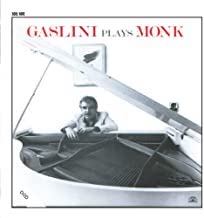
Giorgio Gaslini born October 22, 1929 in Milan, Italy. He began performing aged 13 and recorded with his jazz trio at 16. In the 1950s and 1960s, He performed with his own quartet. He was the first Italian musician mentioned as a “new talent” in the Down Beat poll and the first Italian officially invited to a jazz festival in the USA New Orleans 1976-77.
He collaborated with leading American soloists, such as Anthony Braxton, Steve Lacy, Don Cherry, Roswell Rudd, Max Roach, but also with the Argentinian Gato Barbieri and Frenchman Jean-Luc Ponty. He also adapted the compositions of Albert Ayler and Sun Ra for solo piano, which the Soul Note label issued. He also composed the soundtrack of Michelangelo Antonioni’s 1961 La notte (The Night).
From 1991 to 1995, Gaslini composed works for Carlo Actis Dato’s Italian Instabile Orchestra, and was the first to teach jazz courses at the Santa Cecilia Academy of Music in Rome in 1972. In the Seventies he scored ten films between 1970 to 1977.
Pianist, composer and conductor Giorgio Gaslini, who composed symphonic works, operas, and ballets, passed away on July 29, 2014 at 84 in Borgo Val di Taro, Italy in the province of Parma.
More Posts: bandleader,composer,conductor,history,instrumental,jazz,music,piano

Daily Dose Of Jazz…
Spencer Williams was born on October 14, 1889 in New Orleans, Louisiana and was educated at St. Charles University in his hometown. Performing in Chicago, Illinois by 1907, he moved to New York City about 1916 where he co-wrote several songs with Anton Lada of the Louisiana Five. Among those songs was Basin Street Blues, which became one of his most popular songs and is still recorded by musicians to this day.
Touring Europe with bands from 1925 to 1928, during this time he wrote for Josephine Baker at the Folies Bergère in Paris. Returning to New York City for a few years, at the end of the Roaring Twenties, Williams was tried but then acquitted on a charge of murder. In 1932, he was back in Europe where he spent many years in London, England before moving to Stockholm in 1951.
A prolific composer, some of Spencer’s compositions that became hit songs were Basin Street Blues, I Ain’t Got Nobody, Royal Garden Blues, Mahogany Hall Stomp, I’ve Found a New Baby, Tishomingo Blues and Everybody Loves My Baby, among numerous others.
Returning once again to New York City in 1957, pianist, composer, vocalist and bandleader Spencer Williams, was posthumously inducted into the Songwriters Hall of Fame. He passed away on July 14, 1965 in Flushing, New York.
More Posts: bandleader,composer,history,instrumental,jazz,music,piano,vocal
Daily Dose Of Jazz…
Steve Elmer was born on October 6, 1941 in Brooklyn, New York. He began his musical training as a drummer in a Brooklyn junior high school when he was thirteen years old. He briefly attended Manhattan School of Music before he became the featured jazz drummer with the All American Big Brass Band’s 16-country three-month tour of Africa.
On his return, he spent the next two years playing drums with the Pepe Morreale Trio and cornetist Bobby Hackett. Elmer then earned his B.S in Music Education from Hofstra University and took a job teaching music in a Passaic, New Jersey elementary school followed by a year-and-a-half at Manhattan Vocational- Technical High School.
At age 25, Steve took the first of many formal piano lessons with the brilliant jazz pianist and teacher Lennie Tristano. After six years of intense training, Elmer decided to move away from the Tristano influence and follow his own musical instincts.
In 1969 Steve attended Queens College where he received a Master’s degree in Music Composition, and accepted an invitation to become an assistant professor. He developed a BA in Jazz Studies program where he and Count Basie alumnus Frank Foster served as the faculty.
Elmer stopped playing professionally from 1976-1991 until he met a young drummer named Myles Weinstein and discovered they were both on the same musical wavelength. He and Myles formed a group called The Jazz Mentality Chris Potter on saxophones and Ralph Hamperian on bass. The group recorded two CDs, Maxwell’s Torment and Show Business Is My Life featuring many of Steve’s original compositions.
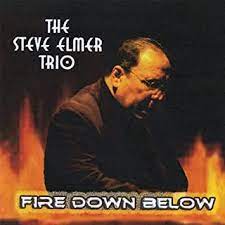
In 2006, Steve recorded I Used To Be Anonymous, featuring nine original compositions. The trio toured Japan, recorded Fire Down Below, their second CD, in 2008 featuring ten more of his original compositions and a lot of classic jazz playing. Pianist and drummer Steve Elmer is looking forward to a return to Japan and recording his first solo piano album.
More Posts: bandleader,composer,drums,history,instrumental,jazz,music