

Daily Dose Of Jazz…
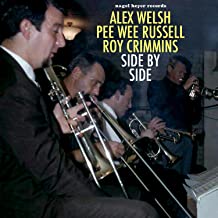
Roy Crimmins was born in London, England on August 2, 1929. Originally self-taught, he was later mentored by the American bass trombonist with the Philarmonia Orchestra, Ray Premru, and the then Ted Heath principal trombonist, Don Lusher. He turned professional when he joined the Mick Mulligan band in 1952.
Collaborating with Alex Welsh in 1954, the pair started their own band and recorded with American guest stars such as the clarinetist Pee Wee Russell and Wild Bill Davison. For the next decade they performed until Roy moved to Germany in 1965 where he kept a consistent line-up and a regular group. Residing in Switzerland from 1970 until 1977 he formed his own band under the pseudonym Roy King and recorded three albums.
Touring Europe extensively during this era, he had his own television show in Vienna, Austria for five years. The late 1970s saw Crimmins returning to England and working once again with Welsh until he died in 1982. In the mid-1980s he was approached to join his Benny Goodman and Duke Ellington orchestras,interpreting the original Lawrence Brown, Tricky Sam Nanton and Juan Tizol trombone solos. He performed at the Nice and North Sea Jazz Festivals.
As an advisor to the Mayor of Eilat, Israel, his involvement in this venture led to the renowned Red Sea Jazz Festival. Soon after, Roy and his family moved to Tel Aviv, Israel where he established the Israel Jazz Ensemble, and was commissioned by Musica Nova to write a concerto, which premiered in the Tel Aviv Museum of Art to great acclaim. His music is still broadcast regularly.
Trombonist, composer and arranger Roy Crimmins, whose career spanned over fifty years, passed away on August 27, 2014 at the age of 85. He is buried on a hill overlooking the Sea of Galilee.

More Posts: arranger,composer,history,instrumental,music,trombone
Daily Dose Of Jazz…
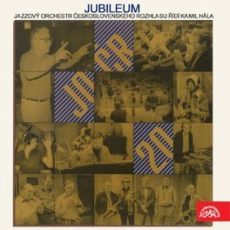
Kamil Hala was born on August 1, 1914 in Most, Czechoslovakia. During the late Fifties he led his own orchestra. He was a member of the Czechoslovak Radio Dance Orchestra beginning in 1960, starting as a pianist and later as its arranger and conductor. After the orchestra split in 1963 he was the conductor of the Czechoslovak Radio Jazz Orchestra until the 1990s.
Pianist composer, arranger, and conductor Kamil Hala passed away on October 29, 2014 in Prague, Czechoslovakia.
More Posts: arranger,bandleader,composer,conductor,history,instrumental,jazz,music,piano

Daily Dose Of Jazz…
Jef Gilson was born on July 25, 1926 as Jean~François Quiévreux in Guebwiller, France. As a clarinetist he began playing with Claude Luter in the Boris Vian band. After that stint he switched to the piano. The experience of the Dizzy Gillespie Big Band led him to become an arranger and big band leader. In his band played, among others Bill Coleman, Bernard Vitet, Jean-Louis Chautemps, François Jeanneau, Michel Portal, Jean-Luc Ponty, Bernard Lubat, Lloyd Miller and Henri Texier.
For a time he was musical director of the vocal sextet Les Double Six. Gilson’s free jazz recordings did not materialize into success, and in 1968 he temporarily went to Madagascar. His 1971 return saw him concentrating first on ethno jazz, then total improvisation. In 1973 he founded his label Palm, and released recordings with his orchestra Europamerica, and with Butch Morris. For this more arranged record, which started reflecting his achievements of free jazz, he was awarded the 1978 Prix Boris Vian.
Up to his final days he lived withdrawn in Ardèche, France. Pianist, arranger, composer and big band leader Jef Gilson passed away on February 5, 2012.

More Posts: arranger,bandleader,composer,history,instrumental,jazz,music,piano
Daily Dose Of Jazz…
Albert Laurence Di Meola was born July 22, 1954 in Jersey City, New Jersey and grew up in Bergenfield, New Jersey where he got his education through high school. When he was eight years old, he was inspired by Elvis Presley and the Ventures to start playing guitar. His teacher directed him toward jazz standards.
Attending Berklee College of Music in the early 1970s, by nineteen he was hired by Chick Corea to replace Bill Connors in the pioneering jazz fusion band Return to Forever with Stanley Clarke and Lenny White. He recorded three albums with the band, all of which cracked the Top 40 U.S. Billboard pop albums chart. After the group disbanded in 1976, Al set out on a solo recording career demonstrating his mastery of jazz fusion, flamenco, and Mediterranean music.
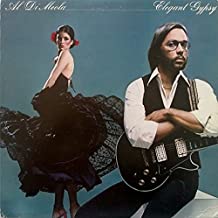
His debut solo album Land of the Midnight Sun in 1976 led to his follow-up His 1977 sophomore album Elegant Gypsy that went gold. His early albums were influential among rock and jazz guitarists. He went on to explore Latin music within jazz fusion, the electronic side of jazz, and along with Jan Hammer and Jeff Beck composed the Miami Vice theme.
Throughout his career he explored his acoustic side, world music and modern Latin styles in addition to jazz and rediscovering his love of the electric guitar in 2006, In 2018, Di Meola was awarded an honorary doctorate of music from his alma mater, Berklee College of Music.
Guitarist Al Di Meola, who cites his jazz influences as guitarists George Benson, Kenny Burrell, Clarence White and Doc Watson, continues to push the envelope with his music.
More Posts: bandleader,composer,guitar,history,instrumental,jazz,music
Daily Dose Of Jazz…
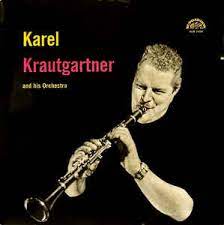
Karel Krautgartner was born on July 20, 1922 in Mikulov, Moravia into the family of a postmaster. He began studying clarinet on a private basis with Stanislav Krtička, and performed a demanding part of the Concertino by Leoš Janáček at the composer’s request at the festival of contemporary music in Frankfurt am Main, Germany in 1926. Acquiring the necessary skills of clarinet playing, and a fanatic passion for clarinet construction and components – reeds, mouthpieces, and barrels, which he later used his knowledge of wind instruments as a lecturer at German universities in Cologne and Düsseldorf.
In 1930 he began playing piano and by 1935 after moving to Brno, Czech Republic he became interested mainly in jazz radio broadcasts. 1936 saw Karel founding the student orchestra Quick band. In 1942, he signed his first professional contract as a saxophonist in the Gustav Brom orchestra in the hotel Passage in Brno. A year later he created Dixie Club and started to arrange in the Benny Goodman and Glenn Miller styles. From 1945 – 1955, the core of the Dixie Club moved to Prague and became a part of the Karel Vlach Orchestra.
He achieved a privileged position as the leader of the saxophone section and started to contribute with his own compositions. In 1956,along with Karel Velebný he put together the Karel Krautgartner Quintet, performed with the All Star Band, and with Studio 5. During the Sixties he became the head of the Dance Orchestra of Czechoslovakia Radio, renamed the Karel Krautgartner Orchestra. In 1968 he emigrated to Vienna, Austria and became the chief conductor of the 0RF Bigband. He eventually moved to Cologne, Germany. Clarinetist, saxophonist, arranger, composer, conductor and educator Karel Krautgartner passed away on September 20, 1982.
More Posts: arranger,clarinet,composer,conductor,educator,history,instrumental,jazz,music,saxophone