

Daily Dose Of Jazz…
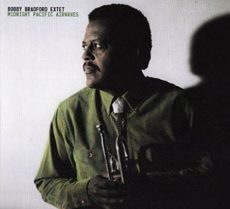
Bobby Lee Bradford was born July 19, 1934 in Cleveland, Mississippi and at age eleven his family moved to Dallas, Texas in 1946. He moved to Los Angeles, California in 1953 where he reunited with childhood friend from Texas, Ornette Coleman. He subsequently joined Coleman’s ensemble but was drafted into the U.S. Air Force and replaced by Don Cherry.
After playing in military bands from late 1954 to late 1958, Bradford reunited with Coleman’s quartet from 1961 to 1963, infrequently performing in public, but prolifically recorded under Coleman’s Atlantic contract. Unfortunately these tapes were among those many destroyed in the Great Atlantic Vault Fire. Returning to the West Coast to pursue further studies, he would eventually receive his B.M. degree from Huston-Tillotson College.
He soon began a long-running and relatively well-documented association with the clarinetist John Carter, a pairing that brought both increased exposure at international festivals. Following Carter’s death in 1991, Bobby fronted his own ensemble known as The Mo’tet.
Bradford has performed with Eric Dolphy, Leon “Ndugu” Chancler, Ingebrigt Håker-Flaten, Bob Stewart, Charlie Haden, George Lewis, James Newton, Frode Gjerstad, Vinny Golia, Nels Cline, William Parker, Paal Nilssen-Love, and David Murray, among others.
An educator, he is a professor at Pasadena City College in California and Pomona College in Claremont, California, where he teaches The History of Jazz. Trumpeter and cornetist Bobby Bradford is the father of drummer Dennis Bradford and jazz vocalist Carmen Bradford. He has recorded eight albums as a leader, ten as a co-leader, seventeen as a sideman and continues to perform with his group The Mo’tet.


Daily Dose Of Jazz…
Warren Smith was born on May 17, 1908 in Middlebourne, West Virginia and and taught by hi s multi-instrumentalist father, he began playing piano from age seven. He learned cornet and saxophone before settling on the trombone.
Starting out in Harrison’s Texans, a territory band in the 1920s, Smith followed with an extended half-dozen year run in Abe Lyman’s employ in the 1930s. He worked with Bob Crosby in Indianapolis, Indiana during late in the 1930s before returning to work with Lyman briefly and closing out the decade.
Moving to Chicago, Illinois in the Forties, he settled in with Bud Jacobson and Bob Scobey, before heading to the West Coast to work with Jess Stacy and Lu Watters. In 1955 he toured with Duke Ellington, then played with Joe Darensbourg from 1957 to 1960. Through the Sixties he performed with Wild Bill Davison and Red Nichols.
On August 28, 1975 in Santa Barbara, California swing and mainstream trombonist Warren Smith, who never led a recording session but was fortunate to be able to make his living performing, passed away of natural causes at age 67.
Sponsored By


#preserving genius
Daily Dose Of Jazz…
Jerry Rusch was born Jerome A. Rusch on May 8, 1943 in St. Paul, Minnesota and studied at the University of Minnesota from 1962 to 1964. Afterward he played trumpet in an Army Reserve band before moving to Los Angeles, California in 1966.
During his time in Los Angeles Rusch played with the Gerald Wilson Big Band beginning in 1967, then backed Ray Charles from 1972 to ‘73, followed by Clifford Jordan, Joe Henderson, Willie Bobo, Louie Bellson, Teddy Edwards, Frank Foster, and Thad Jones & Mel Lewis.
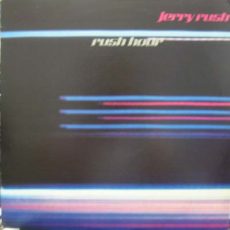
He played with Joe Haider’s orchestra in Europe from 1982 to 1984. As a leader he recorded five albums, Rush Hour on Inner City Records, Native L.A., Bright Moments and Back Tracks for Jeru and Serenata on Jazzschool Records. As a sideman Jerry recorded extensively; among his credits are work with Charles Kynard, Benny Powell, Stan Kenton, Moacir Santos, Henry Franklin, and Eddie Cleanhead Vinson.
Not limiting himself to jazz he also backed Gladys Knight, the Rolling Stones, Smokey Robinson, Diana Ross, and The Temptations. Though uncredited, he was one of the cornet players in the final parade scene in the 1962 film, The Music Man along with member of the University of Southern California’s marching band, the Spirit of Troy, and many junior high school students from Southern California.
Trumpeter, cornetist and composer Jerry Rusch, who was also credited as Jerry Rush, passed away from liver cancer on May 5, 2003 in Las Vegas, Nevada.
Sponsored By

Voices From The Community
#preserving genius

Daily Dose Of Jazz…
Bix Beiderbecke was born Leon Bismark Beiderbecke on March 10, 1903 in Davenport, Iowa and began playing piano at age two standing on the floor and playing with his hands over his head. At seven he was lauded in the Davenport Daily Democrat tas being able to play any selection he hears. At age ten he slipping aboard one or another of the excursion boats to play the Calliope or at home trying to duplicate the silent matinee melodies.
His love of jazz came from listening to records by the Original Dixieland Jazz Band his brother brought him and from the excursion boats that stopped on the Mississippi. Bix taught himself to play cornet largely by ear listening to Nick LaRocca’s horn lines, leading him to adopt a non-standard fingering creating his original sound.
While attending Davenport High School from 1919 to 1921 he played professionally with various bands, including those of Wilbur Hatch, Floyd Bean and Carlisle Evans, and in 1920 Beiderbecke performed for the school’s Vaudeville Night, singing in a vocal quintet called the Black Jazz Babies and playing his horn. However, due to his inability to read music he never got his union card.
Enrolled at the exclusive Lake Forest Academy, north of Chicago, Bix would often jump a train into Chicago, Illinois to catch the hot jazz bands at clubs and speakeasies, sometimes sit in with the New Orleans Rhythm Kings and go to the Southside to listen to Black musicians who he referred to as real jazz musicians. Soon after, Beiderbecke began pursuing a career in music, moved to Chicago, joined the Cascades Band and gigged around the city until the fall of 1923.
He first recorded with Midwestern jazz ensembles, The Wolverines and The Bucktown Five in 1924, after which he played briefly for the Detroit-based Jean Goldkette Orchestra before joining Frankie “Tram” Trumbauer for an extended gig at the Arcadia Ballroom in St. Louis. In 1926 Beiderbecke and Trumbauer joined Goldkette, touring widely and famously played a set opposite Fletcher Henderson at the Roseland Ballroom in New York City. He made his greatest recordings Singin’ the Blues and I’m Coming, Virginia in 1927 and the following year the pair left Detroit for New York City and the best-known dance orchestra in the country: the Paul Whiteman Orchestra.
During the Whiteman period Bix suffered a precipitous decline in his health, brought on by the demand of the bandleader’s relentless touring and recording schedule in combination with his persistent alcoholism. Support from family and Whiteman along with rehabilitation centers did not help to stem his drinking or decline.
Cornetist, jazz pianist, and composer Bix Beiderbecke, one of the most influential jazz soloists of the Twenties, along with Louis Armstrong and Muggsy Spanier, passed away of lobar pneumonia in his apartment in Sunnyside, Queens, New York on August 6, 1931 at the age of 28.
Sponsored By

#preserving genius
Daily Dose Of Jazz…
George “Little Mitch” Mitchell was born March 8, 1899 in Louisville, Kentucky and took up the cornet at the age of 12, joining a local brass band in Louisville. From 1921-3 he recorded with Johnny Dunn’s Original Jazz Hounds and Johnny Dunn’s Original Jazz Band on the Columbia label.
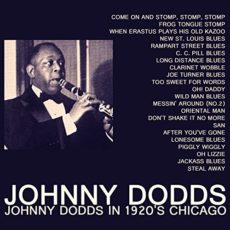
In 1926 Little Mitch recorded with the New Orleans Wanderers and New Orleans Bootblacks, taking the place of the unavailable Louis Armstrong. Shortly afterwards he recorded with Jelly Roll Morton’s Red Hot Peppers. He also went to record with Luis Russell, Johnny Dodds and The Earl Hines Orchestra.
Cornetist George Mitchell ended his active but short career on the 1920s jazz scene around 1931, never leading a recording session, opting to become a bank messenger. He passed away on May 22, 1972 in Chicago, Illinois.
Sponsored By

#preserving genius
More Posts: cornet