

Daily Dose Of Jazz…
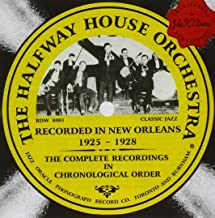
Abbie Brunies was born Albert Brunies on January 19, 1900 into a famous New Orleans, Louisiana family, which counted among its members George Brunies and Merritt Brunies.
Brunies was the leader of the Halfway House Orchestra from 1919 to about 1927, playing at the Halfway House club in New Orleans. This ensemble recorded for Okeh Records in 1925. Among the musicians who played in this group were New Orleans Rhythm Kings members Charlie Cordella, Mickey Marcour, Leon Rappolo, Sidney Arodin, Bill Eastwood, Joe Loyacano and Leo Adde.
>He played in New Orleans into the mid-1940s, after which time he moved to Biloxi, Mississippi. There he played with Merritt in the Brunie Brothers Dixieland Jazz Band. This ensemble recorded sparsely. Cornetist Abbie Brunies passed away in Biloxi on October 2, 1978.

More Posts: bandleader,cornet,history,instrumental,jazz,music
Daily Dose Of Jazz…
Olu Dara was born Charles Jones III on January 12, 1941 in Natchez, Mississippi. After moving to New York City In 1963, he changed his name to Olu Dara, which means “God Is Good” in the Yoruba language. In the Seventies and Eighties, he played alongside David Murray, Henry Threadgill, Hamiet Bluiett, Don Pullen, Charles Brackeen, James Blood Ulmer, and Cassandra Wilson. He formed two bands, the Okra Orchestra and the Natchezsippi Dance Band.
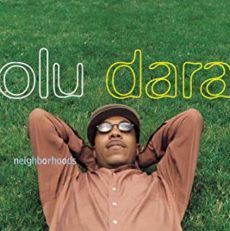
His first album, In the World: From Natchez to New York, released in 1998, revealed another aspect of his musical personality: the leader and singer of a band immersed in African-American tradition, playing an eclectic mix of blues, jazz, and storytelling, with tinges of funk, African popular music, and reggae. His second album Neighborhoods, with guest appearances by Dr. John and Cassandra Wilson, followed in a similar vein.
Dara played on the 1994 album Illmatic, on the song Dance, and he sang on the 2004 song Bridging the Gap, all by his son, rapper Nas. Besides recording two albums as a leader, cornetist, guitarist and singer Olu Dara has recorded fifty-four as a sideman with the likes of Doug Carn, Oliver Lake, Julius Hemphill, Nona Hendryx, The Be Good Tanyas, Rickie Lee Jones, Terumasa Hino, Jack McDuff, Dirty Dozen Brass Band, and James Newton, among others.
More Posts: bandleader,cornet,guitar,history,instrumental,jazz,music,vocal
Daily Dose Of Jazz…
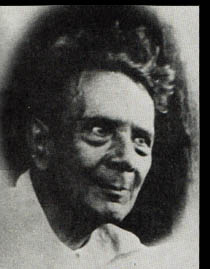
Emanuel Perez was born on December 28, 1871 in New Orleans, Louisiana into a Creole of Color family of Spanish, French and African descent. At the turn of the century, he became a member of the Onward Brass Band, leading it from 1903 to 1930. The Onward Brass Band was one of the most respected of its day that included King Oliver, Peter Bocage, Henry Kimball, Lorenzo Tio, Luis Tio, George Baquet, Isidore Barbarin, and Benny Williams. The Perez and Oliver two cornet, or “trumpet” team, was one of the most renowned in New Orleans.
Manuel started his own brass band, called the Imperial Orchestra, which operated from 1901 to 1908. A move north to Chicago, Illinois in 1915 saw him playing with Charles Elgar’s Creole Orchestra at the Arsonia Cafe and also with the Arthur Sims Band. Returning to the Crescent City in the Twenties, he played in Storyville, on steamboat excursions with Fate Marable and in parades with the Maple Leaf Orchestra.
Suffering a stroke in 1930, he left music during this period to work with his brother, who owned a moving company, while he ran the used furniture store. Cornetist Manuel Perez, who was a sight-reader and highly technical musician, He would go on to suffer a series of strokes that left him disabled and eventually caused his death in 1946 in New York City.
More Posts: cornet
Daily Dose Of Jazz…
Ernie Carson was born December 4, 1937 in Portland, Oregon. He played trumpet from elementary school, and played with the Castle Jazz Band in the mid-1950s prior to a stint in the U.S. Marines.
Following his discharge Ernie moved to and worked in Los Angeles, California with Dave Wierbach, Jig Adams, Ray Bauduc, Pat Yankee, and Turk Murphy. He led several of his own groups from the 1970s, including the Capital City Jazz Band and a new version of the Castle Jazz Band.
After more than twenty years of playing based in Atlanta, Georgia he moved back to his hometown in 1995. Dixieland jazz revival cornetist, pianist and singer Ernie Carson, who left a small catalogue of music as his legacy, passed away on January 9, 2012 in Portland, Oregon.

Daily Dose Of Jazz…
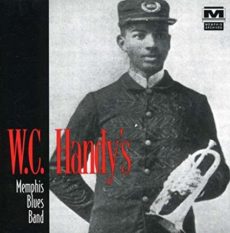
William Christopher Handy was born on November 16, 1873 in a log cabin built by his grandfather in Florence, Alabama. Because his father believed musical instruments were tools of the devil, he purchased his first guitar without his parents’ permission, that he secretly saved for by picking berries and nuts and making lye soap. Upon seeing the guitar his father ordered him to return it, but also arranged short-lived organ lessons, moving on to learn to play the cornet. Secretly he joined a local band, purchased a cornet from a fellow band member and spent every free minute practicing it.
After working for a time on a “shovel brigade” at the McNabb furnace, in 1892 Handy travelled to Birmingham, Alabama, passed a teaching exam and began teaching. Finding the compensation too little, he quit, got a job in a pipe plant, put together a small string orchestra and taught musicians how to read music. He later organized the Lauzetta Quartet, ventured to St. Louis, Missouri and founding working conditions deplorable, so they disbanded.
Handy would go on to Evansville, Indiana, play the cornet in the Chicago World’s Fair in 1893, join a successful band that performed throughout the neighboring cities and states and worked as a first tenor vocalist in a minstrel show, a band director, choral director, cornetist and trumpeter.
At the age of 23, he was the bandmaster of Mahara’s Colored Minstrels and over a three-year tour, they toured to Chicago, throughout Texas, Oklahoma, Tennessee, Georgia, Florida, Cuba and Alabama at the end. Weary of life on the road, he and his wife, Elizabeth, settled in his nearby hometown of Florence and he became a faculty member at Alabama and Mechanical University from 1900 to 1902.
W.C. traveled throughout Mississippi, listening to various styles of black popular music, and with his remarkable memory would recall and transcribe the music later. He rejoined the Mahara Minstrels, toured the Midwest and Pacific Northwest, and became the director of a black band in Clarksdale, Mississippi. By 1909 he and his band moved to Memphis, Tennessee, where the publication of his Memphis Blues sheet music introduced his style of 12-bar blues, credited as the inspiration for the foxtrot dance step. By the time he was 40, he had established his musical style, his popularity had greatly increased, he was a prolific composer and a successfully profitable music publisher.
He founded the Handy Record Company, gained widespread popularity with the Bessie Smith recording of his Saint Louis Blues with Louis Armstrong, published several books including an autobiography and went blind after a fall from a subway platform. He later suffered a stroke and on March 28, 1958, W. C. Handy, The Father of the Blues, passed away from bronchial pneumonia at Sydenham Hospital in New York City.
More Posts: cornet