


Daily Dose Of Jazz…
Paul Wesley “Doc” Evans was born on June 20, 1907 in Spring Valley, Minnesota and learned piano and drums as a child. He went on to play saxophone in high school and during his college years played with the Carleton Collegians. By the late Twenties gave up saxophone for the cornet to play Dixieland in Minneapolis.
Doc played through the Great Depression, turning down offers to play outside of the Midwest. In 1947 he recorded for Disc Records and led the band that played for the opening of Chicago Jazz Limited club. He stayed in Chicago until 1952, and then embarked on nationwide tours, recording frequently along the way, particularly for Audiophile Records.
He returned to Minneapolis and continued playing jazz up until his last recordings in 1975. He founded the Bloomington Symphony Orchestra and conducted it until his death on January 10, 1977 in Minneapolis, Minnesota. His legacy was marked in 1999 with the yearly Doc Evans Jazz Festival, founded in Minnesota.

Inspire A Young Mind
More Posts: cornet
Daily Dose Of Jazz…
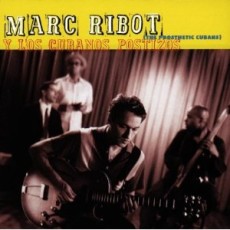
Marc Ribot was born on May 21, 1954 in Newark, New Jersey and worked extensively as a session musician. His early sessions with Tom Waits helped define Waits new musical direction in 1985.
His own work has touched on many styles, including n wave, free jazz and Cuban music. Ribot’s first two albums featured The Rootless Cosmopolitans, followed by an album of works by Frantz Casseus and Arsenio Rodriguez. Further releases found him working in a variety of band and solo contexts including two albums with his self-described “dance band”, Marc Ribot y Los Cubanos Postizos.
His relatively limited technical facility is due to learning to play right-handed despite being left-handed. He currently performs and records with his group Marc Ribot’s Ceramic Dog. Marc’s studio work involves several tracks accompanying the legendary pianist McCoy Tyner’s “Guitars” project. He has performed and recorded with Jack McDuff, John Scofield, Wilson Pickett, Cibo Matto, Bela Fleck, Derek Trucks, Madeline Peyroux, Medeski Martin & Wood, Elton John and many others.
He has toured Europe with his band Sun Ship, had a biographical documentary film called the The Lost String and has also judged the 8th Annual Independent Music Awards to support indie careers in music. He has twenty-one albums as a leader, a filmography that includes five and a biographical documentary about him titled The Lost String. Guitarist Marc Ribot also plays banjo, trumpet, cornet and sings and continues to perform, record and tour.
Dose A Day-Blues Away
Daily Dose Of Jazz…
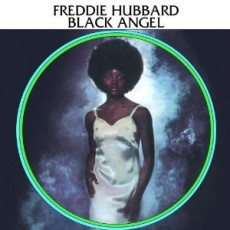
Frederick Dewayne Hubbard was born on April 7, 1938 in Indianapolis, Indiana and started playing the mellophone and trumpet in his school band at Arsenal Technical High School. Upon the recommendation of one-time Stan Kenton sideman, trumpeter Lee Katzman, he began studies at the Arthur Jordan Conservatory of music. During his teens he played with Wes and Monk Montgomery, bassist Larry Ridley and James Spaulding.
1958 saw a 20-year old Hubbard in New York working with the likes of Philly Joe Jones, Sonny Rollins, Slide Hampton, Eric Dolphy, J. J. Johnson and Quincy Jones. Three years later in ’61 he recorded his debut as a leader, Open Sesame with Tina Brooks, McCoy Tyner, Sam Jones and Clifford Jarvis. That same year he replaced Lee Morgan in Art Blakey’s Jazz Messengers and for the next five years played and recorded on a succession of albums. Leaving Blakey in 1966 he formed the first of several small groups with among others Kenny Baron and Louis Hayes.
Throughout his hard bop and post bop career he recorded profusely for Blue Note, Atlantic, CTI, Columbia and a host of subsidiaries and smaller labels playing with the likes of Ornette Coleman, John Coltrane, Wayne Shorter, Eric Dolphy, Don Cherry, Herbie Hancock, Oliver Nelson, Stanley Turrentine, George Benson, Richard Wyands, Eric Gale, Ron Carter, Jack DeJonette, Dexter Gordon, Curtis Fuller and the list goes on.
Freddie Hubbard, NEA Jazz Master, had an unmistakable and influential tone that greatly contributed to new perspectives for modern jazz and bebop. He passed away from a heart attack on December 29, 2008.
More Posts: cornet,flugelhorn,french horn,mellophone,trumpet
Daily Dose Of Jazz…
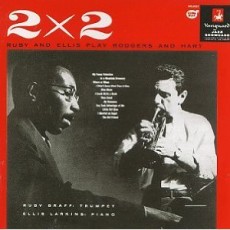
Reuben “Ruby” Braff was born on March 16, 1927 in Boston, Massachusetts He began playing in local clubs in the 1940s and in 1949, and he was hired to play with the Edmond Hall Orchestra at Boston’s Savoy Cafe. Ruby teamed up with Pee Wee Russell when the clarinet was making a comeback and they recorded several sessions for Savoy Records.
Relocating to New York in 1953 Braff easily fit into a variety of Dixieland and mainstream settings becoming in demand for band dates and recordings. He recorded as both leader and sideman working with such names as Vic Dickinson, Buck Clayton, Urbie Green, Ellis Larkins and Benny Goodman.
In the Sixties he was a member of George Wein’s Newport All-Stars but for a number of years work was hard to come by for the Dixieland player until the 70s when he formed a quartet in 1973. Following this he freelanced in different small combos and duets ultimately recording with Scott Hamilton’s quintet and sparring with guitarist Howard Alden.
Ruby Braff, cornetist and trumpeter who played in the genres of Dixieland, mainstream jazz and swing passed away on February 10, 2003 in Chatham, Massachusetts.
Daily Dose Of Jazz…
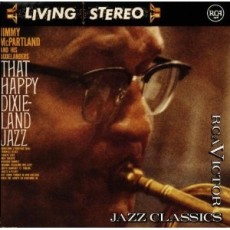
James Dugald McPartland was born on March 15, 1907 in Chicago, Illinois and due to family problems caused Jimmy and his siblings to be partly raised in orphanages. After being kicked out of one orphanage for fighting, he got in further trouble with the law. Fortunately, he had started violin at age 5, then took up the cornet at 15 and credits music with turning him around.
A member of the legendary Austin High Gang in the 920s, they would study and attempt duplication of recordings by The New Orleans Rhythm Kings and visit with Louis Armstrong and King Oliver’s Creole Jazz Band at Lincoln Gardens. After playing through high school, their first musical job was under the name The Blue Friars. In 1924, at age 17, McPartland was then called to New York to take Bix Beiderbecke’s place in the Wolverine Orchestra and who gave him a cornet he would play throughout his career.
From 1926 to the end of the decade, Jimmy worked with Art Kassel, the McKenzie-Condon Chicagoans, Ben Pollack and Benny Goodman, moonlighted in Broadway pit bands and played in a number of small combos. By the thirties he was back in Chicago working with his brother at the Three Deuces and working with other bands around the city. He spent time in South America, returned and led his own bands until drafted into WWII.
Upon his return McPartland worked with Willie “The Lion” Smith’s band that won a Grammy for the soundtrack to the 1954 film After Hours. He soon met and married Marian, encouraged her to form her own group and subsequently landed a long residency at the Hickory House. Jimmy went on to try his hand at acting resulting in a featured role in a Sal Mineo and Ralph Meeker episode “The Magic Horn” on The Alcoa Hour in 1956.
Over the course of his career James McPartland has played with Gene Krupa, Jack Teagarden, Eddie Condon, Pee Wee Russell, Bud Freeman, Glenn Miller, Benny Goodman, Lil Armstrong and George “Pops” Foster to name a few while also guest starring with many bands and at festivals around the world. Although he and Marian divorced in 1970, they remained friends, worked together and remarried shortly before his death of lung cancer on March 13, 1991 in Port Washington, New York, two days shy of his 84th birthday.
More Posts: cornet