


Daily Dose Of Jazz…
Warren Vaché, born February 21, 1951 in Rahway, New Jersey came from a musical family. His father was a bassist, author of several jazz books and a critic, while his mother was a secretary at Decca Records. He began playing piano in the third grade but soon switched to trumpet so he could play in the fourth grade band and his father immediately bought him a cornet.
Over the years Warren has looked to Louis Armstrong, Roy Eldridge, Bobby Hacket, Fats Navarro, Tom Harrell and Ruby Braff as his sources of inspiration. Throughout high school and while attending Montclair State College he played gigs from dance to weddings and all kinds of receptions.
Part of his formal training by studying under Pee Wee Erwin and continued with him playing in polka, Dixieland, big dance and Broadway pit bands, as well as small jazz groups and large free-wheeling combos.
His first professional job was with the Billy Maxted band in Detroit in 1972. From there he ventured on to play th Broadway production of Mr. Jazz, work with George Wein and finally landing in Benny Goodman’s band. There he played with Hank Jones, Urbie Green, Zoot Sims and Slam Stewart.
He became part of the Condon’s house band, had his debut release, First Time Out on the Monmouth label, but Concord Records gave him his biggest exposure working with Scott Hamilton, John Bunch, Jake Hanna and Cal Collins. He has also worked with Bucky Pizzarelli and Howard Alden.
Swing master cornet, flugelhorn and trumpeter Warren Vaché currently maintains a full schedule of recording, worldwide festivals appearances, Broadway and club dates.

Give The Gift Of Knowledge
More Posts: cornet,flugelhorn,trumpet
Daily Dose Of Jazz…
Graham Haynes was born September 16, 1960 in Brooklyn, New York the son of drummer Roy Haynes. With aspirations to push jazz beyond its traditional boundaries, his first foray into electronic music came in 1979 with meeting alto saxophonist Steve Coleman. Together, they formed a band called Five Elements, which launched the influential group of improvisers called M-Base Collective.
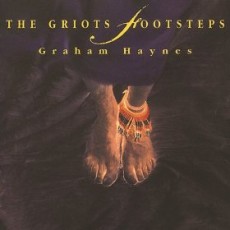
With the formation of his own ensemble, Graham Haynes and No Image and subsequent release of What Time It Be?, he spent much of the Eighties studying a wide range of African, Arabic and South Asian Music. Then in 1990 a move to France incorporated these far-off influences into his next two releases, Nocturne Parisian and The Griot’s Footsteps.
Haynes returned to New York City in 1993, took advantage of the flourishing Hip-Hop scene and released the sample heavy album Transition. He recorded another hybridized album in 1996, Tones For The 21st Century, then discovered drum ‘n’ bass and began working with some of the genres finest DJs and producers in London and the U.S. This manifested in the 2000 release of BPM, a fusion of drum n’ bass beats with the classical music of Richard Wagner.
Over the years, Haynes has kept busy with several critically acclaimed multimedia projects, composing scores for films Flag Wars and The Promise, and as a lecturer at New York University. He received two nominations for the Alpert Award For The Arts.
He has collaborated with his father, Cassandra Wilson, Jaki Byard, Uri Caine, Vernon Reid, Me’Shell Ndegeocello, The Roots, David Murray, George Adams, Ed Blackwell, Bill Laswell, Steve Williamson and Bill Dixon to name a few. With ten albums under his belt, cornetist, trumpeter and composer Graham Haynes continues to push the envelope in his performance, recording and composing.
Inspire A Young Mind
Daily Dose Of Jazz…
Red Nichols was born Ernest Loring Nichols on May 8, 1905 in Ogden, Utah. A child prodigy, he learned to play the cornet and by the age of twelve he was playing difficult set pieces for his father’s brass band. Hearing the early recordings of the Original Dixieland Jazz Band, and later those of Bix Beiderbecke, they had a strong influence and his style became polished, clean and incisive.
In the early 1920s, Nichols moved to the Midwest and joined a band called The Syncopating Seven, then joined the Johnny Johnson Orchestra and went with it to New York City in 1923. In New York he met and teamed up with trombonist Miff Mole and the two of them were inseparable for the next decade.
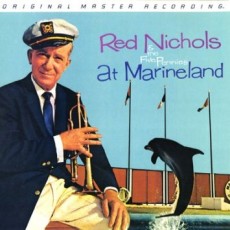
Nichols had good technique, could read music, and easily got session and studio work. In 1926 he and Miff Mole began a prodigious stint of recording over 100 sides for the Brunswick label, with a variety of bands, most of them known as “Red Nichols and His Five Pennies”. Very few of these groups were actually quintets; the name was simply a pun on “Nickel”, since there were “five pennies” in a nickel
He also recorded under a number of other names, employing Jimmy Dorsey, Benny Goodman, Glenn Miller, Jack Teagarden, Pee Wee Russell, Joe Venuti, Eddie Lang and Gene Krupa among others. He would go on to record for Edison, Victor, Bluebird, Variety and Okeh record labels.
By the time the Swing Era arrived his recording career stalled even though he formed his own band. The transition from Dixieland to swing was not easy for him and the critics who once lauded him now trashed his output. During the Depression he played in show bands and pit orchestras, moved out to California and led Bob Hopes orchestra and during WWII gave up music for an Army commission. After the war he returned to music playing small clubs, hosting jam sessions and getting better engagements at the top clubs in the city – Zebra room, Tudor room in San Francisco’s palace Hotel and Pasadena’s Sheraton.
He toured Europe as a goodwill ambassador for the State Department, performed in Mickey Rooney film Quicksand, and was the subject of This Is Your Life. By 1965 he was in Las Vegas with his band playing the Mint Hotel. Only a few days into the date, he was sleeping in his suite and was awakened by paralyzing chest pains. He managed to call the front desk and an ambulance was summoned, but it arrived too late.
On June 28, 1965, cornetist, composer, and bandleader Red Nichols, rumored to have appeared on over 4000 recordings during the 1920s alone, passed away. That night the band went on as scheduled, but at the center of the band a spotlight pointed down at an empty chair in Nichols’ customary spot. He has been the subject of a film biography portrayed by Danny Kaye, had a cameo in the biopic the Gene Krupa Story and in 1986 was inducted into the Big Band and Jazz Hall of Fame.
Put A Dose In Your Pocket
More Posts: cornet
Daily Dose Of Jazz…
Wynton Learson Marsalis was born October 18, 1961 in New Orleans, Louisiana, the son of a jazz pianist. At an early age he exhibited an aptitude for music and by age eight he was performing traditional New Orleans music in the Fairview Baptist Church band. At 14, he performed with the New Orleans Philharmonic and during high school played with the New Orleans Symphony Brass Quintet, the New Orleans Community Concert Band, the New Orleans Youth Orchestra, the New Orleans Symphony, various jazz bands and with a local funk band, the Creators.
At age 17, Wynton was the youngest musician admitted to Tanglewood’s Berkshire Music Center where he won the school’s Harvey Shapiro Award for outstanding brass student. Moving to New York City he attended Julliard in 1979 and picked up gigs around town. He joined the Jazz Messengers led by Art Blakey in 1980 and in the years that followed he would perform with Sarah Vaughan, Dizzy Gillespie, Sweets Edison, Clark Terry, Sonny Rollins, Ron Carter, Herbie Hancock, Tony Williams and countless other jazz legends.
Marsalis has written, produced and hosted Marsalis On Music, an educational television series on jazz and classical music, National Public Radio aired the first of Marsalis’ 26-week series, titled Making the Music, was awarded a Peabody Award, has written five books, co-founded the jazz program at Lincoln Center that evolved into Jazz at Lincoln Center, opened Frederick P. Rose Hall, the first ever institution for jazz with three performance halls, recording, broadcast, rehearsal and education facilities.
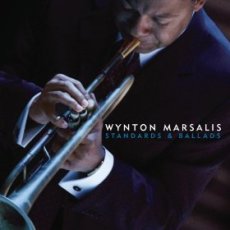
Wynton Marsalis, jazz trumpeter, bandleader, composer and educator is currently the Artistic Director for Jazz at Lincoln Center and Music Director for the Jazz at Lincoln Center Orchestra. He was won nine Grammy Awards in both jazz and classical genres, and received the first ever Pulitzer Prize for Music.
Jazz Is Global – Share
More Posts: cornet,flugelhorn,flumpet,trumpet
Daily Dose Of Jazz…
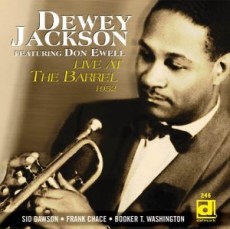
Dewey Jackson was born on June 21, 1900. A trumpeter and cornetist, he began playing professionally at an early age, with the Odd Fellows Boys’ Band in 1912, then Tommy Evans from 1916-17 and George Reynold’s Keystone Band.
He played the riverboats with Charlie Creath and then led his own Golden Melody Band from 1920 to 1923. He continued to be a regular performer on riverboats into the early 1940s, heading his own groups and working as a sideman for Creath and Fate Marable. His only major stint off boats during this time was in 1926, when he played for four months with Andrew Preer at the Cotton Club in New York City.
Jackson played little in the 1940s but returned to work in the 1950s with Singleton Palmer and Don Ewell. He recorded only four sides as a leader in 1926. Among his sidemen were Pops Foster, Willie Humphrey, Don Stovall, Morris White and Clark Terry.
Dewey Jackson passed away on January 1, 1994.
Dose A Day – Blues Away