

Daily Dose Of Jazz…
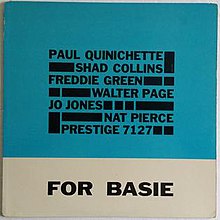
Walter Sylvester Page was born on February 9, 1900 in Gallatin, Missouri on to parents Edward and Blanche Page. Showing a love for music as a child, in 1910 with his mother moved to Kansas City, Missouri and exposed him to folksongs and spirituals, a critical foundation for developing his love of music. He gained his first musical experience as a bass drum and bass horn player in the brass bands of his neighborhood. Under the direction of Major N. Clark Smith, he took up the string bass in his time at Lincoln High School. During that time he also drew inspiration from bassist Wellman Braud, who he had the opportunity to see when he came to town with John Wycliffe.
After completing high school, he went on to study to become a music teacher at the University of Kansas at Lawrence. In college,Walter completed a three-year course in music in one year, in addition to taking a three-year course on gas engines. Between the years 1918 and 1923, he moonlighted as a tuba, bass saxophone, and string bass player with the Bennie Moten Orchestra. In 1923 he left Moten and began an engagement with Billy King’s Road Show, and with Jimmy Rushing and Count Basie, toured the Theater Owners’ Booking Association (TOBA) circuit across the United States.
Walter Page and the Blue Devils was a territory band founded in 1925, based out of the Oklahoma City~Wichita, Kansas area that included Basie, Rushing, Buster Smith, Lester Young, and Hot Lips Page. By 1929 the Blue Devils faced defections of key players, booking problems and musicians’ union conflict, he relinquished control to James Simpson and joined Moten’s band in 1931, staying until 1934. After his second stint with Moten, he moved to St. Louis, Missouri to play with the Jeter-Pillars band. Following the death of Moten in 1935, however, Basie took over the former Moten Band, which Page rejoined.
Staying with the Count Basie Orchestra from 1935 to 1942, Walter was an integral part of what came to be called the “All-American Rhythm Section. Together with drummer Jo Jones, guitarist Freddie Green, and pianist Basie, the rhythm section pioneered the “Basie Sound”, a style in which Page, as bass player, clearly established the beat, allowing his band mates to complement more freely. Until this point, the rhythm of a jazz band was traditionally felt in the pianist’s left hand and the kick of the bass drum on all four beats. In a sense, the classic Basie rhythm section were liberators.
After his first departure from the Count Basie Orchestra, Walter worked with various small groups around Kansas City. He returned to the Basie Band in 1946 for three more years. Bassist and multi-instrumentalist Walter Page, best known for his groundbreaking work with Walter Page’s Blue Devils and the Count Basie Orchestra, passed away of kidney ailment and pneumonia at Bellevue Hospital on December 20, 1957 in New York City.

More Posts: bandleader,bass,bass horn,bass saxophone,drums,history,instrumental,jazz,music,tuba

Requisites
Dr. Jeckyle ~ Art Blakey & The Jazz Messengers | By Eddie Carter
Art Blakey’s impact on the jazz world as a bandleader and drummer offered a creative and unique perspective that helped shape the artistic style of Hard-Bop and Post-Bop for more than three decades. It was this vision that enabled The Jazz Messengers to become one of the greatest ensembles worldwide. Up next from the library is a recent acquisition titled Dr. Jeckyle (Paddle Wheel K28P 6462). Blakey and the band are performing the second of two performances that were recorded on the final two days of 1985 at Sweet Basil in Greenwich Village. Sharing the spotlight with the drummer is Terence Blanchard on trumpet, Tim Williams on trombone, Donald Harrison on alto sax, Jean Toussiant on tenor sax, Mulgrew Miller on piano, and Lonnie Plaxico on bass. My copy used in this report is the 1987 King Record Company Japanese Stereo album.
Fuller Love (also known as In Case You Missed It) by alto saxophonist Bobby Watson opens the album with an aggressive attack by Blakey preceding the speedy melody by the ensemble. Tim begins the solos with an exciting performance. Donald swings with a robust beat on the second statement. Jean takes the reins next for a rousing reading. Mulgrew charges into the last solo with an impeccably hip contribution before the ensemble takes the song out. Dr. Jeckyle comes next with the propulsive power of Blakey’s drums in full effect on the introduction leading to the melody. Blanchard sizzles on the lead solo, then Harrison gives an equally fierce statement. Williams heats things up on the following reading, then Toussiant contributes considerable energy on the fourth scintillating statement. Miller wraps it up with a tidal wave of compelling emotion.
81 by Ron Carter begins Side Two cooking at an easy groove during the ensemble’s opening chorus. Donald kicks off the solos laying down a lively rhythm. Tim moves into the second statement with an easy swing, followed by Jean who gives an intriguing improvisation. Mulgrew strolls into an enjoyable performance on the next reading. Lonnie takes the final spot with an exquisite solo before the close. One By One by Wayne Shorter picks up the pace one final time with the septet at an optimum level on the melody. Harrison flies right out of the gate with a speedy lead statement. Williams steps up next for a heated interpretation, then Toussiant responds with radiant intensity. Blanchard drives into the next reading ferociously, and Miller delivers a closing chorus of incandescent fury ahead of the ensemble’s finale and audience’s ovation.
Dr. Jeckyle was produced by Shigeyuki Kawashima and Horst Liepolt. It was recorded by Kazunori Sugiyama and the album was mixed at King Studio, Japan by Hatsuro Takanami and mastered by Akira Makino. This is a digital recording with a superb soundstage possessing a bright treble, vibrant midrange, and deep bass that’s fun to listen to. Though released three years before Art’s passing in 1990, Dr. Jeckyle is an exhilarating, exciting live album by Art Blakey & The Jazz Messengers that still stands up very well over three decades later and belongs in every jazz fan’s library!

More Posts: choice,classic,collectible,collector,drums,history,instrumental,jazz,music
Daily Dose Of Jazz…
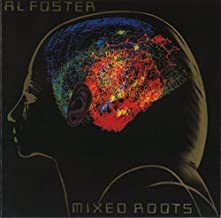
Al Foster was born on January 18, 1943 in Richmond, Virginia and grew up in New York City. He began playing drums at the age of 13 and made his recording debut on Blue Mitchell’s The Thing to Do at age 20.
He joined Miles Davis’s group when Jack DeJohnette left in 1972 and stayed with Davis until 1985. Foster began composing in the 1970’s, and has toured with his own band, including musicians such as bassist Doug Weiss, saxophonist Dayna Stephens, and pianist Adam Birnbaum.
He played with Miles Davis during the 1970s and was one of the few people to have contact with Davis during his retirement from 1975 to 1981. Al also played on Davis’s 1981 comeback album The Man with the Horn. He was the only musician to play in Davis’s band both before and after his retirement.
Other artists Foster has performed and recorded with include Joe Henderson, Freddie Hubbard, McCoy Tyner, Wayne Shorter, Bobby Hutcherson, John Scofield, Pat Metheny, Charlie Haden, Randy & Michael Brecker, Bill Evans, George Benson, Kenny Drew, Carmen McRae, Stan Getz, Toots Thielemans, Dexter Gordon and Chick Corea.
Drummer Al Foster, who has toured extensively with Herbie Hancock, Sonny Rollins, and Joe Henderson continues to engage in jazz.
More Posts: bandleader,drums,history,instrumental,jazz,music
Three Wishes
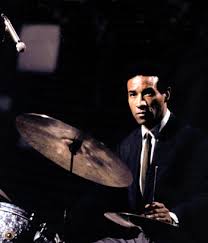
When Panninica asked Max Roach what his three wishes would be, he simply said:
- “Wishes would be a superfluous luxury for me, because I have everything I desire. That’s the most important thing in the world.”
*Excerpt from Three Wishes: An Intimate Look at Jazz Greats ~ Compiled and Photographed by Pannonica de Koenigswarter

More Posts: baroness,drums,history,instrumental,jazz,music,pannonica,three,wishes
Daily Dose Of Jazz…
Albert Francis Jones was born on December 18, 1930 in Philadelphia, Pennsylvania and started to play the drums at the tender age of three. In 1949 he played with Lionel Hampton and with Dizzy Gillespie in 1951~1953 that included four tours of Europe.
In the early Fifties he also worked with Joe Carroll, Miles Davis, Milt Jackson, and Wade Legge. Later that decade he played with Arnett Cobb and accompanied Billie Holiday, Sarah Vaughan, and Dinah Washington.
After touring Europe with alto saxophonist Jackie McLean and the Living Theater of New York in 1962, he permanently moved to Belgium. There he led a group with Jean Fanis and Roger van Haverbeke, that became the house band in a Belgian club. This ensemble played with visiting musicians such as Dexter Gordon, Milt Jackson, Art Farmer, Clark Terry. and Dany Doriz.
Drummer Al Jones passed away in April 1976.
More Posts: drums,history,instrumental,jazz,music