

The Quarantined Jazz Voyager
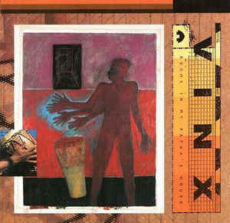
The continual disregard of the health and safety of others during this medical state of our country by certain factions who want the recently removed days of old by contributing new surges in Covid cases, gives me added incentive to remain sequestered and listening to great music. This week I am turning to a resident of Cannes, France and pulling from the shelves the March 12, 1991 released album Rooms In My Fatha’s House by Vinx.
To claim him as a vocalist would be an injustice, Vinx owns the songs on this debut release, where up is the only way he can go. His unique, interpretive phrasing and melodic presentation expresses so much more that I was taken from the first note of his voice, which is why I have enjoyed this over the years and recommend it for your listening pleasure.
The session was produced by Greg Poree, John Eden, Sting, and by Vinx on track 2. It was released on the Pangea record label and distributed by Capitol Records-EMI Of Canada.
Tracklist | 54:43- Tell My Feet ~ 4:44
- I Should Have Told Her ~ 3:41
- My TV ~ 4:19
- While The City Sleeps ~ 4:46
- I’ll Give My All To You ~ 4:23
- Captain’s Song ~ 4:32
- Somehow Did You Know ~ 4:44
- Little Queen ~ 3:44
- Temporary Love ~ 4:07
- Porch Light ~ 6:02
- Don’t Got to Be That Way ~ 5:16
- A Little Bit More ~ 6:24
- Sting ~ Bass, Backing Vocals
- Herbie Hancock ~ Piano
- Sheryl Crow ~ Vocal, Guitar
- Taj Mahal ~ Guitar, Vocal
- Branford Marsalis ~ Saxophone
When the curtain goes up and the pandemic is controlled I will return to flying around the globe discovering the best of jazz. Until that time arrives, stay safe and healthy.
More Posts: adventure,club,drums,genius,jazz,museum,music,preserving,restaurant,travel,vocal

Conversations About Jazz & Other Distractions
Conversations About Jazz
Spotlights The Producers on December 10
Hammonds House Digital invites you to join us for Conversations about Jazz & Other Distractions hosted by former jazz radio host and founder of Notorious Jazz, Carl Anthony. On Thursday, December 10 at 7:30 pm (EST), Carl’s special guests will be some of the industry’s top Producers: Leatrice Ellzy Wright, Executive Director of Hammonds House Museum; Sunny Sumter, Executive Producer of the DC Jazz Festival; and Laura Greer, Senior Producer for The Apollo Theater. This is the last Conversations About Jazz for the year. The program is free and will stream live on Hammonds House Museum’s Facebook and YouTube.
Leatrice Ellzy Wright is a curator, producer, thinker, and fan of disruption. She is the Executive Director of Hammonds House Museum where she curates and produces art exhibitions, as well as cultural and music programming. Her unique skill set has been developed over 29 years of migrating through non-profit management and development, broadcast, media relations, arts presenting and technology. Her arts management and administration experience developed through work at Woodruff Arts Center and the National Black Arts Festival (NBAF). She produced for NBAF from 2002-2005. In 2005 she was hired to manage the organization’s artistic programming and later became the organization’s 5th Artistic Director. More info HERE.
Sunny Sumter is the Executive Director of the DC Jazz Festival, a nonprofit service organization established in 2004 to present jazz-related cultural and educational programs in the nation’s capital. Its signature programs are the annual DC JazzFest held each June, the year-round DC Jazz Festival Education Program; and the Charles Fishman Embassy Series. Prior to her tenure at the DC Jazz Festival, Sumter held management/director positions with the Aspen Institute, National Foundation for Teaching Entrepreneurship, the Smithsonian Institution, and the Rhythm and Blues Foundation. Sumter earned her bachelor’s degree in music business from Howard University where she minored in jazz voice. More info HERE.
Laura Greer is the Senior Producer for The Apollo Theater where she has served for more than a decade overseeing the performing arts, education, and community programs of the historic theater. Prior to her current position, Greer was the Associate Producer at the National Black Arts Festival in Atlanta, Georgia (1999-2005) where she was responsible for the artistic and production oversight of the annual festival. She has also served as the Director of Programming at 651 Arts at the Brooklyn Academy of Music Majestic Theater, specializing in works grounded in the African Diaspora and held various leadership positions at Aaron Davis Hall at City College of New York (1985-1998).
Hammonds House Museum is generously supported by the Fulton County Board of Commissioners, Fulton County Arts and Culture, the City of Atlanta Mayor’s Office of Cultural Affairs, The Community Foundation for Greater Atlanta, The National Performance Network, AT&T and WarnerMedia.
Hammonds House Museum’s mission is to celebrate and share the cultural diversity and important legacy of artists of African descent. The museum is the former residence of the late Dr. Otis Thrash Hammonds, a prominent Atlanta physician and a passionate arts patron. A 501(c)3 organization which opened in 1988, Hammonds House Museum boasts a permanent collection of more than 450 works including art by Romare Bearden, Robert S. Duncanson, Benny Andrews, Elizabeth Catlett, Jacob Lawrence, Hale Woodruff, Amalia Amaki, Radcliffe Bailey and Kojo Griffin. In addition to featuring art from their collection, the museum offers new exhibitions, artist talks, workshops, concerts, poetry readings, arts education programs, and other cultural events throughout the year.
Located in a beautiful Victorian home in Atlanta’s historic West End, Hammonds House Museum is a cultural treasure and a unique venue. During the COVID-19 pandemic, they continue to observe CDC guidelines, but look forward to welcoming in-person visitors soon! For more information about upcoming virtual events, and to see how you can support their mission and programming, visit their website: hammondshouse.org.
MEDIA: Contact Karen Hatchett at Hatchett PR, karen@hatchettpr.com
More Posts: conversations,drums,history,instrumental,jazz,producers
Daily Dose Of Jazz…
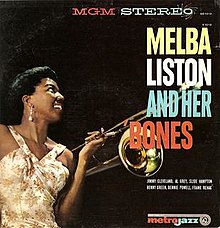
Francis Dunlop was born on December 6, 1928 in Buffalo, New York and began playing guitar at age nine and drums at ten. He was playing professionally by age 16 and received some classical education in percussion. He toured with Big Jay McNeely and recorded with Moe Koffman in 1950 before serving in the Army during the Korean War.
After his discharge, Frankie played with Sonny Stitt, Charles Mingus, Sonny Rollins, Maynard Ferguson, Lena Horne, Duke Ellington, and Thelonious Monk. It is his recordings with the latter two that he is principally remembered. Later in his life, he recorded with Lionel Hampton, Earl Hines, Ray Crawford, and Joe Zawinul.
In 1984, he retired, having recorded on over 100 albums with Wilbur Ware, Randy Weston, Melba Liston, Martin Mull, Dodo Greene, Herman Foster, Bill Barron, Richard Davis, Mose Allison and Leo Wright among many others. Drummer Frankie Dunlop passed away on July 7, 2014.
More Posts: drums,history,instrumental,jazz,music
Daily Dose Of Jazz…
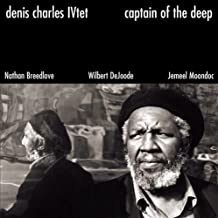
Denis Charles was born in St. Croix, Virgin Islands on December 4, 1933 and first played bongos at age seven with local ensembles in the Virgin Islands. Moving to New York City in 1945, he gigged frequently around town and in 1954 began working with Cecil Taylor, and the pair collaborated for the next four years. Following his work with Taylor, he played with Steve Lacy, Gil Evans, and Jimmy Giuffre. He befriended Ed Blackwell, and the two influenced each other.
Recording with Sonny Rollins on a calypso-tinged set, Denis then returned to play with Lacy until 1964. He worked with Archie Shepp and Don Cherry in ‘67 and then disappeared from the jazz scene until 1971. In the 1970s and 1980s he played regularly on the New York jazz scene with Frank Lowe, David Murray, Charles Tyler, Billy Bang, and others, and also played funk, rock, and traditional Caribbean music.
Between 1989~1992 drummer Denis Charles released three albums as a leader before passing away of pneumonia in his sleep on March 26, 1998 in New York City in 1998, four days after a five-week European tour with the Borgmann/Morris/Charles (BMC) Trio, with Wilber Morris and Thomas Borgmann. In 2002 Veronique N. Doumbe released a film documentary Denis A. Charles: An Interrupted Conversation about his life.
More Posts: bandleader,composer,drums,history,instrumental,jazz,music
Daily Dose Of Jazz…
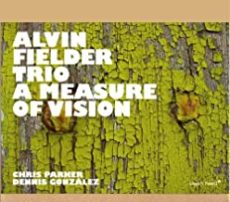
Alvin Leroy Fielder Jr was born November 23, 1935 in Meridian, Mississippi to a mother who played the violin and piano and a father who played the cornet and was a pharmacist by profession. His brother William became a trumpeter. He initially learned the piano as a young child, but stopped and did not regain an interest in music until he was 12 when he heard a Max Roach record. He took drum lessons from Ed Blackwell while studying pharmacology at Xavier University of Louisiana, and then continued his degree at Texas Southern University. He did all this while maintaining his musical development by taking lessons with local drummers and performing at night. He went on to complete his pharmacology studies with a master’s degree from the University of Illinois at Chicago.
In Chicago, Illinois he played with Sun Ra during 1959 and 1960. Encouraged by fellow musicians Muhal Richard Abrams and Beaver Harris, he became more experimental in his playing and went on to be a charter member of the Association for the Advancement of Creative Musicians (AACM). The AACM’s first released recording featured him on Roscoe Mitchell’s Sound. In the mid-to-late 1960s, while working part-time as a pharmacist, Alvin played in his own trio with Fred Anderson and bassist/cellist Lester Lashley.
1969 saw he returned home to Mississippi where he took responsibility for managing the family business, becoming involved in political activism, and continued to pursue his passion for music. In 1971 he met John Reese and helped develop the Black Arts Music Society (BAMS). Fielder was instrumental in bringing many AACM and other musicians to Mississippi. In 1975, he began working with Kidd Jordan in what became the Improvisational Arts band, which featured various musicians over three decades and appeared at the New Orleans Jazz and Heritage Festival every year from 1975 to 2008. In 1995, he participated as a founding faculty member in the Louis “Satchmo” Armstrong Summer Jazz Camp.
He recorded twenty-seven albums with Ahmed Abdullah, Charles Brackeen, Damon Smith, and Dennis Gonzalez, and continued exploring free jazz in the 1990s with Joel Futterman, Kidd Jordan, and others, and toured with Andrew Lamb. He was awarded the Resounding Vision Award by Nameless Sound in Houston, Texas. Drummer Alvin Fielder passed away of complications from congestive heart failure and pneumonia, in Jackson, Mississippi on January 5, 2019.
More Posts: bandleader,drums,history,instrumental,jazz,music