

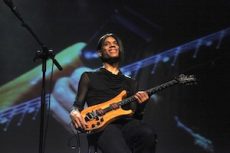
STANLEY JORDAN TRIO
In a career that took flight in 1985 with commercial and critical acclaim, guitar virtuoso and 4-time Grammy nominated Stanley Jordan has consistently displayed a chameleonic musical persona of openness, imagination, versatility and maverick daring.
Be it bold reinventions of classical masterpieces or soulful explorations through pop-rock hits, to blazing straight ahead jazz forays and ultramodern improvisational works-solo or with a group, Jordan can always be counted on to take listeners on breathless journeys into the unexpected.
Stanley has collaborated and share the stage with many greats including Art Blakey, Richie Cole, Stanley Clarke, Kenny Rogers, Kevin Eubanks, Sharon Isbin, Muriel Anderson, the Dave Matthews Band, the String Cheese Incident, Phil Lesh, Moe and Umphrey’s McGee.
The Trio:
Stanley Jordan ~ guitar
Kenwood Dennard ~ drums
Wes Wirth ~ bass
Cover: $45.00 ~ $55.00 | $4.16 ~ $4.86 fee
Streaming: $15.00 + $2.05 fee
More Posts: adventure,bandleader,bass,club,drums,genius,guitar,instrumental,jazz,music,preserving,travel
Requisites
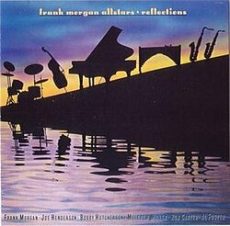
Reflections ~ Frank Morgan Allstars | By Eddie Carter
I discovered Frank Morgan in the 80s while living in Cincinnati, Ohio and listening to WNOP 740 AM, the city’s then jazz station. This morning’s album from the library was his eighth release as a leader and seventh for Lester Koenig’s label. Reflections (Contemporary Records C-14052) by the Frank Morgan Allstars is the only album the group recorded together and isn’t a loose, thrown-together blowing session. The sextet is a powerhouse group of musicians: Frank Morgan on alto sax; Joe Henderson on tenor sax; Bobby Hutcherson on vibraphone; Mulgrew Miller on piano; Ron Carter on bass; and Al Foster on drums. I own the 1989 U.S. stereo release.
The first side gets underway with Old Bowl, New Grits by Mulgrew Miller. The sextet’s easy-flowing melody gives way to Joe’s opening solo, inviting us to settle in. Bobby follows with a blissfully happy reading, then Frank continues motoring along next. Mulgrew gets the final word ahead of the theme's restatement and fade-out. The title track, Reflections by Thelonious Monk, shifts the energy toward Frank and Joe taking center stage for the enticingly delicate theme. Frank shows a tender vulnerability in the first interpretation. Joe takes over with a gracefully emotional response, then Bobby takes a sensitive, poignant turn, leading to the theme’s return and gorgeous ending.
Starting Over by Bobby Hutcherson picks the beat back up with a lively opening ensemble. Bobby comes out swinging hard first, then Frank dives into the second solo with surgical precision. Joe jumps right into the third reading next, then Mulgrew provides the exclamation point, soaring cheerfully into the ensemble’s vigorous reprise and climax. Side Two opens with the rhythm section’s introduction to Black Narcissus by Joe Henderson, segueing into a compelling front-line dialogue between Frank and Joe. Frank paints a delicate palette first, then Joe adds a few more elegant colors. Bobby infuses the third statement with tender beauty, and Mulgrew saves the best for last in a gorgeous finale before the close.
Sonnymoon for Two by Sonny Rollins affords everyone solo space and begins with the trio’s introduction to the sextet’s medium melody. Frank’s first solo is a great example of relaxed lyricism. Bobby follows with a bounce that’s pure artistry. Joe sets up the next reading perfectly, then Mulgrew keeps the line moving forward. Ron takes a short, satisfying walk before Al brings the curtain down, preceding the closing chorus. O.K. by Ron Carter is his tribute to album producer Orrin Keepnews, and the ensemble opens with a leisurely paced theme. The solo order is Frank, Joe, and Mulgrew before the melody’s reprise and Bobby, who gets the last word in a gentle fade to nothingness.
Orrin Keepnews produced the album; Danny Kopelson managed the recording console, and George Horn mastered the album. The recording is fantastic, with an exceptional soundstage and outstanding detail that emerges through your speakers with exceptional fidelity. Reflections by the Frank Morgan Allstars is a gorgeous album with an all- star lineup and a wonderful selection of tunes. If you’re a fan of the alto saxophonist and in the mood for a terrific blend of bop and modal jazz, I invite you to check it out on your next record shop visit. I’m sure it’ll be a welcome addition to your library, and you’ll enjoy it as much as I do!
© 2026 by Edward Thomas Carter

More Posts: bass,choice,classic,collectible,collector,drums,history,instrumental,jazz,music,piano,saxophone,vibraphone
Daily Dose Of Jazz…
Specs Wright was born Charles Wright on September 8, 1927 in Philadelphia, Pennsylvania. He played drums in an Army band until his discharge in 1947. Following this he played in a group with Jimmy Heath and Howard McGhee. By 1949 he had joined Dizzy Gillespie‘s band alongside John Coltrane, remaining until it disbanded in mid-1950.
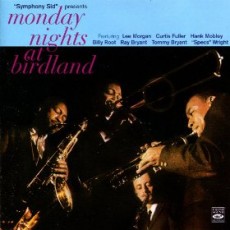
Wright would rejoin Dizzy late in the decade as a member of his sextet with Coltrane, Jimmy Heath, Percy Heath, and Milt Jackson. He would go on to play with Earl Bostic, Kenny Drew, Cannonball Adderley, Art Blakey, and Carmen McRae as well as a member of the Hank Mobley sextet with Billy Root, Curtis Fuller, Ray Bryant, Tommy Bryant, and Lee Morgan.
Not one to be idle, though never a leader, he was a sought after sideman playing with Sonny Rollins, Betty Carter, Red Garland, Coleman Hawkins, and Lambert, Hendricks and Ross in the early Sixties. Drummer Specs Wright passed away on February 6, 1963. He was 36 years old.
More Posts: drums
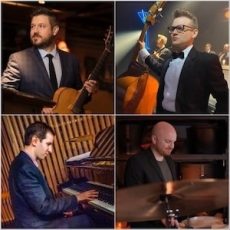
DECHTER | FRANK | SEGIEL | SHAW QUARTET
The quartet frequently performs live at prominent jazz venues like The Baked Potato in Studio City, California, often collaborating with special guest horn players and saxophonists. Guitarist Graham Dechter is known for his work with the Clayton-Hamilton Jazz Orchestra and upright bassist Alex Frank is best known for his work with Jeff Goldblum’s Mildred Snitzer Orchestra.
The Quartet:
Graham Dechter – Guitar
Alex Frank – Upright Bass
Jordon Segiel – Fender Rhodes
Ryan Shaw – Drums
Cover:
$25.00 + $6.25 fee | 1st Set ~ Inside
$20.00 + fee | 2nd Set ~ Inside
$15.00 + fee ~ Patio Seating | Live Video Concert as patio is not inside the club
More Posts: adventure,bandleader,bass,club,drums,genius,instrumental,jazz,music,piano,preserving,travel
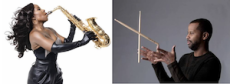
TIA FULLER & LIL’ JOHN ROBERTS
Grammy-nominated saxophonist and composer Tia Fuller has established herself as one of the most compelling voices in modern jazz. Equally at home on the concert stage, in the recording studio, and in the classroom, Fuller is celebrated for her commanding tone, inventive compositions, and electrifying performances. A former member of Beyoncé’s all-female touring band, she has also performed and recorded with jazz luminaries including Esperanza Spalding, Terri Lyne Carrington, Nancy Wilson, and Ralph Peterson. Her critically acclaimed recordings, including the Grammy-nominated Diamond Cut, have solidified her reputation as an artist who effortlessly bridges artistic sophistication and broad audience appeal.
Joining Fuller is world-renowned drummer Lil’ John Roberts, one of the most sought-after drummers in contemporary music. Known for his explosive energy, impeccable groove, and remarkable versatility, Roberts has toured and recorded with an extraordinary roster of artists including Janet Jackson, Stevie Wonder, George Duke, Herbie Hancock, Chaka Khan, and The Crusaders. Together, Fuller and Roberts create a musical chemistry that is both powerful and deeply engaging, blending virtuosity, soul, and spontaneity in every performance.
Cover: $49.00
More Posts: adventure,bandleader,club,drums,genius,instrumental,jazz,music,preserving,saxophone,travel