

Daily Dose Of Jazz…
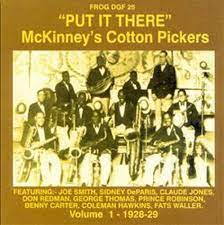
Bill McKinney was born William McKinney on September 17, 1895 in Cynthiana, Kentucky. Early in his career he worked as a drummer in a circus band until he was inducted into the Army in World War I. After service, he settled in Springfield, Ohio where he took over leadership of the Synco Jazz Band.
After hiring drummer Cuba Austin, McKinney worked as leader and business manager. After touring the U.S. Midwest, they got a residency at the Arcadia Ballroom in Detroit, Michigan in 1926. While there, they were heard by bandleader and music promoter Jean Goldkette, who arranged a more lucrative home base for the band in Detroit’s Graystone Ballroom. The band was renamed McKinney’s Cotton Pickers.
During the Great Depression the band broke up in 1934 and Bill led and played with a dance band in Boston, Massachusetts for a time. From 1937 on McKinney managed a Detroit Cafe with a dance floor and live bands who McKinney booked, while booking bands for other locations on the side.
Drummer Bill McKinney retired in the 1950s and spent his last years in his childhood hometown of Cynthiana, where he transitioned on October 14, 1969 at 74.

More Posts: bandleader,drums,history,instrumental,jazz,manager,music
Three Wishes
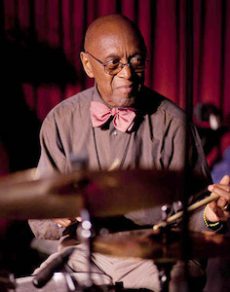
Nica’s curiosity never got the best of her mission to discover the wishes of her guests and when she asked Albert “Tootie” Heath of his three wishes he responded with:
- “Being in more than one place at once.”
- “Being able to do anything I want to do on my instrument.”
- “Happiness.”
*Excerpt from Three Wishes: An Intimate Look at Jazz Greats ~ Compiled and Photographed by Pannonica de Koenigswarter

More Posts: baroness,drums,history,instrumental,jazz,music,pannonica,three,wishes
Daily Dose Of Jazz…
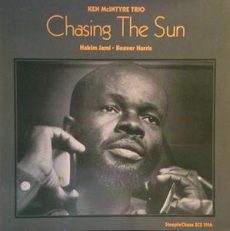
Makanda Ken McIntyre was born Kenneth Arthur McIntyreon on September 7, 1931 in Boston, Massachusetts to a father whoplayed mandolin. He started his musical life on the bugle when he was eight years old, followed by piano. In his teens he discovered the music of Charlie Parker and began playing saxophone at nineteen, then clarinet and flute two years later. Serving in the Army in 1953, for two years he played saxophone and piano in Japan.
Following his discharge Ken attended the Boston Conservatory where he studied with Gigi Gryce, Charlie Mariano, and Andy McGhee. In 1958 he received a degree in flute and composition with a master’s degree the next year in composition. He also received a doctorate (Ed.D.) in curriculum design from the University of Massachusetts Amherst in 1975.
1960 saw McIntyre recording as a leader with Eric Dolphy. The following year and for the next six he taught music in public schools. He took oboe lessons in New York before playing with Bill Dixon, Jaki Byard, and the Jazz Composer’s Orchestra. He went on to spend three years with pianist Cecil Taylor. During the 1970s he recorded with Nat Adderley and Beaver Harris and in the 1980s with Craig Harris and Charlie Haden.
In 1971, he founded the first African American Music program in the United States at the State University of New York College at Old Westbury, teaching for 24 years. He also taught at Wesleyan University, Smith College, Central State University, Fordham University, and The New School for Jazz and Contemporary Music.
In the early 1990s, while performing in Zimbabwe, a stranger handed him a piece of paper with the word “Makanda” written on it, which translates to many skins in the Ndebele language and many heads in Shona. He changed his name to Makanda Ken McIntyre. At the age of 69 on June 13, 2001 he transitioned from a heart attack in New York City.
More Posts: bass clarinet,bassoon,double bass,drums,flute,history,instrumental,jazz,music,oboe,piano,saxophone
Three Wishes
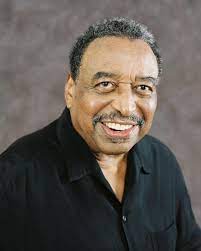
When the curious Pannonica posed the question of three wishes to Chico Hamilton he came back with the following answers:
- “Well, I think the first wish would be I want everything wonderful for my wife and my family , because they have sacrificed.”
- “I don’t know. I wish that this God-given talent I have ~ someone will get some good out of it..”
- “I wish I never lose my sense of humor.”
*Excerpt from Three Wishes: An Intimate Look at Jazz Greats ~ Compiled and Photographed by Pannonica de Koenigswarter
More Posts: baroness,drums,history,instrumental,jazz,music,pannonica,three,wishes
Daily Dose Of Jazz…
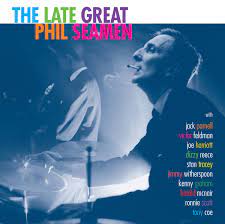
Philip William Seamen was born on August 28, 1926 in Burton upon Trent, Staffordshire, England. He began playing drums at the age of six, turning professional at the age of 18 by joining Nat Gonella and his Georgians in 1944. At 20 he spent a year with Gordon Homer Big Band at the Coronation Ballroom in Ramsgate. He joined the Tommy Sampson Orchestra in 1948 and by 1949, Seamen and tenor saxophonist Danny Moss formed a bebop quintet from within the ranks and was featured on a radio broadcast by the orchestra.
He then went on to play in the Joe Loss Orchestra for about 14 months before taking the top job with Jack Parnell from 1951 until midway 1954. Seamen, being much sought after during the 1950 played in Kenny Graham’s Afro-Cubists projects from 1952 to 1958, from 1954 onwards with the Joe Harriott Quartet, the Ronnie Scott Orchestra and Sextet. He was recruited opn countless sessions as well to perform with Dizzy Reece, Victor Feldman, Jimmy Deuchar, Kenny Baker, Vic Ash, Don Rendell, Stan Tracey, Laurie Johnson, Big Bill Broonzy and Josh White, to name a few.
In 1957 Phil was on his way to America with the Ronnie Scott Sextet as part of a Musicians’ Union exchange tour deal. Unfortunately the Southhampton custom officers found him in possession of drugs, killing his lifelong dream of visiting the States. In 1958, the West End production of West Side Story opened with him after Leonard Bernstein reputedly specifically asked for him, so the producers hired him.
During the first half of the 1960s, he worked often with Tubby Hayes, Joe Harriott, played a couple of nights with Dexter Gordon at Ronnie Scott’s, and recorded with Carmen McRae. In 1964 he played R&B with Alexis Korner and Georgie Fame.
He started teaching in 1962, one of his pupils being Ginger Baker, who went on to influence a whole generation of rock drummers. However, his addiction to alcohol, heroin and other drugs hampered his health and career as many bandleaders refused to hire him with the exception of Freddie Hubbard in 1964 and Roland Kirk in 1967 with a UK tour. On October 13, 1972 drummer Phil Seaman transitioned in his sleep at his home in Old Paradise Street Lambeth, South London, at the age of 46.
Bestow upon an inquiring mind a dose of a Burton upon Trent drummer to motivate the perusal of the genius of jazz musicians worldwide whose gifts contribute to the canon…