

The Jazz Voyager
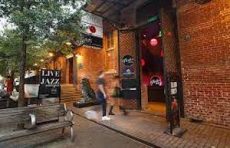
The Jazz Voyager had a blast at Cliff Bell’s last week hanging out with friends but it’s time to head South to Texas and see what’s happening at the Parker Jazz Club at 117 W 4th Street, #10, Austin 78701. I’m looking forward to what promises to be an evening of jazz classics and the Great American Songbook performed by the Ryan Davis Trio with drummer Jeremy Bruch and bassist Ben Triesch.
I’ll be masking throughout the day starting with catching an early flight into the state capital and home of those famous City Limits and I’ll be Ubering or Lyfting to do some sightseeing. My first stop being the Moody Theater where the longest running music television show is taped, then off to the Bullock Museum for a history lesson of the state, the George Washington Carver Museum, LBJ Presidential Library, a visit to the Downs~Mabson Field which was the former home of the Austin Black Senators of the Texas Negro League during the early 20th century. Don’t know if I’ll get it all done in one day because I’m grabbing some dinner before showtime. My last stop of the first day is the Congress Bridge at sunset to see the 1.5 million bats take wing.
Then it’s off to the hotel to shower and change and get ready for a great night of jazz. The doors are at 7:00pm, the one performance runs from 7:30pm ~ 9:00pm, the cover is $15~$25. Early evening for this nightowl, so I’ll be adventuring into the city for more music. For additional information, the number is 512-394-6003 or parkerjazzclub.com.

More Posts: adventure,album,bass,club,drums,festival,genius,jazz,museum,music,piano,preserving,restaurant,travel
The Jazz Voyager
The Jazz Voyager has been hanging out in the Midwest for the past week and this week was headed out to the West Coast but when I heard that two of my favorite performers will be together in Detroit for two nights, I changed all plans and rescheduled to catch the two hour flight.
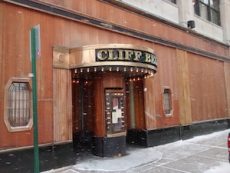
Though having been to the city numerous times to hang with friends, this is a definitive first time experience for this Jazz Voyager as I make my way to Cliff Bell’s, the renowned nightspot for jazz located at 2030 Park Avenue, 48226. The club has been touted as a swanky, restored art deco club that not only serves a creative, eclectic fare of surf, turf, desserts and drinks, topped off with live jazz nightly.
Tony Hightower with the Henry Conerway Trio will be in the house on Thursday and Friday. It will be great catching up with both of them as I haven’t seen Tony in a few months and Henry for about three years. Throws are 7:30pm and 9:00pm, the cover is $25.00 and the estimated tab $$$.So come on out and enjoy an evening of good music. For additional information, the number is 313-961-2543 or cliffbells.com.
More Posts: adventure,album,club,drums,festival,genius,jazz,museum,music,preserving,restaurant,travel,vocal
Daily Dose Of Jazz…
Sunny Murray was born James Marcellus Arthur Murray on September 21, 1936 in Idabel, Oklahoma and was raised by an uncle who later died after being refused treatment at a hospital because of his race. He began playing drums at the age of nine, however, during his teen years he lived in a rough part of Philadelphia, Pennsylvania and spent two years in a reformatory.
By 1956, he was in New York City working in a car wash and as a building superintendent. During this time, he played with among others, trumpeters Red Allen and Ted Curson, pianist Willie “The Lion” Smith, and saxophonists Rocky Boyd and Jackie McLean. 1959 saw him playing for the first time with pianist Cecil Taylor and subsequently turned his direction towards experimenting with creative new ideas. In 1961, Murray made a recording with Taylor’s group that was released under the auspices of Gil Evans as one side of Into the Hot.
In 1962 Sunny went to Europe for the first time with Taylor and saxophonist Jimmy Lyons. During that time, the group made a stylistic breakthrough while in Sweden and started playing free. While in Denmark later that year, the trio recorded the influential concerts released as Nefertiti the Beautiful One Has Come.
That same year Taylor and Murray met saxophonist Albert Ayler, with whom the group recorded together for Danish television as the Cecil Taylor Unit. Upon their return to the United States, the group performed at the Take Three club in Greenwich Village and at Philharmonic Hall, Lincoln Center in New York City on New Year’s Eve 1963 as the Cecil Taylor Jazz Unit, with a healthy Grimes on bass.
Continuing to play with Ayler, Sunny went on to join Ayler’s trio with bassist Gary Peacock. He recorded a number of albums with Ayler, and his unchained approach to percussion gave Ayler the freedom to travel his own road that had hitherto been lacking. In 1964 he played with John Coltrane, however, declined the offer to join the band.
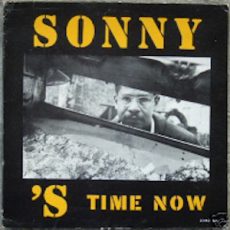
He recorded his debut album as a leader in 1965 with Sonny’s Time Now, which was released on Leroi Jones’s Jihad label. This was followed by twenty more leader albums on various labels until 2011 with the recording of Boom Boom Cat. Over the course of his career he would record as a sideman for a host of musicians, but his final recording session as a sideman was Corona, once again teamed with Cecil Taylor, released posthumously in 2018. Drummer Sunny Murray, who had a documentary made in 2008 titled Sunny’s Time Now: A Portrait of Jazz Drummer Sunny Murray, transitioned on December 7, 2017 from multiple organ failure at the age of 81.
More Posts: bandleader,drums,history,instrumental,jazz,music

TIA FULLER, MIMI JONES & MATT WILSON
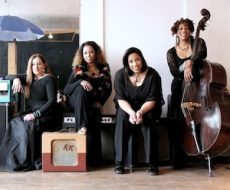
Join saxophonist Tia Fuller, bassist Mimi Jones, and drummer Matt Wilson as they cap off their week in St. Louis with performances on the Ferring Jazz Bistro stage! Jazz St. Louis’s Artist Residency bands are one-of-a-kind groupings brought together for the specific purpose of securing the future of jazz through clinics, masterclasses, and in-school performances. Jazz St. Louis engages these artists for an entire week, during which they visit area schools and conduct masterclasses and clinics for middle and high school students.
Valet Parking ~ $10.00 prepaid
Valet parking is available for all Jazz St. Louis performances. Discounted $10 valet parking may be purchased when ordering your tickets. Please make sure to select the correct date and time when adding parking to your cart with your tickets before purchasing.
October 28 ~ 7:30pm | 9:30pm
October 29 ~ 7:30pm | 9:30pm
More Posts: adventure,album,bass,club,drums,festival,genius,jazz,museum,music,preserving,restaurant,saxophone,travel