

The Quarantined Jazz Voyager
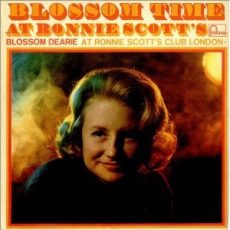
As the Jazz Voyager continues to social distance and wears his mask inside stores when grocery shopping and following doctor office protocol, he is still finding time to listen to great jazz. This week coming off the shelves is an album titled Blossom Time at Ronnie Scott’s by pianist and vocalist Blossom Dearie and is a live recording at Ronnie Scott’s Jazz Club in Soho, London, England in 1966. This was her first live album and was released on the British record label, Fontana. The liner notes were written by Jimmy Parsons.
Her personal favorite recording, the swinging trio will intoxicate you with this set of songs just as if you were there in the intimate space listening. Her girlish, soft voice is her signature as she executes each song with style. This is the first of four albums she will record on the Fontana label.
Track List | 39:23
- On Broadway (Barry Mann, Cynthia Weil, Jerry Leiber, Mike Stoller) ~ 3:55
- (Ah, the Apple Trees) When the World Was Young (Michel Philippe-Gérard, Angele Vannier, Johnny Mercer) ~ 4:20
- When in Rome (Cy Coleman, Carolyn Leigh) ~ 4:45
- The Shadow of Your Smile (Johnny Mandel, Paul Francis Webster) ~ 4:13
- Ev’rything I’ve Got (Richard Rodgers, Lorenz Hart) ~ 4:29
- Once Upon a Summertime (Eddie Barclay, Michel Legrand, Eddy Marnay, Johnny Mercer) ~ 3:51
- I’m Hip (Dave Frishberg, Bob Dorough) ~ 2:48
- Mad About the Boy (Noël Coward) ~ 5:05
- The Shape of Things (Sheldon Harnick) ~ 2:42
- Satin Doll” (Duke Ellington, Johnny Mercer, Billy Strayhorn) ~ 5:15
- Blossom Dearie ~ piano, vocals
- Jeff Clyne ~ double bass
- Johnny Butts ~ drums

More Posts: adventure,album,bass,club,drums,festival,genius,jazz,museum,music,piano,preserving,restaurant,travel
Daily Dose Of Jazz…
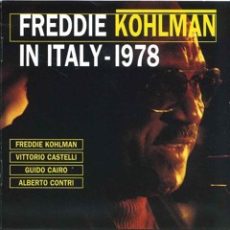
Louis Freddie Kohlman was born on August 25, 1918 in New Orleans, Louisiana and studied under the famed drummer Louis Cottrell, Sr., and Manuel Manetta. He began playing professionally as a teenager, working with A. J. Piron, Joe Robichaux, Papa Celestin, and Sam Morgan.
Moving to Chicago, Illinois in the middle of the 1930s, he played with Albert Ammons, Stuff Smith, Earl Hines, and Lee Collins. After returning to New Orleans in 1941, he led his own band from 1944. Among the musicians in his band was pianist Dave “Fat Man” Williams. In the mid-1950s he played briefly with Louis Armstrong and recorded as a leader with the Jambalaya Four in 1953. He moved back to Chicago and became the house drummer at Jazz, Ltd. There he played with everyone from Billie Holiday to Art Hodes before once again returning to New Orleans in the 1960s.
Back home he played with Louis Cottrell, Jr., the Dukes of Dixieland, and the Onward Brass Band. In 1969 he appeared at the New Orleans Jazz Festival. As a member of the Preservation Hall Jazz Band, he traveled throughout the United States and overseas.[1]
Playing European festivals with his own groups in the 1970s and 1980s, Freddie recorded with Chris Barber and Dr. John in 1980, and also appears on record with Albert Nicholas, Art Hodes, Bob Wilber, Harry Connick, Jr., the Excelsior Brass Band, and the Heritage Hall Jazz Band.
Kohlman appeared in several films, including Pete Kelly’s Blues, Pretty Baby and Angel Heart.
Drummer, vocalist and bandleader Freddie Kohlman transitioned of cancer at his home in New Orleans, aged 72 on September 29, 1990.

More Posts: bandleader,drums,history,instrumental,jazz,music,vocal

Daily Dose Of Jazz…
Bryan Spring was born on August 24, 1945 in London, England. A self-taught drummer beginning at the age of six, he later studied with Philly Joe Jones. He led and co-led his own trios and quartets from the mid-1970s to the early 1990s with Don Weller and also Art Themen.
The new millennium saw Bryan collaborating with Mark Edwards and Andy Cleyndert. He has been a member of Bill Le Sage’s Bebop Preservation Society, Alan Skidmore’s Quartet, Klaus Doldinger’s Passport, and various line-ups led by Stan Tracey.
He has worked with other leading British jazz musicians, including Tubby Hayes, Dick Morrissey, Bobby Wellins, as well as accompanying American musicians, notably George Coleman and Charlie Rouse, when they were visiting the UK.
Drummer Bryan Spring, who is sometimes credited as Brian and has led/co-led two recording sessions and played on eighteen as a sideman, continues to be active on the jazz scene.
More Posts: bandleader,drums,history,instrumental,jazz,music
Daily Dose Of Jazz…
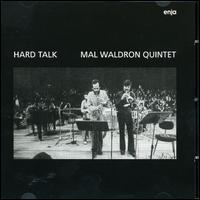
Allen Blairman was born on August 13, 1940 in Pittsburgh, Pennsylvania. Moving from Pittsburgh to New York City he worked with Charles Mingus, Chet Baker and Archie Shepp.In 1970 he played with Albert Ayler at the Fondation Maeght in France. Two years later he toured throughout Europe with Karl Berger, recorded with Mal Waldron for Enja, and with Albert Mangelsdorff. In 1976 Allen played with a German jazz rock group called Embryo and in France he collaborated with Bireli Lagrene.
By 1991 he recorded Life at the Montreux Music Festival in trio-formation with Günter Lenz and Uli Lenz. For over twenty years he played with saxophonist Olaf Schönborn and bassist Mario Fadani in Trio Variety. Since 2009 with tap dancer Kurt Albert and Olaf Schönborn in Melody Rhythm & Tap.
Drummer Allen Blairman was diagnosed with cancer in January and transitioned on April 29, 2022 in Heidelberg, Germany at 81 years of age.
More Posts: drums,history,instrumental,jazz,music

TITO PUENTE JR.
Son of the legendary American salsa and Latin jazz musician Tito Puente, he has big shoes to fill and he does! He returns for another night of exhilarating Latin rhythms that will get your feet moving. Always honoring his father’s legacy, Tito Puente, Jr. has also made a name for himself as one of the most exciting Latin musicians touring today. Puente, Jr. has performed in over 300 shows in a variety of venues across the country, from jazz festival stages to grand symphony halls. This time it’s Mambo!!!
More Posts: adventure,album,club,drums,genius,jazz,museum,music,preserving,restaurant,travel