

Three Wishes
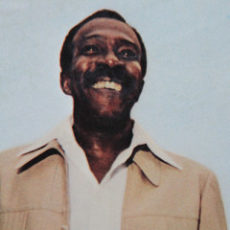
Nica’s inquiry of Walter Lee Bolden as to his three wishes if granted, he told her:
- “I’d like to straighten out my personal life.”
- “I’d like to be among the greats, as far as my career is concerned.”
- “And then I want to be able to live comfortably.”
*Excerpt from Three Wishes: An Intimate Look at Jazz Greats ~ Compiled and Photographed by Pannonica de Koenigswarter

More Posts: baroness,drums,history,instrumental,jazz,music,pannonica,three,wishes
Daily Dose Of Jazz…
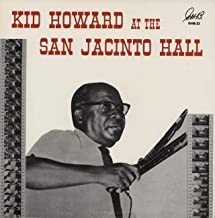
John Baptiste “Bat” Mosley was born on December 22, 1893 in Algiers, Louisiana, and was the brother of drummer Edgar Mosley. His father played guitar but began the youngster playing drums at age nine when he gave him a snare drum. He and his father would make money playing around town together.
Bat, however, did not work professionally until about 1923, and started with Tom Albert, then Joe Harris’ Royal Jazz Band, and later with Kid Howard. Throughout his career he also performed regularly with brass bands, including Kid Rena’s, Henry Allen’s, and the Eureka.
Drummer Bat Mosley passed away on July 28, 1965 in Algiers.

More Posts: drums,history,instrumental,jazz,music
Daily Dose Of Jazz…
Sonny Greer was born William Alexander Greer on December 13, c. 1895 in Long Branch, New Jersey. He played with Elmer Snowden’s band and the Howard Theatre Orchestra in Washington, D.C., before joining Duke Ellington. Meeting him in 1919, he was Ellington’s first drummer, playing with his quintet, the Washingtonians. He then moved with Ellington into the Cotton Club.
As a result of his job as a designer with the Leedy Drum Company of Indiana, Greer was able to build up a huge drum kit worth over a then-considerable $3,000, including chimes, a gong, timpani, and vibes.
A heavy drinker, as well as a pool-hall hustler when he needed to retrieve his drums from the pawnbroker, in 1950, Ellington responded to his drinking and occasional unreliability by taking a second drummer, Butch Ballard, with them on a tour of Scandinavia. This enraged Greer, and the consequent argument led to their permanent estrangement.
Sonny continued to play, mainly as a freelance drummer, working with musicians such as Johnny Hodges, Red Allen, J. C. Higginbotham, Tyree Glenn, and was there for the iconic 1958 Art Kane black-and-white photograph A Great Day In Harlem. He was part of a tribute to Ellington in 1974, which achieved great success throughout the United States.
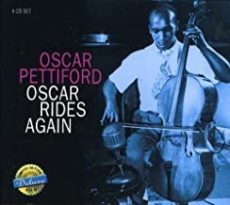
Never recording as a leader, he was quite active as a sideman recording with not only seven albums with Duke but another twelve albums with Johnny Hodges, Bernard Addison, Louis Armstrong, Earl Hines, Lionel Hampton, Lonnie Johnson, Brooks Kerr, Oscar Pettiford, Rex Stewart, Victoria Spivey, and Josh White.
Drummer Sonny Greer , best known for his work with Duke Ellington, passed away of a heart attack on March 23, 1982 in Lenox Hill, on the upper East side of Manhattan.
More Posts: bandleader,drums,history,instrumental,jazz,music

Daily Dose Of Jazz…
Anthony Tillmon Williams was born of African, Portuguese, and Chinese descent on December 12, 1945 in Chicago, Illinois and grew up in Boston, Massachusetts. He studied with drummer Alan Dawson at an early age, and began playing professionally at the age of 13 with saxophonist Sam Rivers. Saxophonist Jackie McLean hired Williams when he was 16.
At 17 Williams gained attention when he joined Miles Davis in what was later dubbed Davis’s Second Great Quintet. A vital element of the group, his playing helped redefine the role of the jazz rhythm section through the use of polyrhythms and metric modulation.
He recorded his first two albums as leader at nineteen for the Blue Note label, Life Time in 1964) and Spring in 1965.. He also recorded as a sideman for the label including, in 1964, Out to Lunch! with Eric Dolphy and Point of Departure with Andrew Hill.
By 1969, he had formed his trio, the Tony Williams Lifetime, with John McLaughlin on guitar and Larry Young on organ. Lifetime was a pioneering band of the fusion movement. Disbanding the group, in 1975 he put together a band he called The New Tony Williams Lifetime, featuring bassist Tony Newton, pianist Alan Pasqua, and English guitarist Allan Holdsworth, which recorded two albums for Columbia Records..
In mid-1976, Tony reunited with Herbie Hancock, Ron Carter, and Wayne Shorter. Freddie Hubbard replaced Miles Davis who was in the midst of a six-year hiatus. The resulting record was later released as V.S.O.P. and the group toured for several years and produced a series of live albums released under the name V.S.O.P. or V.S.O.P.: The Quintet.
1979 saw Williams, McLaughlin and bassist Jaco Pastorius united for a one-time performance at the Havana Jazz Festival. This trio came to be known as the Trio of Doom. In 1985, returning to Blue Note he released six albums through 1993, playing his compositions almost exclusively ubtil he left Blue Note for the final time.
He lived and taught in the San Francisco Bay Area, was one of the pioneers of jazz fusion, and was inducted into the Modern Drummer Hall of Fame in 1986. On February 20, 1997 he checked into Seton Medical Center in Daly City, California, suffering from stomach pain. Three days later, while recuperating from gallbladder surgery, drummer Tony Williams passed away of a heart attack at 51 on February 23, 1997.
More Posts: bandleader,drums,history,instrumental,jazz,music
The Quarantined Jazz Voyager
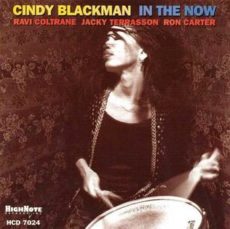
In The Now is an album by the accomplished percussionist and drummer Cindy Blackman recorded on November 18, 1997 by engineer Rudy Van Gelder at Van Gelder Studio in Englewood Cliffs, New Jersey. It was released on the HighNote label on May 19, 1998.
The producer on the date was Don Sickler, the art direction performed by Wendi Horowitz with photography by Carl Posey. The liner notes were written by Chip Stern.
Track List | 63:23 All compositions by Cindy Blackman except where noted
- In The Now ~ 6:45
- A Banana for Ron ~ 3:22
- Passage ~ 6:40
- A King Among Men ~ 15:00
- Sophia ~ 7:24
- Prince of Darkness (Wayne Shorter) ~ 7:13
- Happy House (Ornette Coleman) ~ 4:34
- A Strawberry for Cindy ~ 4:30
- Let Love Rule (Lenny Kravitz) ~ 7:55
- Cindy Blackman ~ Drums
- Ravi Coltrane ~ Tenor Saxophone, Soprano Saxophone
- Jacky Terrasson ~ Piano, Fender Rhodes
- Ron Carter ~ Bass
More Posts: adventure,album,club,drums,genius,jazz,museum,music,preserving,restaurant,travel