

Daily Dose Of Jazz…
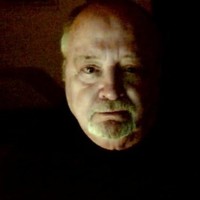
Dannee Fullerton was born January 12, 1944 in Los Angeles, California and at the age of four, moved with his mother to Saudi Arabia, joining his father who worked for the Arabian American Oil Company. By 11, he was enrolled at the Institut Montana Zugerberg, an all boys international school in Switzerland. It was here that drums became a strong influence and his very first drum set was a pair of brushes and a set of bongo drums. Along with singing, Dannee played the guitar and the drums.
At 14, he started a band at the Institut and gave concerts 3 to 4 times a year, something that had never before been accomplished on that campus. By 15 Dannee attended a concert and on the bill was the Gerry Mulligan Quartet and the Benny Goodman Orchestra featuring Gene Krupa playing Sing,Sing,Sing. The effect upon hearing this music caused Fullerton to give away all his rock and roll albums and so he could seriously concentrate on jazz.
During these formative years, he taught himself and others to play Jazz and continued to hold jazz concerts at school. Creating the school’s first jazz club, convincing the Director to allow students to attend jazz concerts, he was able to see concerts by the Oscar Peterson Trio, Ella Fitzgerald, Duke Ellington, Count Basie, Louis Armstrong, J.J. Johnson, Stan Getz, The Modern Jazz Quartet, Ahmed Jamal, Cannonball Adderly, the John Coltrane Quartet and the Dave Brubeck Quartet… Dannee was now hooked on the jazz art form and was intent on learning it.
Graduating from high school, Fullerton attended Berklee College of Music and studied under Alan Dawson, Herb Pomeroy, John La Porta, and Jack Peterson. Later he studied privately with drummer Pete La Roca. He played sessions with Keith Jarrett, Mick Goodrick, Gene Perla, John Abercrombie, Sam Rivers, Sadao Watanabe, Byard Lancaster and other students at the time. He performed with the Keith Jarrett Trio for two years, in his Boston, Massachusetts trio.
Drafted into the US Army during the Vietnam era, he served in various Army bands over the next 24 years, serving in Europe, Korea, Okinawa and many locations within the United States. During his service Dannee performed with Maynard Ferguson, Herb Ellis, The Ink Spots, Bill Watrous, Bill Lohr, “Jazz Express” (Dannee’s own group) John Payne, Don Erdman, Kurt Black, Buddy Tate, Joe Newman, Mike Francis and Curt Warren to name a few.
Retiring from military service in 1989, he settled outside Tacoma, Washington. Drummer Dannee Fullerton, who never recorded professionally, continues to perform locally with Jack Percival, Sid Potter, Tim Eikholt, Tom Russell, Gary Black, Joe Bach, Roger Gard, Pete Lira, Bob McNamara, Ken Upton and Lance Buller, among others.
More Posts: bandleader,drums,history,instrumental,jazz,music
Daily Dose Of Jazz…
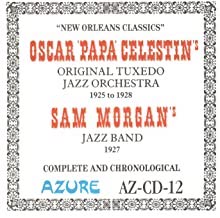
Abbey “Chinee Bébé” Foster was born on January 9, 1902 in New Orleans, Louisiana. A self-taught jazz drummer, he played in Storyville with William Ridgley’s Tuxedo Orchestra, and with Buddie Petit in the Eagle Band.
He recorded with Celestin’s Original Tuxedo Jazz Orchestra in 1927. After years of retirement, he made a comeback with Punch Miller’s Band at Preservation Hall in 1961.
On September 12, 1962 drummer Abbey Foster transitioned in his hometown.
More Posts: drums,history,instrumental,jazz,music
Daily Dose Of Jazz…
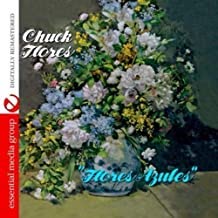
Chuck Flores was born Charles Walter Flores on January 5, 1935 in Orange, California, and grew up in Santa Ana, California. Best known for his work with saxophonist Bud Shank in the 1950s, he also had a two-year stint with Woody Herman from 1954 to 1955.
Throughout his career Chuck performed and recorded with, among others, Carmen McRae, Art Pepper, Maynard Ferguson, Al Cohn, and Shelly Manne. His drum teacher Manne and others considered him an underrated drummer.
In his later years, Flores became a highly sought after and renowned educator who was a longtime faculty member at Musicians Institute in Los Angeles, California.
A few of his students were Danny Seraphine, Chad Wackerman, John Wackerman, Brooks Wackerman, Ray Mehlbaum, Pete Parada, Jamie Wollam, Jose Ruiz and Zack Stewart.
Drummer Chuck Flores, who was one of the relatively small number of musicians associated with West Coast jazz who were actually from the West Coast, transitioned on November 24, 2016.
More Posts: bandleader,drums,educator,history,instrumental,jazz,music
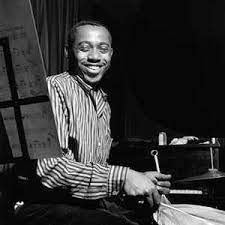
Three Wishes
The question was posed to Charlie Persip by Pannonica and he gave a response to his three wishes as:
- “Money, money, money.”
*Excerpt from Three Wishes: An Intimate Look at Jazz Greats ~ Compiled and Photographed by Pannonica de Koenigswarter

More Posts: baroness,drums,history,instrumental,jazz,music,pannonica,three,wishes
Daily Dose Of Jazz…
David Lee, Jr. born January 4, 1941 in New Orleans, Louisiana played professionally from his early teens. While serving in the U. S. Army, he was a member in several bands. In 1969, he co-founded the New Orleans Jazz Workshop.
In 1969 Dizzy Gillespie brought Lee into his band and soon after he was working with Roy Ayers in 1971 and Sonny Rollins for three years beginning in 1972. The Rollins recordings were hard swinging but included the plethora of tempos of the Seventies.
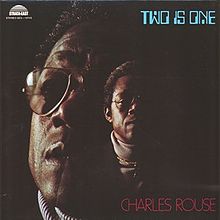
Forming a quartet but never recording as a leader, he continued to work as a sideman. On August 4, 2021, drummer and composer David Lee, who recorded Yoshiaki Masuo, Charlie Rouse, Lonnie Liston Smith and Richard Wyands among others, transitioned at 80 years of age.
More Posts: bandleader,composer,drums,history,instrumental,jazz,music