

Daily Dose Of Jazz…
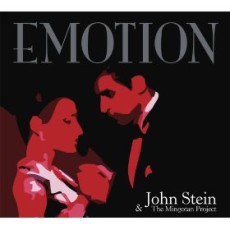
John Stein, born on June 19, 1949, was raised in Kansas City, Missouri and took up the guitar at a very early. His was musically educated on the instrument at Berklee College of Music, where he now holds the position of associate professor.
Stein collaborates with Boston hitters Bill Pierce, Kenneth Weinberger, John LaPorta and Bob Freedman but has graced stages with David “Fathead” Newman, Lou Donaldson, Dr. Lonnie Smith, and Idris Muhammad.
John has published educational columns in Just Jazz Guitar Magazine, focusing on composition and arranging for jazz guitar. He has published arranging materials in a book titled Berklee Jazz Standards For Solo Guitar, as well as his compositional materials into two books. Composing Blues For Jazz Performance, and Composing Tunes For Jazz Performance.
He has also performed in Europe, conducting tours in Germany, France, Switzerland Brasil and the States. As a mainstay on the jazz circuit, guitarist John Stein continues to record, perform and tour with his compositions and performances covering a range of jazz including blues, bebop, bossa nova and swing.

Give A Gift Of Jazz – Share
More Posts: guitar
Daily Dose Of Jazz…
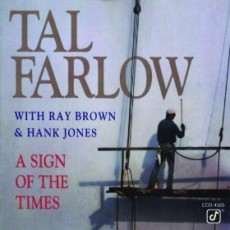
Talmage Holt Farlow was born on June 7, 1921 in Greensboro, North Carolina. He didn’t take up the guitar until he was twenty-one but within a year was playing professionally, although he had a reluctance to perform publicly. But, by 1948 he had joined Marjorie Hyams’ band, moved to Red Norvo’s group from ’49 to ’53 and after only six months with Artie Shaw’s Gramercy Five in 1953, Farlow put together his own group, which for a time included pianist Eddie Costa.
Farlow’s extremely large hands led to his nickname “Octopus” spreading over the fret board as if they were tentacles. In 1956 Down Beat magazine critics named him as the very best jazz guitarist in the world. Where other similar players of his day combined rhythmic chords with linear melodies, Tal preferred placing single notes together in clusters, varying between harmonically richened tones based on a startling new technique.
A supreme technician, renowned for his articulation, and smooth relaxed phrasing even at the most daunting tempos, Tal retired from full-time performing in 1958, returning to a career as a sign painter, playing only the occasional date.
He only made one record as a leader during 1960–1975, but emerged a bit more often during 1976–1984, recording for Concord fairly regularly before largely disappearing again. He was profiled in the documentary film, Talmage Farlow, and can be heard leading groups for Blue Note, Verve and Prestige. Guitarist Tal Farlow died of cancer in New York City on July 25, 1998 at the age of 77.
Take A Dose On The Road
More Posts: guitar
Daily Dose Of Jazz…
Marc Ribot was born on May 21, 1954 in Newark, New Jersey and worked extensively as a session musician. His early sessions with Tom Waits helped define Waits new musical direction in 1985.
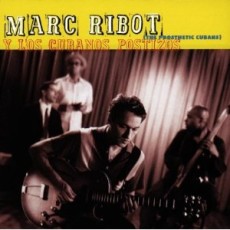
His own work has touched on many styles, including n wave, free jazz and Cuban music. Ribot’s first two albums featured The Rootless Cosmopolitans, followed by an album of works by Frantz Casseus and Arsenio Rodriguez. Further releases found him working in a variety of band and solo contexts including two albums with his self-described “dance band”, Marc Ribot y Los Cubanos Postizos.
His relatively limited technical facility is due to learning to play right-handed despite being left-handed. He currently performs and records with his group Marc Ribot’s Ceramic Dog. Marc’s studio work involves several tracks accompanying the legendary pianist McCoy Tyner’s “Guitars” project. He has performed and recorded with Jack McDuff, John Scofield, Wilson Pickett, Cibo Matto, Bela Fleck, Derek Trucks, Madeline Peyroux, Medeski Martin & Wood, Elton John and many others.
He has toured Europe with his band Sun Ship, had a biographical documentary film called the The Lost String and has also judged the 8th Annual Independent Music Awards to support indie careers in music. He has twenty-one albums as a leader, a filmography that includes five and a biographical documentary about him titled The Lost String. Guitarist Marc Ribot also plays banjo, trumpet, cornet and sings and continues to perform, record and tour.
Dose A Day-Blues Away
Daily Dose Of Jazz…
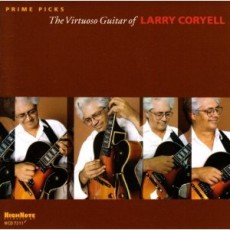
Larry Coryell was born April 2, 1943 in Galveston, Texas moved to Washington as a child. After graduating from Richland High School in eastern Washington, he moved to Seattle to attend the University of Washington.
In 1965, Coryell moved to New York City where he became part of Chico Hamilton’s quintet replacing Gabor Szabo. In the Sixties he recorded with Gary Burton, played with The Free Spirits and extended his musical landscape to include influences of rock, jazz and eastern music.
He formed his own group, “The Eleventh House” in 1973 and following the break-up of this band, Coryell played mainly acoustic guitar but returned to electric guitar later in the 1980s.
In 1979, Coryell formed “The Guitar Trio” with jazz-fusion guitarist John McLaughlin and flamenco guitarist Paco de Lucia. The group toured Europe, released “Meeting of Spirits” recorded at Royal Albert Hall in London, however, his drug addiction led to his being replaced by Al Di Meola.
By the turn of the century he settled back into a more mainstream style of playing releasing “Cedars of Avalon”, “Monk, Trane, Miles & Me”, “Tricycles”, and “Power Trio: Live In Chicago”. In 2007, Coryell published an autobiography titled “Improvising: My Life in Music”. Guitarist Larry Coryell remains active in the music industry performing, touring and recording.
More Posts: guitar
Daily Dose Of Jazz…
Remo Palmier was born Remo Paul Palmieri on March 29, 1923 in New York City, later dropping the “i” at the end of his name. He was taught himself to play guitar and began his professional career with the Nat Jaffe Trio in New York in 1942. In the early part of his career he played with Coleman Hawkins, Billie Holiday, Dizzy Gillespie and Charlie Parker, establishing his own reputation as a swinging and inventive jazz guitarist.
Remo was known to a wider television audience as the guitarist on The Arthur Godfrey Show, a position he held for 27 years from 1945. He went on to work with Red Norvo, pianists Phil Moore and Teddy Wilson, Barney Bigard and Sarah Vaughan in the mid-1940s.
After a hiatus from music, Palmier returned to active jazz playing in the early 1970s, working with the likes of Vic Dickenson, Bobby Hackett, and as an occasional stand-in for Bucky Pizzarelli in Benny Goodman’s small group.
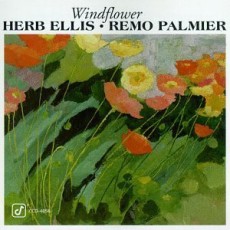
He recorded and released the albums “Windflower” with guitarist Herb Ellis and “Remo Palmier”, and continued to perform into the 90s, including recordings with Louis Bellson, Joe Wilder, and concerts with Benny Carter. Suffering from leukemia and lymphoma, jazz guitarist Remo Palmier passed away in New York City on February 2, 2002.
More Posts: guitar