


Daily Dose Of Jazz…
Born August 26, 1943, Dorival Tostes Caymmi, the son of famous Brazilian musicians Dorival Caymmi and Stella Maris. He began playing piano at age eight, studied music theory at the Conservatorio Lorenzo Fernandez and in 1959 made his professional debut accompanying his sister, Nana.
In 1960 Dori became a member of Groupo dos Sete, writing music for plays aired on Brazilian television. He co-directed and played viola in the play Opinião, an important transitional work between the styles of bossa nova and MPB and directed the play Arena Conta Zumbi. For a time he produced Edu Lobo, Eumir Deodato and Nara Leao, co-wrote the prize winning song “Saveiros” with Nelson Matta, a collaboration that lasted many years and produced some of Brazil’s biggest hits.
Caymmi played and toured with Paul Winter, arranged and directed albums by Caetano Veloso, Gal Costa and Gilberto Gil, and was involved with the tropicalia movement of the late 1960s, but did not record in this style himself due to his distaste for Euro-American pop music. He wrote scores for numerous films and television shows in the 1970s and 1980s, moved to Los Angeles, California in 1989 and has since played or recorded with Dionne Warwick, Toots Thielemans, Marilyn Scott, Oscar Castro-Neves, Eliane Elias, Richard Silveira and Edu Lobo; was a collaborator celebrating Tom Jobim at Carnegie Hall and arranged the music for Spike Lee’s film, Clockers.
Dori Caymmi has been nominated for Latin Grammys several times and is a two-time Grammy Award winner for Best Latin Song and Best Latin Samba Recording. The Brazilian singer, guitarist, songwriter, arranger, and producer has an extensive discography dating back to 1964 and he continues to perform and record.

Take A Dose On The Road
More Posts: arranger,composer,guitar,songwriter,vocal
Daily Dose Of Jazz…
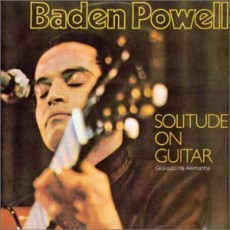
Baden Powell de Aquino was born on August 6, 1937 in Varre-Sai in the state of Rio de Janeiro, Brazil. Simply known as Baden Powell, his father, a scouting enthusiast, named him after Robert Baden Powell founder of the boy scouts. Growing up in a Rio suburb from age three, proved profoundly influential, as his house was a stop for popular musicians. He started guitar lessons with Jayme Florence, a famous choro guitarist in the 1940s, and soon proved to be a young virtuoso, winning many talent competitions before he was a teenager. Fascinated by swing and jazz, his main influences were firmly rooted in the Brazilian guitar canon.
By fifteen, he was playing professionally, accompanying singers and bands in various styles. In 1955, Powell was playing with the Steve Bernard Orquestra at the Boite Plaza, formed the new Hotel Plaza Trio with Ed Lincoln and with their young musician friends took part in after-hours jam sessions, gaining notice in the growing Brazilian jazz scene.
Achieving much wider fame in 1959 by convincing Billy Blanco to put lyrics to one of his compositions resulted in a song called “Samba Triste” and quickly became very successful for Baden. In 1962, he met the poet-diplomat Vinicius de Moraes and began a collaboration that yielded some true classics of 1960s Brazilian music. Together they transcended the prevailing bossa nova by fusing Afro-Brazilian with samba. During those years he released several recordings on Brazilian French and German labels and his 1966 “Tristeza on Guitar”, is considered by many to be a high point in his career.
Powell would go on to be the house guitarist for Elenco Records, the guitarist on Elis Regina’s TV show “O Fino da Bossa”, partner with poet Paulo Cesar Pinheiro and produced another series of Afro-Brazilian inspired music, tour Europe and record profusely until his health began failing him due to alcohol and cigarette abuse and his star dimmed. Returning home to Brazil he continued to record and perform and a renewed public recognition of his work came around that time. However, after many years of abuse, and he fell terminally ill and on September 26, 2000 guitarist and vocalist Baden Powell passed away in Rio de Janeiro of pneumonia triggered by diabetes.
His recordings span five decades beginning with his first appearances as accompanist on a handful of big band and samba recordings from the 1950s. He recorded his first solo album in 1959, but it was released in 1961. H e leaves us with a discography of some 55 recordings as a leader and numerous more as a sideman. He was one of Brazil’s most prominent and celebrated guitarists.
Give The Gift Of Knowledge
Daily Dose Of Jazz…
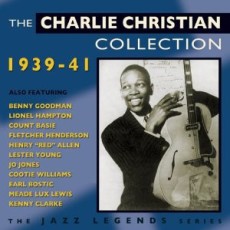
Charlie Christian was born Charles Henry Christian on July 29, 1916 in Bonham, Texas but his family moved to Oklahoma City, Oklahoma when he was a small child. He started performing as a dancer with his father and brothers as buskers to make ends meet. His father would later teach him to play guitar and inherit all his instruments by age 12. Attending Douglass School he was further encouraged in music but a disagreement in instrument led him to leave music and excel in baseball.
By 1936 he was playing electric guitar and had become a regional attraction. He jammed with many of the big name performers traveling through Oklahoma City including Teddy Wilson, Art Tatum and Mary Lou Williams who turned him on to record producer John Hammond. This led to an audition, recommendation to Benny Goodman, subsequently gaining national exposure with the Benny Goodman Sextet and Orchestra from August 1939 to June 1941. By 1940 Christian dominated the jazz and swing guitar polls and was elected to the Metronome All Stars.
Christian was an important early performer on the electric guitar, and is cited as a key figure in the development of bebop and cool jazz. One of the best improvisational talents of the swing era, his single-string technique combined with amplification helped bring the guitar out of the rhythm section and into the forefront as a solo instrument.
Christian’s influence reached beyond jazz and swing, and in 1966, 24 years after his death, Christian was inducted into the Down Beat Hall of Fame. In 1990 he was inducted into the Rock and Roll Hall of Fame and in 2006 Oklahoma City renamed a street in its Bricktown entertainment district Charlie Christian Avenue. On March 2, 1942, Charlie Christian passed away at age 25.
Take A Dose On The Road
More Posts: guitar
Daily Dose Of Jazz…
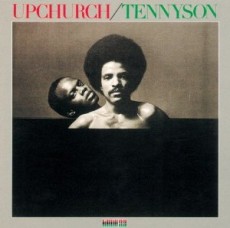
Phil Upchurch was born July 19, 1941 in Chicago, Illinois where he learned to play the guitar and bass. He stared his career in the ‘50s working with Jerry Butler before becoming house guitarist for Chess Records. He also worked with The Kool Gents, The Dells, Gene Chandler, Howlin’ Wolf, Muddy Waters and The Spaniels before going on to work with Curtis Mayfield, Otis Rush and Jimmy Reed.
Returning to Chicago he played and recorded with Woody Herman, Stan Getz, Groove Holmes, B.B. King and Dizzy Gillespie. In 1961, when billed as the Philip Upchurch Combo, his recording of “You Can’t Sit Down” sold over one million copies, and was awarded a gold record.
In the mid-Sixties he was house guitarist for labels such as Sue and Cadet and after a tour in the Army, in 1967 Phil he recorded with Richard Evans, John Lee Hooker, Grover Washington, Jr. and Cannonball Adderley.
In the 70s he worked with Ramsey Lewis and Quincy Jones, led his own quartet with Tennyson Stephens, through the Eighties played with George Benson, Mose Allison, Gary Burton, Joe Williams, Natalie Cole, Carmen McRae and Michael Jackson.
By the 1990s he was working with Jimmy Smith and Jack McDuff, recorded for Ichiban, Palladium and Ridgetop labels and remains an active session musician and bandleader.
Inspire A Young Mind
More Posts: guitar
Daily Dose Of Jazz…
Johnny Smith was born John Henry Smith on June 25, 1922 in Birmingham, Alabama but his family moved north during the Depression living in several cities before their final destination ending in Portland, Maine.
Smith taught himself to play guitar in pawnshops, which let him play in exchange for keeping the guitars in tune. At thirteen years of age he was teaching others to play the guitar. He got his first guitar after one of his students bought a new guitar and gave him his old guitar becoming the first guitar Smith owned.
Dropping out of high school, Johnny joined a local hillbilly band, Uncle Lem and the Mountain Boys, and travelled around Maine earning four dollars a night. His interest in jazz peaked after hearing jazz bands on the radio, started practicing playing jazz, left The Mountain Boys at eighteen and founded a jazz trio called The Airport Boys.
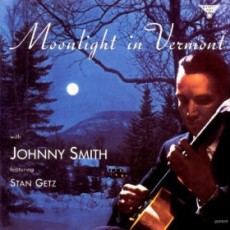
Equally at home playing Birdland or sight-reading scores in the orchestral pit of the New York Philharmonic and was one of the most versatile guitarists of the 1950s. He recorded for Roost Records, with his most critically acclaimed Moonlight In Vermont was named one of Down Beat magazine’s top jazz albums in 1952. His most famous musical composition is the tune “Walk Don’t Run” in 1955. Johnny Smith stepped out of the public eye/ear in the 1960s, having moved to Colorado in 1958 to teach and run a music store and to raise his daughter after the death of his second wife. The cool jazz and mainstream guitarist who actively participated in the jazz scene from 1935 to 1960 passed away on June 11, 2013.
Jazz Is Global – Share
More Posts: guitar