

Daily Dose Of Jazz…
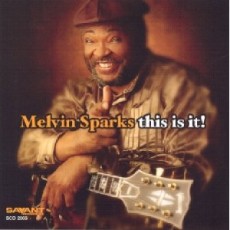
Melvin Sparks was born on March 22, 1946 in Houston, Texas. He got his first guitar when he was eleven and two years later he was sitting in with B.B. King. By 1963 he had joined the “Upsetters”, an R&B show band that backed Little Richard, Sam Cooke and other big names. Following this he did a year stint with Jack McDuff from 1966-67, then became quite in demand for his ability to improvise.
Sparks released his first album as a leader on Prestige in 1970 followed by a number of recording dates for the Prestige and Savant record labels and also appeared as a sideman and guest artist on several recordings with musicians including Lou Donaldson, Houston Person, Jimmy McGriff, Hank Crawford, Charles Earland, Sonny Stitt, Leon Spencer and Johnny Hammond Smith.
His Grant Green influenced guitar style placed him firmly in the soul jazz, hard bop and jazz blues genres. Melvin Sparks died on March 13, 2011 in Mount Vernon, New York from complications from diabetes.
More Posts: guitar
Daily Dose Of Jazz…
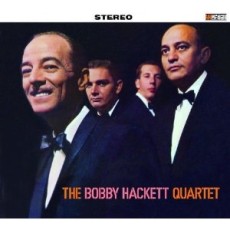
Bobby Hackett was born January 31, 1915 and raised in Providence, Rhode Island. At an early age he played the ukulele and by the time he was twelve, he was playing guitar, violin and had bought his first cornet. Leaving high school after his freshman year he took a steady job with a band that performed seven days a week at the Port Arthur and playing guitar regularly at the Rhodes and Arcadia ballrooms that often broadcasted on Providence radio and when Cab Calloway arrived short-handed and invited him to fill in.
In the fall of 1932 Bobby was recruited by The Herbie Marsh Orchestra, spent the summer of 1933 playing with Payson Re’s band, met Pee Wee Russell, by 1934, and playing college gigs with his band The Harvard Gold Coast Orchestra on weekends between Providence and Boston throughout 1935 and 36.
He worked with a new band at Nick’s in Greenwich Village, with Benny Goodman, Eddie Condon, Jack Teagarden and Teddy Wilson, played the new York World’s Fair in 1939, did the club circuit in New York, toured, recorded with his own band on MCA, took a seat with the Horace Heidt Musical Knights and recorded on the soundtrack of Fred Astaire vehicle “Second Chorus”.
After a dental surgery Bobby’s lip was in bad shape making it difficult for him to play, however, Glenn Miller offered him a job as a guitarist with the Miller Band and playing short trumpet solos. During the 1950s, he made a series of albums of ballads with a full string orchestra, produced by Jackie Gleason, in the Sixties toured with singer Tony Bennett, and by the early 1970s, Hackett performed separately with Dizzy Gillespie and Teresa Brewer. In his later years, he continued to perform in a Dixieland style even as trends in jazz changed.
Trumpeter Bobby Hackett passed away on June 7, 1976 from a heart attack. In 2012, he was selected to be inducted into the Rhode Island Music Hall of Fame.
More Posts: bandleader,cornet,guitar,trumpet
Daily Dose Of Jazz…
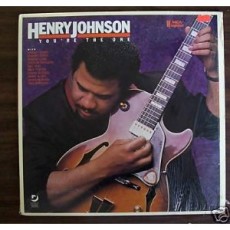
Henry Johnson was born January 28, 1954 in Chicago, Illinois and began playing at age twelve. While spending some formative time in Memphis, he started playing gospel music at age thirteen. By fourteen, Johnson was playing in R&B groups and although Johnson’s parents brought him up hearing the music of Duke Ellington, Count Basie, Joe Williams, and other artists of that era, it was not until 1967 that Johnson was formally introduced to jazz by hearing Wes Montgomery.
In 1969, his family moved back to Chicago where Henry’s reputation on the south side as a good local jazz guitarist flourished. In 1976, he went on the road with jazz organist Jack McDuff, and then he got the call to work with Donny Hathaway in 1977.
In 1979, Johnson began playing with Ramsey Lewis and some six years later Joe Williams added Johnson to his regular group. Henry’s musical roots run deep into gospel, blues, and jazz with his strongest and earliest influences were along with Wes Montgomery, guitarists Kenny Burrell and George Benson but also the music of Herbie Hancock, Oscar Peterson, Freddie Hubbard, Miles Davis, big bands, and jazz orchestras were integral forces to shape his sound and style.
His debut album “You’re The One” went #1 for two months on two charts, received a five star rating from Downbeat magazine, and was nominated for a Grammy. His follow-up albums also received wide recognition and in addition to his other projects, Henry has recorded and/or performed with Vanessa Ruben, Richie Cole, Nancy Wilson, Marlena Shaw, Angela Bofill, Dizzy Gillespie, the Boston Pops, Sonny Stitt, Freddie Hubbard, Grover Washington Jr., Stanley Turrentine, Dr. Billy Taylor, Jimmy Smith, James Moody, David “Fathead” Newman, Terry Gibbs, Bobby Watson, Nicholas Payton, Javon Jackson, Donald Harrison, and many other great jazz artists.
Guitarist Henry Johnson continues to re-invent himself as he records performs and tours worldwide.
More Posts: guitar
Daily Dose Of Jazz…
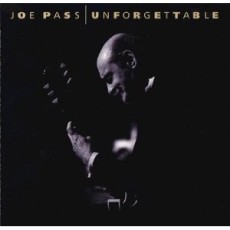
Joe Pass was born Joseph Anthony Jacobi Passalaqua on January 13, 1929 in Brunswick, New Jersey but was raised in Johnston, Pennsylvania. Inspired by Gene Autry’s portrayal of a guitar-playing cowboy. His father gave him his first guitar on his 9th birthday and encouraged him to pick up tunes by ear, play pieces not specifically written for guitar and practice scales leaving no spaces between the notes of the melody.
As early as 14, Joe started gigging with bands fronted by Tony Pastor and Charlie Barnet as he honed his guitar skills and learned the music business. He began traveling with small jazz groups, eventually ending up in New York City. Unfortunately, he fell victim to drug abuse spending a good portion of the 1950s in relative obscurity, reappearing only after a two-and-a –half year stay in rehab at Synanon that resulted in the 1962 album “The Sounds of Synanon”.
Throughout the sixties Pass recorded a series of albums for the Pacific Jazz label, received Downbeat magazine’s “New Star Award” in ’63, toured with George Shearing, was a sideman with Louis Bellson, Frank Sinatra, Sarah Vaughan, Joe Williams, Della Reese and Johnny Mathis, and worked on TV shows including The Tonight Show with Carson, Merv Griffin, Steve Allen and others.
By the early 1970s, Pass and guitarist Herb Ellis were performing together regularly at Donte’s in Los Angeles, a collaboration that led to the recording of Jazz/Concord with Ray Brown and Jake Hanna in tow. During this time he also collaborated on a series of music books, and his Joe Pass Guitar Style is considered a leading improvisation textbook for students of jazz.
In 1970 Norman Granz signed pass to his Pablo records in which he released as a leader and worked with Benny Carter, Milt Jackson, Herb Ellis, Zoot Sims, Duke Ellington, Dizzy Gillespie, Count Basie and many, many others. In 1974, along with Oscar Peterson and Niels-Henning Orsted Pederson they won a Grammy with their album “The Trio” for Best Jazz Performance by a group. Throughout the late 70sto mid 80s, Joe and Ella Fitzgerald would record six albums together as her career was nearing its end. In 1994, guitarist Joe Pass died from liver cancer in Los Angeles on May 23rd at the age of 65.
More Posts: guitar
Daily Dose Of Jazz…
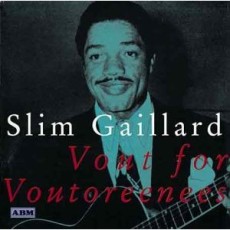
Bulee “Slim” Gaillard was born on January 4, 1916 in Santa Clara, Cuba. His childhood in Cuba was spent cutting sugarcane and picking bananas, as well as occasionally going to sea with his father. At age 12, he made his way to America settling in Detroit. A move to New York City in the late 1930s saw Gaillard’s rise to prominence as part of Slim & Slam, a jazz novelty act he formed with bassist Slam Stewart. Their hits included “Flat Foot Floogie”, “Cement Mixer” and the hipster anthem, “The Groove Juice Special”.
Gaillard’s appeal was that he presented a hip style with broad appeal, was a master improviser whose stream of consciousness vocals ranged far afield from the original lyrics along with wild interpolations of nonsense syllables. Gaillard could play several instruments, such as guitar and piano and always managed to turn the performance from hip jazz to comedy.
In the late forties and early fifties, Gaillard frequently opened at Birdland for such greats as Charlie Parker, Flip Phillips and Coleman Hawkins. Slim composed theme songs for radio shows, appeared in several shows in the 1960s and 1970s, such as Charlie’s Angels, Mission Impossible, Along Came Bronson and Roots: The Next Generation. By the early 1980s he was touring the European jazz festival circuit, playing with such musicians as Arnett Cobb.
Slim Gaillard, singer, songwriter, pianist, guitarist and actor noted for his vocalese, spoke 9 languages including “Vout”, a language he constructed out of word play and created a dictionary, passed away on February 26, 1991 in London, England at the age of 75.