

Daily Dose Of Jazz…
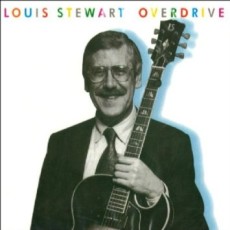
Louis Stewart was born January 5, 1944 in Waterford, Ireland. He began his professional career performing in Dublin showbands. In 1968 he performed at the Montreux International Jazz Festival with Irish pianist Jim Doherty and received the Outstanding European Soloist award.
He was offered and turned down a scholarship to attend Berklee Colege of Music for a job with Benny Goodman’s band in 1970. Stewart began recording as a leader in the 1976 with Louis the First. His sidemen have included Sam Jones, Billy Higgins, Peter Ind, Red Mitchell and Spike Robinson
During the late 1970s he began working with George Shearing, touring America, Brazil and major European festivals, and recording eight albums, including several in trio with bassist Niels-Henning Orsted-Pederson. Louis also appeared on albums with Joe Williams and J.J. Johnson.
As a leader his musical roots lean towards be-bop and material associated with Charlie Parker. Guitarist Louis Stewart has recorded twenty albums to date and has received an honorary doctorate from Trinity College Dublin and continues to perform, record and tour.

Dose A Day – Blues Away
More Posts: guitar
Daily Dose Of Jazz…
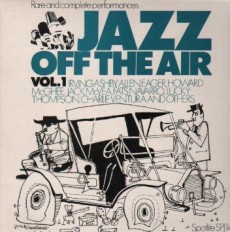
Irving C. Ashby was born December 29, 1920 in Somerville, Massachusetts. After playing rhythm guitar in Lionel Hampton’s orchestra, he played in the Nat King Cole Trio from 1947 to 1951. He then briefly replaced drummer Charlie Smith in the Oscar Trio, producing a lineup of piano, guitar and bass similar to the Cole Trio’s, a substitution that continued until 1958.
After leaving the Peterson Trio, Ashby concentrated on session work for the labels. His subsequent recordings included sessions with Norman Granz, Sheb Wooley, LaVern Baker, Howard Roberts, B.B. King, Louis Jordan, Pat Boone and Illinois Jacquet.
In addition to performing on guitar, Irving Ashby also played the upright bass until his passing on April 22, 1987 in Perris, California at the age of 66.
Dose A Day – Blues Away
Daily Dose Of Jazz…
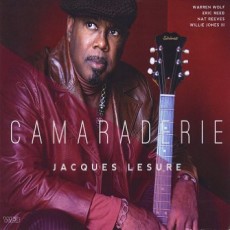
Jacques Lesure was born on December 19, 1962 in Detroit, Michigan. He began playing guitar when he was ten years old, attended Renaissance High School and Interlochen Arts Academy every summer. Started playing in church, he played with the Clark Sisters for many years. He went on to attend Wayne State University.
Signed to WJ# Records, owned by Willie Jones III, he is label mates with Eric Reed and Warren Wolf. He has performed with Kenny Burrell, Oscar Brown Jr., Jimmy Smith, Stanley Turrentine, Freddy Cole, Wynton Marsalis, George Benson, Jack McDuff, Les McCann, Carmen Lundy, Oliver Lake, Paula West and the list goes on and on.
In a career that has spanned 30 years to date, he has collaborated in the creation of and performed in stage plays, movie scores and special projects for television. Active in the Los Angeles, California community where he resides, as an educator he mentors many up and coming musicians. He is the Musical Director for the Living Legends Foundation, President of the African-American Jazz Caucus, is an Artist Teacher for the Monk Institute, Music LA and The Dolo Coker Jazz Foundation, and a national adjudicator, judging student competitions nationwide. Guitarist Jacques Lesure continues to perform and tour with his group and as a sideman.
Give The Gift Of Knowledge
More Posts: guitar
Daily Dose Of jazz…
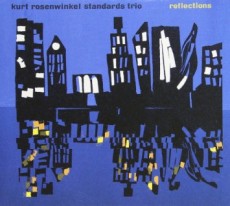
Kurt Rosenwinkel was born October 28, 1970 in Philadelphia, Pennsylvania. A guitarist by choice, his influences include John Coltrane, Pat Metheny, Allan Holdsworth, Tal Farlow, George van Eps, John Scofield and Alex Lifson, among others. He matriculated through Berklee College of Music before leaving in his junior year to tour with Gary Burton, the dean of the school at the time.
Subsequently, Rosenwinkel moved to Brooklyn, where began performing with Human Feel, Paul Motian’s Electric Bebop Band, Joe Henderson Group, and the Brian Blade Fellowship. During that time he began using a Lavalier lapel microphone fed into his guitar amplifier that blends his vocalizing with his guitar, much like George Benson and Pat Metheny.
In 1995 he won the Composer’s Award from the National Endowment for the Arts and was signed by Verve Records. Kurt has played and recorded both as a leader and sideman with Mark Turner, Brad Mahldau and Joel Frahm, Aaron Goldberg, Joe Martin, Eric Harland, Aaron Parks, Eric Revis and Justin Faulkner on the short list. He has collaborated with Q-Tip of A Tribe Called Quest, co-producers of Heartcore with Ben Street, Jeff Ballard and Mark Turner. He would have further collaborations with Q-Tip that yielded The Renaissance and Kamaal/The Abstract.
A move to Berlin, Germany has guitarist Kurt Rosenwinkel performing in Europe and on the faculty at the Hochschule fur Musik Hanns Eisler.
Dose A Day – Blues Away
More Posts: guitar
Daily Dose Of Jazz…
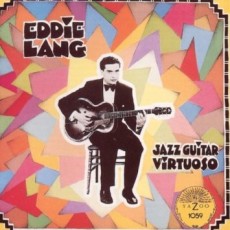
Eddie Lang was born Salvatore Massaro on October 25, 1902 in Philadelphia, Pennsylvania. He first took violin lessons for 11 years and while in school he became friends with Joe Venuti, with whom he would work for much of his career. By the time he was 16 he was playing violin, banjo and guitar professionally. He worked with various bands in the Northeast United States, worked in London between late 1924 to early 1925, and then settled in New York City.
By 1927 Lang was being featured along with cornetist Bix Beiderbecke on the recording of Singin’ the Blues by Frankie Trumbauer and His Orchestra. Between the two trading licks and soloing this session became a landmark jazz recording of the decade. 1929 saw him joining Paul Whiteman’s Orchestra and performing in the movie King of Jazz. The following year he played guitar on the original recording of the jazz and pop standard Georgia On My Mind recording with Hoagy Carmichael and His Orchestra with Joe Venuti and Bix Beiderbecke.
Eddie would leave Whiteman’s band with Bing Crosby and as his accompanist was back in the movies with Big Broadcast. Switching gears to play blues he recorded under the pseudonym Blind Willie Dunn on a number of blues records with Lonnie Johnson. Over the course of his short career he composed some three-dozen songs and recorded with the bands of Joe Venuti, Frank Signorelli, Adrian Rollini, Roger Wolfe Kahn, Jean Goldkette, in addition to doing a large amount of freelance radio and recording work.
Guitarist Eddie Lang, who was one of the three major innovators of jazz guitar and who influenced future guitarists, such as Django Reinhardt, passed away following a tonsillectomy in New York City on March 26, 1933 at the age of thirty. He had been urged by Crosby to have the tonsillectomy so that he might have speaking parts in Crosby’s films. His voice was chronically hoarse, and it was hoped that the operation would remedy this.
His recording of Singin’ The Blues with Frankie Trumbauer and His Orchestra was inducted into the Grammy Hall of Fame and has been placed on the U.S. Library of Congress National Recording Registry. He has been inducted into the Big Band and Jazz Hall of Fame, is one of the ASCAP Jazz Wall of Fame inductees.
Give The Gift Of Knowledge
More Posts: guitar