

Daily Dose Of Jazz…
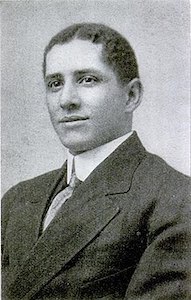
Harry Herbert Pace came into this world on January 6, 1884 in Covington, Georgia. No information is available about his parents but his grandfather was a slave related to his master who ultimately freed him. The young lad however completed elementary school at the age of twelve.
Enrolled at Atlanta University, Pace found work as a printer’s devil or an apprentice mixing tubs of ink and fetching type to pay his way through school. However, after learning that pay equity was higher for whites employees than black employees he left and began working odd jobs on campus instead. While at school he met W. E. B. Du Bois, who was one of his professors, and he went on to graduate valedictorian of his class in 1903, at 19.
A move to Memphis, Tennesse saw Harry going into the printing business with Du Bois. Then two years later they put together the short-lived magazine The Moon Illustrated Weekly. By 1912 he was collaborating and writing songs with W. C. Handy, who took a liking to him. They founded the Pace and Handy Music Company, which brought him to New York City. Around 1920, the company began working with composers William Grant Still and Fletcher Henderson.
A visionary who saw that the growing popularity of the phonograph would shift the music business as it reached a wider audience wanted to expand beyond selling sheet music for parlour playing. Handy had no interest in changing the business, so Pace resigned.
While living in 1921 Harlem, New York he established Black Swan Records after singer Elizabeth Taylor Greenfield, who was called the Black Swan. Their offices were in Times Square and he set up a recording studio in the basement of his brownstone. He brought in Henderson as recording manager and Still as arranger. The label’s first hit was a recording of Down Home Blues and Oh, Daddy, sung by Ethel Waters. Even with outstanding artists the label failed, went into bankruptcy and was sold to Paramount Records in 1923.
In 1925, Pace founded the Northeastern Life Insurance Company in Newark, New Jersey, which became the largest African-American-owned business in the North during the 1930s. Moving to Chicago, Illinois he attended the Chicago-Kent College of Law, receiving his degree in 1933. Around this time, he began passing for White and opened a law firm in downtown Chicago in 1942. His progeny would not discover his African ancestry until well after his death.
Music publisher, record label owner and life insurance executive Harry Pace, who is featured on the documentary series Profiles of African-American Success and in the miniseries The Vanishing of Harry Pace on Radiolab. transitioned on July 19, 1943, in Chicago.
More Posts: history,instrumental,jazz,music,music publisher,record label owner
Daily Dose Of Jazz…
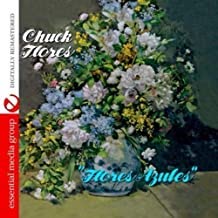
Chuck Flores was born Charles Walter Flores on January 5, 1935 in Orange, California, and grew up in Santa Ana, California. Best known for his work with saxophonist Bud Shank in the 1950s, he also had a two-year stint with Woody Herman from 1954 to 1955.
Throughout his career Chuck performed and recorded with, among others, Carmen McRae, Art Pepper, Maynard Ferguson, Al Cohn, and Shelly Manne. His drum teacher Manne and others considered him an underrated drummer.
In his later years, Flores became a highly sought after and renowned educator who was a longtime faculty member at Musicians Institute in Los Angeles, California.
A few of his students were Danny Seraphine, Chad Wackerman, John Wackerman, Brooks Wackerman, Ray Mehlbaum, Pete Parada, Jamie Wollam, Jose Ruiz and Zack Stewart.
Drummer Chuck Flores, who was one of the relatively small number of musicians associated with West Coast jazz who were actually from the West Coast, transitioned on November 24, 2016.
More Posts: bandleader,drums,educator,history,instrumental,jazz,music
Three Wishes
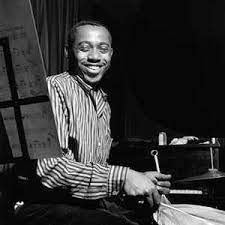
The question was posed to Charlie Persip by Pannonica and he gave a response to his three wishes as:
- “Money, money, money.”
*Excerpt from Three Wishes: An Intimate Look at Jazz Greats ~ Compiled and Photographed by Pannonica de Koenigswarter
More Posts: baroness,drums,history,instrumental,jazz,music,pannonica,three,wishes
Daily Dose Of Jazz…
David Lee, Jr. born January 4, 1941 in New Orleans, Louisiana played professionally from his early teens. While serving in the U. S. Army, he was a member in several bands. In 1969, he co-founded the New Orleans Jazz Workshop.
In 1969 Dizzy Gillespie brought Lee into his band and soon after he was working with Roy Ayers in 1971 and Sonny Rollins for three years beginning in 1972. The Rollins recordings were hard swinging but included the plethora of tempos of the Seventies.
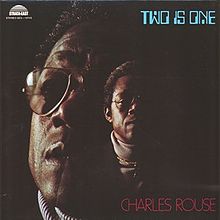
Forming a quartet but never recording as a leader, he continued to work as a sideman. On August 4, 2021, drummer and composer David Lee, who recorded Yoshiaki Masuo, Charlie Rouse, Lonnie Liston Smith and Richard Wyands among others, transitioned at 80 years of age.
More Posts: bandleader,composer,drums,history,instrumental,jazz,music
Daily Dose Of Jazz…
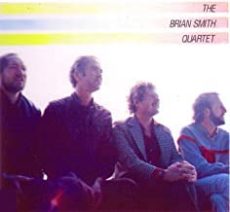
Brian Smith was born on January 3, 1939 in Wellington, New Zealand and studied piano in his youth but was primarily an autodidact on reeds. He played locally in pop and jazz groups before moving to England in 1964, where he played with Alexis Korner’s Blues Incorporated.
Following this stint he played at Ronnie Scott’s Jazz Club from 1966 to ‘67 and in the big bands of Tubby Hayes and Maynard Ferguson from 1969 to 1974. Smith went on to work with the group Nucleus from 1969 to 1982. During the next two decades he also performed with Mike Westbrook, Neil Ardley, Mike Gibbs, the Spontaneous Music Ensemble, Keith Tippett, Pacific Eardrum and Paz.
1982 saw the return to New Zealand, where Brian began playing with his own quartet. His 1984 album Southern Excursions was named Australian Jazz Record of the Year. Based out of Auckland, working with Frank Gibson, Jr. later in the Eighties, his Moonlight Sax albums were chart successes in New Zealand. Saxophonist and flautist Brian Smith continues to perform and record.
More Posts: bandleader,flute,history,instrumental,jazz,music,saxophone