

Daily Dose Of Jazz…
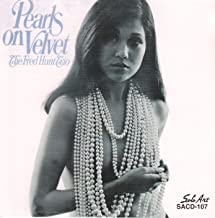
Herbert Frederick Hunt was born September 21, 1923 in London, England to musician parents. A self taught pianist, he started playing at the age of 13 and played local gigs before joining the Royal Air Force.
After demobilization, he began his musical career playing semi-professionally with Mike Daniels and the Cy Laurie Four in 1951. He then became professional and went on to join the Alex Welsh Band from 1954 to 1962 and again from 1964 to 1974.
As Welsh’s primary pianist and a featured soloist, he became one of Britain’s leading trad jazz musicians. He recorded with Eddie Davis, Bud Freeman, Eddie Miller, and Ben Webster in 1967. His work with Alex Welsh did not stop him from accompanying visiting Americans, including recording with the four-tenor group, Tenor Of Jazz, featuring Ben Webster and Eddie “Lockjaw” Davis, which toured in the late 60s.
After leaving Welsh in 1974, he played in Copenhagen, Denmark and South Africa, then after 1976 split his time between Britain, Denmark and Germany. He led a trio featuring drummer Lennie Hastings from 1978 although Hastings died that year. In 1979 the German label Erus Records released a live recording titled Yesterdays, featuring the Fred Hunt Trio, with Hunt on piano, bassit Brian Mursell and drummer Roger Nobes.
In the late Seventies Hunt toured with Wild Bill Davison and played with Welsh once more in the early 1980s. He retired due to failing health after being incapacitated and confined to wheelchair, though he worked frequently at London’s PizzaExpress Jazz Club until his death. Pianist Fred Hunt, who played in both modern and trad jazz musical settings, passed away in Weybridge, Surrey, England at the age of 62 on April 25, 1986.

More Posts: bandleader,history,instrumental,jazz,music,piano
Daily Dose Of Jazz…
Francis Williams was born September 20, 1910 in McConnell’s Mill, Pennsylvania. His first gigs were with Frank Terry’s Chicago Nightingales in the 1930s.
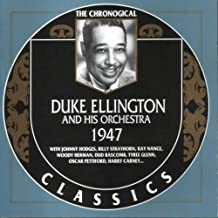
In 1940 he moved to New York City, and in the first half of the decade played in the bands of Fats Waller, Claude Hopkins, Edgar Hayes, Ella Fitzgerald, Sabby Lewis, and Machito. From 1945 to 1949, and again in 1951, he played and recorded extensively as a member of Duke Ellington’s orchestra.
Williams worked primarily with Latin jazz ensembles and New York theater bands in the 1950s and 1960s, and played with Clyde Bernhardt and the Harlem Blues and Jazz Band. In addition to working with his own quartet, near the end of his life he worked with Panama Francis.
Trumpeter Francis Williams, who was a single father of two, had one son, actor Greg Morris, passed away on October 2, 1983 in Houston, Texas.
More Posts: bandleader,history,instrumental,jazz,music,trumpet
Requisites
Sassy Swings The Tivoli ~ Sarah Vaughan | By Eddie Carter
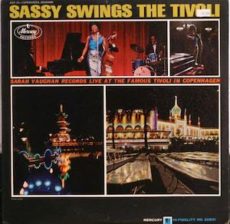
On the stage stands a beautiful woman who’s about to give a memorable performance before a capacity crowd in The Tivoli Theatre. The concert will be praised by the Danish press as one of the highlights of her career. Behind her sit three elegantly dressed gentlemen who’ll match her improvisational techniques, incredible range, and sophisticated style with their musical artistry. Together, they are a perfectly melded ensemble who are up to the task of enchanting the audience. Her name is Sarah Vaughan, and the gentlemen are Kirk Stuart on piano, Charles Williams on bass, and George Hughes on drums who collectively make up The Kirk Stuart Trio. This morning’s choice from the library is Sassy Swings The Tivoli (Mercury Records MG-20831/SR-60831). Quincy Jones was the musical director during the group’s four-day engagement at the Copenhagen hall. He supervised each recording and worked with Sarah on the song selections. My copy used in this report is the 1963 Mono deep groove album.
Side One starts with Won’t You Come Home Bill Bailey? It was written by Hughie Cannon and originally titled Bill Bailey, Won’t You Please Come Home? Cannon wrote the song after his friend Willard “Bill” Bailey discussed his marriage to his wife Sarah during an evening out together. Sassy serves up two exhilarating vocals that swing on the opening and closing melodies. Kirk comes in next for an energetic interpretation illustrating the trio’s remarkable interplay. The quartet slows the pace to a ballad tempo for Misty by Erroll Garner who wrote it with Johnny Burke adding the lyrics a year later. Sarah opens with a seductively stunning showpiece that spills out her emotions with sincere feeling. Stuart shares the spotlight adding a humorous note when he takes over on the bridge with a light touch during his vocal statement. Sarah, Kirk, Charles, and George have a little fun on the finale and these musical pranksters will bring a smile to your face and may even make you laugh a little by the song’s end.
Sassy and the trio offer an uptempo version of the Cole Porter classic, What Is This Thing Called Love? It was first heard in the musical, Wake Up and Dream (1929). Here she makes the lyrics come alive with a jubilant performance including a short, scintillating scat that’s mesmerizing. Amidst a thunderous ovation from the audience, Stuart begins a brief solo introduction developing into an elegantly beautiful rendition of Lover Man by Jimmy Davis, Roger Ramirez, and Jimmy Sherman. The dreamlike softness that Sarah brings to this standard is incredibly tender, soft, and delicately supplemented by the trio’s soothing support. Sometimes I’m Happy by Vincent Youmans and Irving Caesar is a perfect song for jazz vocal improvisation. Sassy and the trio grandly illustrate this at a rapidly brisk tempo. The quartet invites the audience to sit back and enjoy an uptempo free-wheeling scat performance of aggressive rhythmic heat with an agile ending.
Side Two starts with I Feel Pretty by Leonard Bernstein and Stephen Sondheim. This song premiered in the Broadway musical, West Side Story (1957) and was later reprised in the 1961 film. The melody receives a delightfully spring-like interpretation by Sassy who sings the first chorus at midtempo, then picks up the pace for the second verse with a rocking groove and the rhythm section providing the sprightly support behind her. She returns to the original tempo taking the trio through the reprise into a sudden stop followed by the audience’s ovation. Up next is the jazz standard Tenderly by Walter Gross and Jack Lawrence. This ageless classic is presented at a slow tempo with Sassy displaying a deep and strong romantic affection for the lyrics through her voluptuously gorgeous vocals. She even interjects her sense of humor on the word “breeze”. Her three bandmates return the favor by matching the simplicity and exquisite softness with an intimate finesse preceding a lush climax.
Sassy’s Blues is a midtempo original by Sarah and Quincy Jones that the quartet has some fun with beginning with a cheerful introduction that’ll have the listener tapping their feet along to the contagious beat. She takes over for the opening chorus and song’s only statement utilizing her skills to maximum effect with a series of scat verses including maintaining a single note for twenty seconds. She ultimately achieves an easy-going, happy sound on both that’s performed impressively before the ensemble wraps it up. Polka Dots and Moonbeams by Jimmy Van Heusen and Johnny Burke is one of jazz’s most recorded standards. Sassy first recorded this tune on her album Swingin’ Easy (1957). The quartet begins at a very slow tempo, but her delivery is strikingly beautiful with each verse a remarkable commentary of warmth, intimacy, and elegance sustained by the delicate understructure of the rhythm section’s foundation.
The quartet closes with a speedy version of I Cried For You by Gus Arnheim, Abe Lyman, and Arthur Freed. This standard has been a favorite for jazz vocalists for years and is perfect for Sarah to sing one final outstanding number. Sassy lets loose every bit of her energy with a rendition I’m sure brought down the house judging by the audience’s reaction at the song’s finale. The Danish recording engineer and producer, Birger Svan was behind the dials with Quincy supervising the recording of each show. The sound quality of my copy is excellent revealing a smooth soundstage with sparkling highs, crisp midrange, and deep, tight bass. Sassy Swings The Tivoli is a marvelous live album showing Sarah in her prime with The Kirk Stuart Trio backing her beautifully. If you’re a fan of jazz vocals, I happily submit for your consideration, Sassy Swings The Tivoli by Sarah Vaughan. It’s a classic that’ll always be in style, and a must have for your library!
~ Birger Svan, Swingin’ Easy (EmArcy Jazz–Mercury MG-36109) – Source: Discogs.com ~ I Cried For You, Lover Man, Misty, Polka Dots, and Moonbeams, Sometimes I’m Happy, Tenderly, What Is This Thing Called Love? – Source: JazzStandards.com ~ I Feel Pretty, Won’t You Come Home Bill Bailey? – Source: Wikipedia.org © 2021 by Edward Thomas Carter

More Posts: choice,classic,collectible,collector,history,instrumental,jazz,music
Daily Dose Of Jazz…
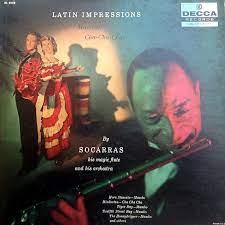
Alberto Socarrás Estacio was born in Manzanillo, Cuba on September 19, 1908 and started learning the flute at age seven with his mother and later joined the provincial music conservatory at Santiago de Cuba. He completed his studies at the Timothy Music Conservatory in New York, gaining the equivalent title to a doctorate in music. In the middle 1920s he moved to Havana to join the theatre orchestra of Arquimedes Pous, where his sister Estrella was playing the violin. He also played in one or two early Cuban jazz bands before moving to the United States in 1927.
Once stateside he recorded with Clarence Williams with his first flute solo taking place on Shooting the Pistol on the Paramount label, making him the earliest known jazz flute soloist. He played with The Blackbirds revue between 1928 and 1933, and played on Lizzie Miles’s 1928 recording You’re Such a Cruel Papa to Me.
During the Thirties he played with Benny Carter, led the all-female Cuban band Anacaona on a tour of Europe, played with Sam Wooding and Erskine Hawkins. He made one recording in 1935, with four numbers, then went on to record for RCA Victor, SMC Pro-Arte and Decca.
In the 1950s he took part in Rod Serling’s The Twilight Zone, concerts of cult music at the Carnegie Hall in New York, and in the 60s he dedicated himself to teaching.
Flautist Alberto Socarras, who in 1983 was filmed by Gustavo Paredes playing the flute in a TV documentary Música, passed away on August 26, 1987 in New York City.
More Posts: bandleader,flute,history,instrumental,jazz,music
Daily Dose Of Jazz…
Teddi King was born Theodora King on September 18, 1929 in Boston, Massachusetts. She won a singing competition hosted by Dinah Shore at Boston’s Tributary Theatre, which led to her beginning to work in a touring revue involved with “cheering up the military in the lull between World War II and the Korean conflict. Improving her vocal and piano technique during this time, she first recorded with Nat Pierce in 1949, later recording with the Beryl Booker Trio as well as with several other small groups from 1954–1955. These recordings were available on three albums for Storyville.
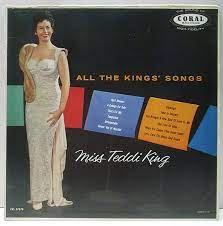
She went on to tour with George Shearing for two years beginning in the summer of 1952, and for a time was managed by the famed George Wein. For a time she was a Las Vegas performer. Teddi ultimately signed with RCA, recorded three albums for the label, beginning with 1956’s Bidin’ My Time. She also had some minor chart success with the singles Mr. Wonderful, Married I Can Always Get and Say It Isn’t So. Her critically praised 1959 album All the Kings’ Songs found her interpreting the signature songs of contemporary male singers like Frank Sinatra and Nat King Cole, the “kings” of the title.
In the Sixties she opened the Playboy Club, where she often performed. After developing lupus, she managed to make a brief comeback with a 1977 album featuring Dave McKenna, and with two more albums recorded for Audiophile released posthumously.
Vocalist Teddi King, who was influenced by Lee Wiley, Mildred Bailey and Mabel Mercer, recorded twelve albums as a leader, passed away from lupus on November 18, 1977.
More Posts: bandleader,history,instrumental,jazz,music,vocal