

Hollywood On 52nd Street
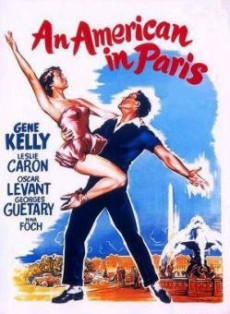
Stairway To Paradise was a tune composed by George Gershwin with lyrics by Ira Gershwin for the 1951 musical film An American in Paris. Gene Kelly, Leslie Caron, Oscar Levant, Georges Guétary and Nina Foch.
The Story: American World War II veteran Jerry Mulligan is now an exuberant expatriate in Paris trying to make a reputation as a painter. His friend and neighbor, Adam Cook s a struggling concert pianist who is a longtime associate of a French singer, Henri Baurel At the ground-floor bar, Henri tells Adam about his cultured girlfriend. A lonely society woman and heiress, Milo Roberts, finds Jerry displaying his art on the street and takes in an interest in him and his art. And the fun begins with dancing and singing.
Sponsored By

www.whatissuitetabu.com
Hollywood On 52nd Street
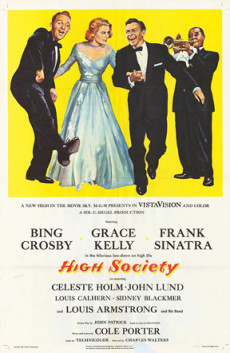
You’re Sensational was a tune written by Cole Porter for the 1956 film High Society starring Bing Crosby, Grace Kelly and Frank Sinatra, who introduced the song.
The Story: The highly successful jazz musician C.K. Dexter Haven (Crosby) was divorced from wealthy Newport, Rhode Island socialite Tracy Samantha Lord (Kelly) but remains in love with her. She, however, is about to get married to a bland gentleman of good standing, George Kittredge.
Spy Magazine, a fictional tabloid newspaper in possession of embarrassing information about Tracy’s father, sends reporter Mike Connor (Sinatra) and photographer Liz Imbrie to cover the nuptials. Tracy begins an elaborate charade as a private means of revenge, pretending that her Uncle Willy is her father Seth Lord and vice versa. Connor falls in love with Tracy. She must choose between three very different men in a course of self-discovery.
Sponsored By
www.whatissuitetabu.com
Hollywood On 52nd Street
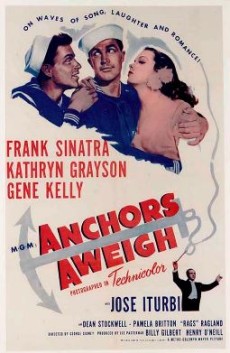
I Fall In Love Too Easily is a 1944 song composed by Jule Styne with lyrics by Sammy Cahn. Frank Sinatra introduced the song in the 1945 film Anchors Aweigh. The film won an Academy Award for its music; the song was nominated for Best Original Song but lost. The other stars of the film were Kathryn Grayson and Gene Kelly.
The Story: Two Navy sailors, Joe Brady and Clarence Doolittle on a four-day leave in Hollywood. Joe has his heart set on spending time with his girl, the unseen Lola. Clarence, the shy choirboy turned sailor, asks Joe to teach him how to get girls. Enter Susan, aunt to a small boy who wants to join the Navy and Clarence is smitten with her at first sight. Susan goes on to tell them that she has been trying to find work in music, and longs to perform with José Iturbi. Trying to impress her with Clarence, Joe tells her that he has arranged an audition. That night, they go out to a cafe, where Clarence meets a girl from Brooklyn, and they hit it off.
With no audition in sight they decide to come clean. Susan gets her screen test on her own, it’s successful and in they end all is forgiven and the lovers kiss as a choir sings the theme song.
Sponsored By
www.whatissuitetabu.com
Hollywood On 52nd Street
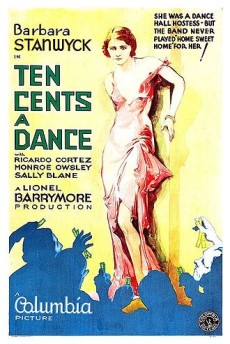
10 Cents A Dance is a song originally written by Richard Rodgers and Lorenz Hart for the Broadway play Simple Simon, which became the inspiration for the 1931 romance-drama film of the same name. The film starred Barbara Stanwyck as a married taxi dancer who falls in love with one of her customers.
The Story: A beautiful streetwise taxi dancer named Barbara O’Neill works at a New York City dance hall called Palais de Dance. One of the dance hall’s wealthy patrons, Bradley Carlton comes to the hall and gives Barbara $100. Concerned about her unemployed friend and neighbor Eddie Miller, Barbara asks Bradley to give him a job, and he agrees. They fall in love, get married, Eddie philanders, they get divorced, they remarry, and then he wanders off to South America. Realizing their love is not strong enough she tries to get another divorce but gets denied by the judge. But after a fight and his gambling she packs her bags, goes to the dance hall and leaves with Bradley for France.
Sponsored By
www.whatissuitetabu.com
Hollywood On 52nd Street
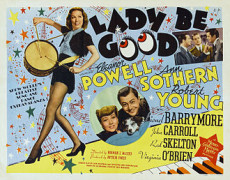
Lady Be Good was performed in the 1941 film Lady Be Good, taking its title and theme song “Oh Lady Be Good” from the 1924 George and Ira Gershwin Broadway musical, but otherwise is unrelated to the musical play. The film starred dancer Eleanor Powell, Ann Sothern, Robert Young, Lionel Barrymore and Red Skelton.
The Story: Eddie Crane, a young composer, is struggling with a tune he has just written. When his girlfriend, Dixie Donegan, provides words almost by accident, the song is published and is a great success.
A few years later, now married and successful songwriters with a hit Broadway show behind them, Dixie realizes that Eddie is spending more time in rich New York society than composing. They divorce, but quickly realize they are still in love and cannot do without each other. They remarry and write more successful songs, but then Eddie goes off to South America, ostensibly to get inspiration to write a symphony. Dixie again seeks a divorce, but the astute judge denies it. Eddie returns and they realize that despite all, they are still in love.
Sponsored By
www.whatissuitetabu.com