

Daily Dose Of Jazz…
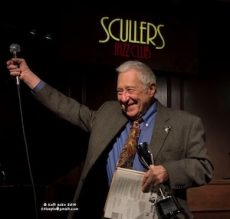
Fred Taylor was born in Boston, Massachusetts on June 29, 1929 and was raised in nearby Newton, Massachusetts. He studied piano as a youth and played drums but it was jazz where he found his calling. Captivated by bebop in the 1940s and ’50s, he got a degree from Boston University, with jazz as his major area of study, seeing live shows, collecting albums, listening to the radio, and simply hanging out. While gaining his jazz legs he worked at his parents’ mattress and upholstery business.
Taylor first started promoting a mix of jazz and folk acts around Boston in 1961. In 1965 he and his business partner Tony Mauriello bought two nightclubs, and renamed them Paul’s Mall and the Jazz Workshop, where the who’s-who of modern jazz, from legends of the bebop generation to young innovators of the fusion era.
When the two venues closed in 1978 the partners bought a movie theater and ran it for eight years. During that period Miles Davis came out of retirement with a new band and asked Taylor to promote his comeback gigs, and his coming-out party in Boston became international news, and the material recorded at Kix was later released on the album We Want Miles, named after the chants that greeted Davis and the group at those first shows.
In 1990 he took over the lounge at the Embassy Suites Hotel which eventually became a full-fledged jazz venue called Scullers. Under his leadership, the club became an essential part of the local music landscape.
Fred then took a young saxophonist named Grace Kelly under his wing, whom he met when she was just 13 years old. He became both Kelly’s mentor and advocate, recommending her to everyone and anyone in the jazz community. Their relationship reflects a lifelong pattern of seeking out new artists, presenting them as performers, and then working to raise both the industry and the public’s awareness of their importance.
In a move that was widely unpopular in Boston and even drew national criticism, Hilton Hotels, the owner of Scullers, terminated its relationship with Taylor in 2016. This ended his reign of more than a quarter-century at the club. At 87 years old, he continued to promote Kelly and other artists he believed in. During his last few years, he finished his autobiography and fought the cancer that would eventually end his life. Jazz impressario Fred Taylor died on October 26, 2023.

More Posts: history,impresario,instrumental,jazz,music
Daily Dose Of Jazz…
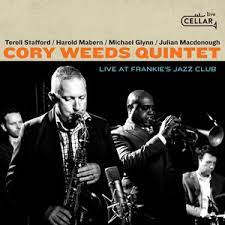
Cory Weeds was born and raised in Burnaby, British Columbia on December 5, 1975. His interest in jazz began in secondary school, and then chose to pursue his post-secondary education by attending Capilano University and the University of North Texas.
>At the age of 26, Weeds purchased a jazz club which would become the Cellar Jazz Club. The venue was selected by DownBeat named Cellar to its list of the world’s greatest jazz clubs. Thirteen years later in 2014 the Cellar Jazz Club shuttered its doors.
Remaining vital in the jazz community of Vancouver, British Columbia he books musicians at Frankie’s Jazz Club and the Shadbolt Centre for the Arts in Burnaby.
In 2023, Cellar Music Group was awarded their first Grammy Award for Best Large Jazz Ensemble Album. The Grammy was awarded to Steven Feifke and Bijon Watson’s Generation Gap Jazz Orchestra for their album Generation Gap Jazz Orchestra.
Weeds has performed alongside musicians including Christian McBride, Joey DeFrancesco, Peter Bernstein, Eric Alexander, Mike LeDonne, and Joe Farnsworth.
Alto and tenor saxophonist and impresario Cory Weeds, who is the founder and owner of the Cellar Music Group record label, continues to perform and record.

More Posts: history,impresario,instrumental,jazz,music,saxophone
Daily Dose Of Jazz…
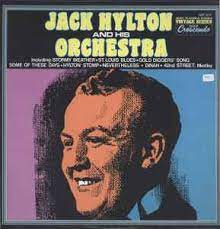
Jack Hylton was born John Greenhalgh Hilton on July 2, 1892 in Great Lever near Bolton, Lancashire, England the son of a cotton yarn twister and an amateur singer at the local Labour Club. He learned piano to accompany him on the stage and later sang to the customers when his father bought a pub in nearby Little Lever, becoming known as the Singing Mill-Boy. He also performed as a relief pianist for various bands.
Moving to London, England as a pianist in the 400 Club during his early career and playing with the Stroud Haxton Band. During World War I he became musical director of the band of the 20th Hussars, and later in the Army Entertainment Division. After the war Hylton formed a double act with Tommy Handley to little success, played with the Queens Dance Orchestra, wrote arrangements of popular songs and recorded them for His Master’s Voice and Zonophone under the label Directed by Jack Hylton. His records carried the new style of jazz-derived American dance music.
Dismissed by his own bandmates from the Queen’s Hall in 1922, Jack not only set up his own band, but also set up a number of other orchestras under the Jack Hylton Organisation. Even though he was not professionally trained for business, he brought his band to success during the Great Depression. He is credited for bringing Duke Ellington, Louis Armstrong and others to Britain and Europe in the 1930s.
Hylton also became a director and major shareholder of the new Decca record label, recorded with Paul Robeson, and made the first transatlantic entertainment broadcast with Paul Whiteman and his orchestra. He performed in the United States when Standard Oil signed him for a radio show on CBS. Returning to Britain he toured Europe, appeared on radio and television and finally disbanded by 1940.
He continued to conduct orchestras for radio in the years to come, leading the Glenn Miller Orchestra when it visited England in 1943. During the war, he took the London Philharmonic Orchestra around Britain, giving promenade concerts. At this point in his career he became an impresario, discovering new stars and managing radio, film and theatre productions.
The Fifties saw him reuniting with old band members for that year’s Royal Command Performance, billed as “The Band that Jack Built”. He founded Jack Hylton Television Productions, which lasted until 1960. IIn his final years Hylton was still producing stage shows, as well as taking a leading role in organising various Royal Command Performances, until his final stage production, Camelot, in 1965.
Complaining of chest and stomach pains he was admitted to the London Clinic, where three days later on January 29, 1965 1892~1965 | pianist, composer, bandleader and impresario Jack Hylton transitioned from a heart attack. He was 72.
More Posts: bandleader,history,impresario,instrumental,jazz,music,piano