

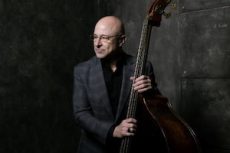
BEN WOLFE QUARTET
RECORD RELEASE
Following his acclaimed 2023 release Unjust, which received accolades from DownBeat, The Wall Street Journal, NPR and more, esteemed bassist and composer Ben Wolfe returns with The Understated. This project features a mix of new compositions and fresh takes on his earlier works, with a notable emphasis on ballads, showcasing Wolfe’s ability to transform the classic song form into a cohesive narrative.
than their individual sound.
The Band: Ben Wolfe ~ Bass | Nicole Glover ~ Saxophone | Orrin Evans ~ Piano | Aaron Kimmel ~ Drums
More Posts: adventure,bandleader,bass,club,genius,instrumental,jazz,music,preserving,travel
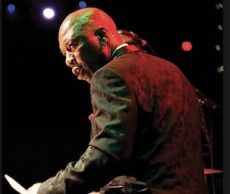
RON SAVAGE
The Ron Savage Berklee Trio features two of Berklee’s stalwart and renowned
More Posts: adventure,bandleader,club,drums,educator,genius,instrumental,jazz,music,preserving,travel

JACQUES LESURE
Hosting the Jazz Jam Session every Monday Night
Jacques Lesure has performed and recorded with some of the top names in music. He has been fortunate to share the stage with musicians in many genres. He has played with Bernadette Peters, Pharoah Sanders, Gregory Porter,Jimmy Smith, Carmen Lundy, the Clark Sisters, Little Milton, James Brown and numerous others.
He has appeared in commercials, on television, in stage in plays and motion pictures including the Oscar winning film, La La Land.
More Posts: adventure,bandleader,club,genius,guitar,instrumental,jazz,music,preserving,travel
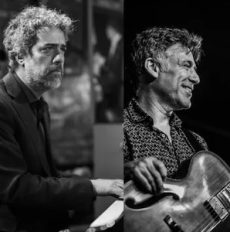
SPIKE WILNER
Trio Contrafactus with special guest Peter Bernstein
Wilner’s career took off in New York’s vibrant jazz scene, performing at iconic venues like the Village Gate and becoming a fixture at Smalls Jazz Club, where he recorded “Late Night: Live At Smalls.” Over the past 15 years, he’s collaborated with jazz greats such as Peter Bernstein, Joe Magnarelli, Grant Stewart, Jesse Davis, Eric Alexander, Jim Rotundi, Joe Farnsworth, Bob Mover, Ian Hedrickson-Smith, Ryan Kisor, Steve Davis, Ralph Lalama, Paul Gill, Neal Miner, Joe Strasser, Ari Roland, Chris Byars, Sherman Irby, Joel Frahm, Omer Avital, Stephon Harris and many others.
An accomplished educator, Spike has taught at institutions like the Brooklyn Conservatory and Juilliard. With several albums to his name, including “Portraits” and “Planet Jazz: In Orbit,” Spike Wilner continues to captivate audiences with his masterful improvisation and deep understanding of jazz history.
Jazz guitarist Peter Bernstein has been a part of the jazz scene in New York and abroad since 1989. During that time he has participated in numerous recordings and performances with musicians from all generations. As a leader, Peter has released nine albums and a DVD. As a sideman Peter has appeared in groups led by Sonny Rollins, Bobby Hutcherson, George Coleman, Lou Donaldson, Dr. Lonnie Smith, Fathead Newman, Joshua Redman, Brad Mehldau, Diana Krall, Lee Konitz, Jimmy Cobb and many more. Current projects include his album, Monk, with Doug Weiss and Bill Stewart, a recently released solo record, Solo Guitar – Live at Smalls, and the highly acclaimed organ trio with organist Larry Goldings and drummer Bill Stewart.
Tickets: $25.50 ~ $55.50
Shows: 7:00pm | 9:15pm
More Posts: adventure,bandleader,club,genius,guitar,instrumental,jazz,music,piano,preserving,travel
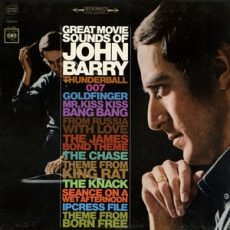
Daily Dose Of Jazz…
John Barry was born John Barry Prendergast in York, England on November 3, 1933 the youngest of four children, his mother, a classical pianist, his father a projectionist. Raised in and around cinemas, this childhood background influenced his musical tastes and interests. He was educated at St. Peter’s School, York, and received composition lessons from Francis Jackson, Organist of York Minster.
Spending his national service in the British Army playing the trumpet and working from a correspondence course with jazz composer Bill Russo, after his service he worked as an arranger for the orchestras of Jack Parnell and Ted Heath. Forming his own band, the John Barry Seven, in 1957, they recorded hit records on EMI’s Columbia label. By 1959 he gained commissions to arrange music for other acts, and his career breakthrough was the BBC television series Drumbeat, when he appeared with the John Barry Seven.
He was employed by EMI from 1959 until 1962 arranging orchestral accompaniments for the company’s singers. He began composing songs and scores for films and when Adam Faith made his first film, Beat Girl in 1960, Barry composed, arranged and conducted the film score, his first. His music was later released as the UK’s first soundtrack album. His composition and orchestration caught the attention of the Bond producers and he went on to have an accomplished career as a composer and arranger with the series.
In 2001, the University of York conferred an honorary degree on Barry, and in 2002 he was named an Honorary Freeman of the City of York. Fiancial issues in Britain forced him to emigrate to the United States where he lived for many years mainly in Oyster Bay, New York, in Centre Island on Long Island
He suffered a rupture of the esophagus in 1988, following a toxic reaction to a health tonic he had consumed. The incident rendered him unable to work for two years and left him vulnerable to pneumonia.
Composer, arranger and conductor John Barry, who won five Academy Awards and four Grammy Awards with scores for Born Free, The Lion in Winter, Midnight Cowboy and Somewhere in Time, died of a heart attack on January 30, 2011 at his Oyster Bay home, aged 77.

More Posts: arranger,composer,conductor,history,instrumental,jazz,music