

Daily Dose Of Jazz…
Bert Niosi was born on February 10, 1909 in London, Ontario, Canada into a family of musicians, having two brothers who became musicians. As a teenager he briefly played clarinet with Guy Lombardo in Cleveland, Ohio.
Proficient on several instruments he played clarinet, flute, saxophone, trombone, and trumpet and formed a dance band in 1931. This began a long association with the Palais Royale dance hall in Toronto, Canada which lasted until 1950.
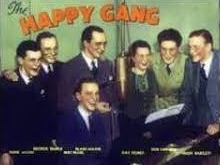
His orchestra, and a smaller group made up of some of its members, was broadcast frequently on CBC Radio. Bert played alto saxophone and clarinet in the small band. He was also a member of CBC radio’s The Happy Gang musical series from 1952 to 1959.
Alto saxophone, clarinetist and bandleader Bert Niosi, known as Canada’s King of Swing, died in Toronto, Canada on August 3, 1987.

More Posts: bandleader,clarinet,history,instrumental,jazz,music,saxophone
Daily Dose Of Jazz…
Joseph Gabriel Esther Maneri was born on February 9, 1927 in Brooklyn, New York. His formal schooling only went through the eighth grade, dropping out because of an undiagnosed attention deficit disorder. He went on to receive a rigorous classical music education from Josef Schmid, who taught courses in Arnold Schoenberg’s harmony, counterpoint and composition. As a composer he was mostly self-taught and his compositions were featured at Carnegie Recital Hall in 1961, including his Divertimento for piano, drums, and double bass.
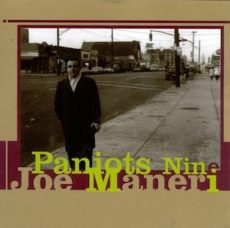
His early work was with Gunther Schuller and his 20th Century Innovations Ensemble performances of Third Stream music at Carnegie Hall. Schuller arranged a record deal for Maneri with Atlantic Records, but the 1963 recording was not released. Twenty-five years later the Atlantic recording session tapes were released by the Avant label under the title Paniot’s Nine. During the 1990s Joe released 14 additional albums on the ECM, Hat Hut, Leo labels, often in collaboration with his free-style violinist son Mat.
Maneri went on to teach harmony, 16th Century counterpoint and composition at the Brooklyn Conservatory while continuing to compose. In 1963, he was commissioned by Erich Leinsdorf of the Boston Symphony Orchestra to write a piano concerto that premiered in 1985 by the American Composers Orchestra and pianist Rebecca la Brecque at Alice Tully Hall. He founded the Boston Microtonal Society, dedicated to microtonal music and tuning.
Saxophonist, clarinetist and composer Joe Maneri invented a keyboard that had 588 notes: 72 pitches per octave and co-authored a theory book titled Preliminary Studies in the Virtual Pitch Continuum, died on August 24, 2009 at the age of 82 of heart failure.
More Posts: clarinet,composer,history,instrumental,jazz,music,saxophone
Daily Dose Of Jazz…
Ron Kobayashi was born February 8, 1962 in Southern California. He has worked with Kenny Burrell, Tom Scott, Margaret Whiting, Peter Frampton, the Modernaires, Peter White, Mel Tormé, and Tim Weisberg.
He has led the Ron Kobayashi Trio since its formation in 1994. They have recorded Live at Steamers for DVD and four compact discs and received global airplay. In 1996 the trio was voted Best Jazz Group in Orange County by Orange County Weekly readers. In 2012, the trio was nominated for Best Jazz at the Orange County Music Awards.
He served as music director of the Hollywood Diversity Awards for five years. Pianist Ron Kobayashi is a faculty member at The Orange County School of the Arts and Biola University and continues to perform.
Daily Dose Of Jazz…
David Joseph Shepherd was born February 7, 1929 in Walthamstow, London, England to Joseph Shepherd, a semi-professional piano player and gas company employee. He began on piano before switching to clarinet at age 16 in 1945. He studied under a clarinetist from the Hamburg State Opera Orchestra while stationed in Hamburg, Germany after World War II. Upon his return to England in 1950 he played with Reg Rigden, Joe Daniels and his Hotshots, and Freddy Randall to the middle of the decade.
He played with Billie Holiday and Gerry Mulligan on their British tours. He played in New York City in 1956 with Ted Kotick, then returned to England to play with the Jazz Today Unit and with the Jazz at the Philharmonic. He also played with Mary Lou Williams several times during the 1950s.
The 1960s and 1970s saw Dave playing with Randall again and with Teddy Wilson, at the Montreux Jazz Festival and in South Africa. During this period he was heard a lot more with his quartet on BBC Radio 2’s Jimmy Young programme as well as Round Midnight, Breakfast Special, and Music While You Work.
Centered in the UK found him working regularly with trombone player Roy Williams, Len Skeat and many more. He was a frequent guest with his line up called The Dave Shepherd Quintet on BBC Radio 1’s Sounds of Jazz. He based his style on Benny Goodman and was praised for his accuracy and unfailing swing and a quality of musical elegance.
He performed with Peter Boizot’s Pizza Express All Stars Band at the Pizza Express Jazz Club from 1980 to 1999. He led several of his own bands and has done extensive work producing music for film and television. Shepherd continued to solo and make guest appearances until shortly before his death.
Clarinetist Dave Shepherd, who was described by fellow jazz musician Digby Fairweather as Britain’s greatest swing clarinettist since 1948, on December 15, 2016 in Hampshire, England.
More Posts: bandleader,clarinet,history,instrumental,jazz,music
Daily Dose Of Jazz…
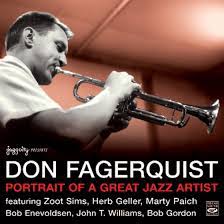
Donald Alton Fagerquist, born February 6, 1927 in Worcester, Massachusetts and studied trumpet privately under Ms. Marion Twiss at Roosevelt Elementary and lessons at Carl Seder’s Music as well as classes at North High School. He began playing around his hometown in 1940 with Paul rhode, Paul Gervais, Bud Boyce and the Ambassadors/Crusaders. By 1942 he had played a year each with the Dol Brissette Orchestra and the Bob Pooley Band.
At 16 Fagerquist was making a name for himself through the decade as a featured soloist with several major bands, including Mal Hallett, Gene Krupa, Artie Shaw, and Artie Shaw’s Gramercy Five. In the Fifties he was performing with Woody Herman, Les Brown, and the Dave Pell Octet. He played on the Ella Fitzgerald Sings the Jerome Kern Songbook album in 1963 under the baton of Nelson Riddle.
Despite high demand for his services as a lyrical soloist, Donald only recorded twice as a leader, a half-date for Capitol Records in 1955 that was reissued as part of the Dave Pell Octet compact disc, I Had the Craziest Dream, and a complete project for Mode in 1957 titled Music to Fill a Void. During the 1950s he recorded more than two dozen albums with Chet Baker, Louis Bellson, Hoagy Carmichael, Bob Cooper, Fred Katz, Shorty Rogers, Stan Kenton, Mel Tormé, Benny Goodman, Skip Martin and Pete Rugolo.
In 1956, Fagerquist signed on as a staff musician for Paramount Films, while still periodically recording with artists such as Shelly Manne, Mel Tormé, and Art Pepper. Throughout the early to mid-1960s, his solos could be heard on the recordings of Pete Rugolo, Frank Comstock, Nelson Riddle, Billy May, Paul Weston, Si Zentner, Dean Martin, Junior Mance, and many others.
However, by 1966 health issues forced him to withdraw from studio recordin. Trumpeter Don Fagerquist, who was a small group, big band, and studio session player, died from kidney disease at his home in Canoga Park, Los Angeles, California at the age of 46 on January 23, 1974.
More Posts: bandleader,history,instrumental,jazz,music,trumpet