DOUBLE N TRIO & NEGRONI’S TRIO
The Double N Trio is headed up by Noah Nipp, hence the double “n” in the groups name.
Negroni’s Trio is a jazz band that plays piano jazz, Latin jazz, hard bop, jazz instrument, and soul jazz. The band is made up of Jose Negroni on piano, Nomar Negroni on drums, and Josh Allen on bass. They have been active since 2002 and have released nine albums, including New Era, Esperanzas/Hopes, and Piano – Drums – Bass. Their songs include “Esperanzas”, “El Incomprendido”, and “Sunny”.
More Posts: adventure,bass,drums,genius,jazz,music,piano,preserving,travel

LEESA RICHARDS QUARTET & JEAN CAZE QUARTET
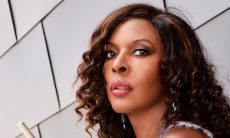
As a part of Miami’s vibrant music scene, singer/songwriter Leesa Richards grew up in music-rich Detroit and started showing an inclination towards the arts at a very early age. “My parents listened to a lot of jazz and I would record myself over and over singing along to Nancy Wilson records,” she says. But when she saw Alvin Ailey American Dance Theater, she knew she wanted to be a dancer. She graduated from University of North Carolina School of the Arts with a degree in dance and began her career on stage performing with a variety of dance companies.
She began honing her vocal chops with soul greats Gerald Austin and Peabo Bryson and contemporary soul maverick Dionne Farris. Her first world tour was as a dancer with legendary singer Whitney Houston after which she combined her love for music and dance to earn the role of Mary Magdalene in the national tour of the Broadway musical, Jesus Christ Superstar, earning critical acclaim which led to featured performances throughout the US and Europe.
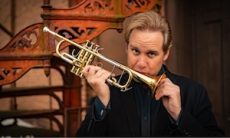
Renowned jazz trumpeter Jean Caze, stands as a prominent figure in today’s jazz scene. His magnetic performances have graced stages alongside icons such as Herbie Hancock, Aretha Franklin, Mariah Carey, Al Jarreau, Roy Hargrove, Arturo Sandoval, and George Duke, among others. Currently serving as the featured soloist for Michael Bublé worldwide, Jean’s musical journey traces back to his roots in Queens, NY, where his passion ignited at the age of nine. By his senior year, he showcased his talent on national television with “Chicago” on NBC.
Jean’s dedication to his craft earned him scholarships, accolades, and widespread recognition, culminating in a Bachelor’s degree from Manhattan School of Music and a Master’s from Florida International University. Noteworthy achievements include securing second place in the 2007 Thelonius Monk International Jazz Trumpet Competition and claiming victory in both the 2004 National Trumpet Jazz Competition and the 2006 International Trumpet Guild Jazz Competition.
More Posts: adventure,concert,genius,jazz,music,preserving,travel,trumpet,vocal

Requisites
Home Cookin’ ~ Jimmy Smith | By Eddie Carter
I’d had a really long week and wanted to hear some organ jazz when I came across a title I always enjoyed but hadn’t listened to in a while. Jimmy Smith provides the recipe for seven courses of hard bop and soul-jazz with a side of the blues in Home Cookin’ (Blue Note BLP 4050/BST 84050). It’s a delicious quartet meal of pure organ bliss taken from three different sessions that hit the stores in 1961. Jimmy is joined by Percy France (tracks: A1, A4, B1, B2) on tenor sax, Kenny Burrell on guitar, and Donald Bailey on drums. My copy is the 1992 Toshiba EMI Japanese Stereo reissue sharing the original catalog number.
Side One opens with See See Rider by Gertrude “Ma” Rainey and Lena Arant. Jimmy and the trio introduce the theme at a slow tempo. Kenny has the first spot and swings lightly to the leader’s fat bass lines and Donald’s subtle brushwork. Percy follows with a down-home reading, and then Jimmy is equally elegant in a short solo ahead of the song’s finale. Sugar Hill by Kenny Burrell is dedicated to an area of Harlem and picks up the pace significantly as the composer leads Smith and Bailey through the melody. Kenny gets things going with a lively lead solo, and then Jimmy comes in for a spirited statement that moves along nicely. Burrell adds a few more comments preceding the reprise and slow fadeout.
I Got A Woman by Ray Charles would become a big hit for Jimmy McGriff a year later. Smith and company offer a change of pace from that swinger with a medium groove featuring Jimmy in the solo spotlight. The organist’s soulful presentation is a danceable treat until the threesome reprises the ending theme into a slow dissolve. Messin’ Around by Jimmy Smith brings back France to the foursome for the medium melody. Burrell is up first again with a sparkling statement. France puts a lot of heart and emotion into the following reading, then Smith’s short solo leads back to the quartet’s theme restatement and fade out.
Side Two begins with an introduction to a lovely lady named Gracie by Jimmy Smith. The quartet’s leisurely theme sets the tone for Percy’s contagious opening statement. Kenny skillfully constructs the second solo, and then Jimmy delivers one of his smoothest readings preceding the out-chorus. Come On Baby by Kenny Burrell is a solid blues that grabs the listener from the start of Smith’s melody and informal, easy opening interpretation. France steps up next with an excellent example of his superb tone quality. Burrell enters the picture next for a brief presentation before Jimmy adds a few last thoughts until the slow fade into nothingness.
Jimmy’s Motoring Along is the album’s closing number and the final trio track. The beat shifts upward for the melody. Kenny gets his message across in the lead solo, and Jimmy is a joy to listen to in the closer. Donald keeps the excitement in the beat going until the theme’s closing chorus and the trio’s slow exit. Alfred Lion produced Home Cookin’, and Rudy Van Gelder was the man behind the dials. The sound quality is good but not great, and the reason is the same issue I had with Hootin’ ‘n Tootin’ and Open House. The microphone placement for Jimmy’s organ has a level of distortion that is particularly noticeable on every track but not as bad on Come On Baby.
The front and rear covers are both laminated, and the record is incredibly quiet until the music starts. That aside, the good news is I enjoyed the music, particularly Percy France who I was unaware of, but pleasantly surprised with his playing because he reminded me of Stanley Turrentine. Burrell and Bailey are as solid a rhythm section as anyone could have, and they’ve collaborated with Jimmy on four other albums: Back At The Chicken Shack, Houseparty, Midnight Special, and The Sermon. If you’re a fan of hard bop, soul-jazz, or Jimmy Smith, I hope you will check out Home Cookin’ on your next record shop visit. It’s a tasty musical meal I’m sure you won’t regret adding to your library!
~ Back At The Chicken Shack (Blue Note BLP 4117/BST 84117), Hootin’ ‘n Tootin’ (Blue Note BLP 4094/BST 84094), Houseparty (Blue Note BLP 4002/BST 84002), Midnight Special (Blue Note BLP 4078/BST 84078), Open House (Blue Note BLP 4269/BST 84269), The Sermon (Blue Note BLP 4011/BST 84011) – Source: Discogs.com
~ See See Rider – Source: Wikipedia.org © 2024 by Edward Thomas Carter
More Posts: choice,classic,collectible,collector,history,instrumental,jazz,music,organ

Daily Dose Of Jazz…
Glenn Paul Zottola was born in Port Chester, New York on April 28, 1947. He started playing jazz professionally in 1960.
Glenn is known for his work with Lionel Hampton, Benny Goodman, and Bob Wilber, and has accompanied a broad range of vocalists, including Mel Tormé, Frank Sinatra, Peggy Lee, Ella Fitzgerald, and Joe Williams.
He has recorded over 50 albums with Butch Miles, Bob Wilber, Mousey Alexander, Steve Allen, Phil Bodner, George Kelly, Peggy Lee, George Masso, George Masso, and Maxine Sullivan, among numerous others.
In 1988, was a featured soloist at the 50th anniversary of Benny Goodman’s Carnegie Hall Concert. In 1995, Zottola was bandleader on the Suzanne Somers daytime TV talk show at Universal Studios.
Trumpeter and saxophonist Glenn Zottola, who has recorded twenty-two albums as a leader, continues to perform and record.
More Posts: bandleader,history,instrumental,jazz,music,saxophone,trumpet

Daily Dose Of Jazz…
Tale Ognenovski was born April 27, 1922 in Brusnik, Bitola, Kingdom of Yugoslavia. He inherited his talent from his reed pipe great-grandfather Ognen and grandfather Risto and his father Jovan who played bagpipes. When he was seven he began playing on the reed pipe. With his father passing away in 1937 and when he was fifteen his grandmother gave him some money to buy his first clarinet.
During WWII he served as a Macedonian Partisan, Tale began playing clarinet at celebrations and concerts in villages and the town of Bitola with numerous musicians. For three years beginning in 1951 he worked as a member of the Police Wind Orchestra and from 1954 till 1956 he worked with the Public Town Skopje Orchestra.
1956 saw him performing to a capacity audienceat Carnegie Hall in New York City as a clarinet and reed pipe/recorder soloist of the Macedonian State Ensemble of Folk Dances and Songs. A seven year residency starting in 1960 had Ognenovski working with Radio Television Skopje. He went on to play in orchestras and ensembles that toured North America, and Europe.
HIs recordings were not singularly jazz, but included the works of Benny Goodman and Artie Shaw. Tale also recorded classical and folk dances, often interlinking the three genres. Alongside his son Stevan, they arranged for two clarinets the music of Mozart. He was the recipient of twenty-one prestigious awards, had several articles and was recognized as one of the top 100 clarinetists of all time.
Clarinetist Tale Ognenovski, who authored a book on Macedonia dance and was biographed by his son Stevan, died in Skopje, Macedonia on June 19, 2012.
More Posts: arranger,bandleader,clarinet,history,instrumental,jazz,music,recorder