

Daily Dose Of Jazz…
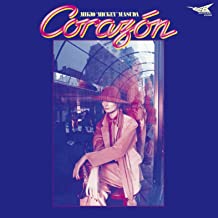
Mikio Masuda 益田 幹夫, also known as Mickey Masuda, was born on August 14, 1949 in Osaka, Japan. Largely self-taught, he played bass at the age of 16, before switching to piano and performing in various Osaka clubs. Moving to Tokyo, Japan In 1969 he played around the Japanese jazz scene, notably in a quartet with Motohiko Hino, Shunzo Ohno and Terumasa Hino.
Recording his debut album Trace for East Wind Records in 1974, he followed it with his sophomore jazz-fusion album Mickey’s Mouth in 1976. The following years saw Masuda working with a number of Japanese musicians prior to moving to New York City in 1978. He recorded the album Corazón, and worked in New York City with David Matthews. He recorded the trio album Black Daffodils in 1996 with Ron Carter and Lewis Nash, and Blue Dumplings in 1998 with Ron Carter and Grady Tate.
In the field of jazz he was involved between 1972 and 1998 in 46 recording sessions, most recently with Chie Ayado. Pianist Mikio Masuda continues to be active on the jazz scene.

More Posts: history,instrumental,jazz,music,piano
Daily Dose Of Jazz…
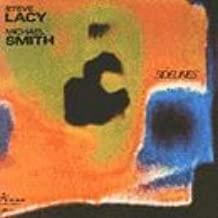
Michael Joseph Smith was born August 13, 1938 in Tiline, Kentucky. At the age of 6 years, he gave his first concert of original solo piano music in Nashville, Tennessee. After serving in the United States Navy, he studied electro-acoustic music, moving between Boston, Massachusetts and New York City. He became involved with the New England Conservatory of Music and the Juilliard School and developed a philosophy and notation form of his original music, titled Geomusic, and composed works with this method for various chamber groups, solo piano, and symphony orchestra.
Embarking on his first European concert tour in 1970, he completed his initial recordings in Italy and developed an interest in Jazz and improvisation. Moving to Paris, France in 1972 he had several concert tours and recordings in Western Europe and America with Steve Lacy, Anthony Braxton and others. In 1975 he began recording various albums in Europe and America and toured, mostly solo, Italy, Poland, East Germany, Hungary, Western Europe, South America and Scandinavia over the next year. 1977 saw Michael admitted to the Swedish Composers Society andtwo years later he became a member of the International Society for Contemporary Music.
A return to the United States landed a composer-in-residence in Atlanta, Georgia and completed three ballet projects, has been awarded numerous cultural prizes and stipends in Europe and Scandinavia, and has composed scores for films, television projects, and music for 10 major ballet works.
He has lectured in Atlanta, Boston, Massachusetts, Brunswick, Maine and in Beijing and Xian, China. He has founded three music corporations and has been inducted in the Royal Swedish Academy of Music’s Swedish Musical Heritage project as a “living musical heritage” of Sweden. Pianist and composer Michael Smith, who has released 55 recordings of original compositions in 17 countries and has three film portraits of his life, continues to remain active.

The Quarantined Jazz Voyager
Taking the high road and staying safe, socially distanced and listening to great music. This week I am choosing A Flower Is a Lovesome Thing is the second studio album by pianist Vince Guaraldi, credited to the Vince Guaraldi Trio. It was recorded at Fantasy Recording Studios in San Francisco, California on April 16, 1957 and released in the U.S. the following year on the Fantasy Records label. Ralph J. Gleason wrote the liner notes and in 1994, Phil De Lancie produced the digital remastering.
Track Listing | 34:40 Side One- A Flower Is A Lovesome Thing (Billy Strayhorn) ~ 5:37
- Softly, As In A Morning Sunrise (Oscar Hammerstein II, Sigmund Romberg) ~ 3:28
- Yesterdays (Jerome Kern) ~ 4:00
- Like A Mighty Rose aka Room At The Bottom (Vince Guaraldi) ~ 4:30
- Looking For The Boy (George & Ira Gershwin) ~ 4:06
- Autumn Leaves (Joseph Kosma) ~ 4:21
- Lonely Girl (Bobby Troup) 3:23
- Willow Weep For Me (Ann Ronell) ~ 5:14
- Vince Guaraldi – piano
- Eddie Duran – guitar
- Dean Reilly – double bass

More Posts: adventure,album,club,genius,jazz,museum,music,piano,preserving,restaurant,travel

Daily Dose Of Jazz…
Billy Douglas was born on August 12, 1912 in New Haven, Connecticut. He played with Larry Ringold while young, both having been in the same boys’ institution. He played locally in his teens, then moved to New York City in 1932 as a member of Earle Howard’s band.
In 1933-34 he went on to play with Percy Nelson in Hartford, Connecticut. He then played in the South with Jimmy Gunn. Don Albert picked him up in 1934, and Douglas remained in Albert’s orchestra through 1937.
Doing freelance work for a time, he then worked with Earl Hines for several years in the early 1940s. After 1945 he returned to New Haven where he performed locally until his retirement. Trumpeter and vocalist Billy Douglas passed away in 1978.
More Posts: history,instrumental,jazz,music,trumpet
Three Wishes
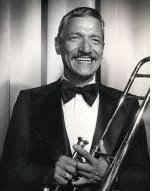
Upon receiving the question of three wishes from the Baroness, Frank Rehak responded with:
“Improvement of the caliber of recorded music. In general, the public has been exposed – via radio, TV, disc-jockeys, etc. – to bad sounds for many years, which in turn has caused a yardstick of poor music to measure by. If, on the other hand, good music had been given the same exploitation, the taste of John Q. Public would have been made vastly more musical, if by nothing more than the repeated playing and hearing of music worthwhile. I.e.: If any person is exposed to any sound continuously, and for a long period of enough time, it will begin to sound musical to him.
Classic example: The audience hisses, booed, and left the auditorium when Bach first used the sixth in addition to a triad-which of course is now one of the most common sounds used in any type of music. Ditto the dominant seventh which, when first employed, was considered completely distasteful, dissonant, and disgusting to the uneducated ear.
To sum this rambling up, I wish that more good music could be brought across to the general public via any medium. It would make we musicians’ jobs so much more fun and educational.”
*Excerpt from Three Wishes: An Intimate Look at Jazz Greats ~ Compiled and Photographed by Pannonica de Koenigswarter

More Posts: baroness,history,instrumental,jazz,music,pannonica,three,trombone,wishes