


The Quarantined Jazz Voyager
But Beautiful | Jimmy Scott
Society is taking another step towards mingling as governors are relaxing the mask requirement and several major cities are following their lead and people are celebrating. Thinking it too early and comfortable in my home I remain vigilant with my social distancing and trust you are doing the same.
So this week we take a trip down memory lane with Jimmy Scott and his 2002 recording titled But Beautiful. It was recorded at The Studio in New York City on August 16~19, 2001.released on the German label Milestone and was arranged by Freddy Cole (Track 7), Joe Beck (Track 8), Renee Rosnes (Track 1,4,6,7,9) and Robert Sadin (Track 5,10). The album was mixed by Dave Luke at Fantasy Studios in Berkeley, California. It was produced by Todd Barkan and recorded by Katherine Miller. Track Listing | 54:05
- You Don’t Know What Love Is (Gene DePaul/Don Raye) ~ 4:59
- Darn ThatDream (Edddie DeLange/James Van Heusen) ~ 6:35
- It Had To Be You (Isham Jones/Gus Kahn) ~ 4:17
- This Bitter Earth (Clyde Otis) ~ 5:21
- Please Send Me Someone To Love (Percy Mayfield) ~ 5:31
- But Beautiful (Johnny Burke/James Van Heusen) ~ 5:50
- When You Wish Upon A Star (Leigh Harline/Ned Washington) ~ 5:18
- Bye Bye Blackbird (Mort Dixon/Ray Henderson) ~ 5:18
- I’ll Be Seeing You (Sammy Fain/Irving Kahal) ~ 6:01
- Take My Hand, Precious Lord (Rev. Thomas A. Dorsey) ~ 4:37
- Jimmy Scott ~ vocal
- Freddy Cole ~ vocal (track 7)
- Renee Rosnes ~ piano
- George Mraz ~ bass
- Lewis Nash ~ drums
- Joe Beck ~ guitar (track 1,3,5,6, & 8)
- Wynton Marsalis ~trumpet (track 2)
- Lew Soloff ~ trumpet (track 8)
- Eric Alexander ~ tenor saxophone (track 3, 5 & 6)
- Bob Kindred ~ tenor saxophone (track 4 & 9)

More Posts: adventure,album,club,genius,jazz,museum,music,preserving,restaurant,travel,vocal
Daily Dose Of Jazz…
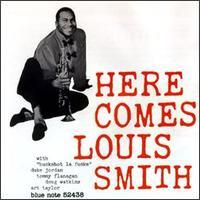
Edward Louis Smith was born on May 20, 1931 in Memphis, Tennessee. After graduating from Tennessee State University he attended graduate school at the University of Michigan. While studying at the University of Michigan, he played with visiting musicians such as Dizzy Gillespie, Miles Davis, Thad Jones and Billy Mitchell.
He went on to play with Sonny Stitt, Count Basie, Al McKibbon, Cannonball Adderley, Percy Heath, Philly Joe Jones, Lou Donaldson, Donald Byrd, Kenny Dorham and Zoot Sims. Deciding to forgo being a full-time musician to take a job as a director of Atlanta’s Booker T. Washington High School, where he recorded two albums for Blue Note.
The first, Here Comes Louis Smith, originally recorded for the Boston-based Transition Records, featured Cannonball Adderley, then under contract to Mercury, played under the pseudonym Buckshot La Funke, Tommy Flanagan, Duke Jordan, Art Taylor and Doug Watkins. Replacing Donald Byrd for Horace Silver’s Live at the Newport 1958 set, and his playing was one of his best efforts and was described by one critic as monstrous.
He was a prolific composer and successful band director leaving Booker T. Washington to become director of the Jazz Ensemble at the University of Michigan and a teacher in Ann Arbor’s public school system. He would later record for the SteepleChase label.
Suffering a stroke in 2006, he enjoyed live jazz around the Detroit/Ann Arbor area, but did not return to performing. Trumpeter Louis Smith passed away on August 20, 2016 at age 85.

More Posts: band director,bandleader,composer,history,instrumental,jazz,music,tuba
Daily Dose Of Jazz…
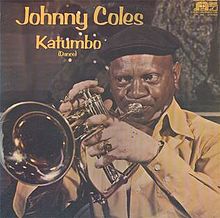
Gregory Herbert was born on May 19, 1947 in Philadelphia, Pennsylvania and started on alto saxophone at age 12. In 1964 he did a short stint in the Duke Ellington Orchestra, then studied at Temple University from 1965 to 1971.
While a student Gregory recorded with Pat Martino in 1968. From 1971 to 1975 he toured with Woody Herman, then played with Harold Danko in 1975 and the Thad Jones/Mel Lewis Orchestra from 1975 to 1977.
After his tenure with the orchestra, he played briefly with Chuck Israels and Blood, Sweat and Tears. Additionally, Herbert appeared on Chet Baker’s Once Upon a Summertime in 1977 along with Harold Danko, Ron Carter and Mel Lewis.
Saxophonist and flautist Gregory Herbert passed away from a heroin overdose on January 31, 1978 in Amsterdam, Netherlands. He never recorded as a leader.

Three Wishes
When Henry Grimes was asked what he would wish for if he had three wishes by Pannonica, he told her:
- “Health. If I had the health, I could do anything else.”
- “The second would be money. Not a large sum of money, but just a constant flow of money to keep me in comfort the rest of my life.”
- “Everlasting peace and everlasting good will amongst everyone. So there’ll be no wars, and no excuse to drop that H~bomb, and all that sh*t. So I’ll live in peace, and spend all that money in peace.”
*Excerpt from Three Wishes: An Intimate Look at Jazz Greats ~ Compiled and Photographed by Pannonica de Koenigswarter

More Posts: baroness,bass,history,instrumental,jazz,music,pannonica,three,wishes
Daily Dose Of Jazz…
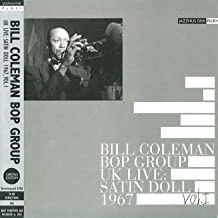
Born May 18, 1894 in North Buxton, Ontario, Canada, Louis Stanley Hooper was raised in Ypsilanti, Michigan. He attended the Detroit Conservatory, where he played locally in dance orchestras in the 1910s. He then moved to New York City around 1920, recorded with Elmer Snowden and Bob Fuller frequently in the middle of the decade, and performed with both of them in Harlem as well as with other ensembles.
Hooper served for some time as the house pianist for Ajax Records and accompanied many blues singers on record, including Martha Copeland, Rosa Henderson, Lizzie Miles, Monette Moore, and Ethel Waters. He participated in the Blackbirds Revue of 1928.
In 1932 returning to Canada he played in Mynie Sutton’s dance band, the Canadian Ambassadors. Lou did local work solo and in ensembles for the next two decades, then was brought back into the limelight by the Montreal Vintage Music Society in 1962. He released an LP of ragtime piano tunes in 1973 entitled Lou Hooper, Piano.
As an educator he taught at the University of Prince Edward Island late in his life and appeared regularly on CBC television in Halifax. His papers, which include unpublished compositions and an autobiography, are now held at the National Library of Canada in Ottawa, Ontario. Pianist Lou Hooper passed away on September 17, 1977, Charlottetown, Prince Edward Island.
More Posts: bandleader,composer,history,instrumental,jazz,music,piano