

Daily Dose Of Jazz…
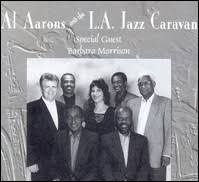
Albert Aarons was born in Pittsburgh, Pennsylvania on March 23, 1932 and graduated from Wayne State University in Detroit, Michigan. He began to gain attention as a trumpeter by 1956 and started working with saxophonist Yusef Lateef and pianist Barry Harris in the latter part of that decade in Detroit.
After a period playing with jazz organist Wild Bill Davis, he played trumpet in the Count Basie Orchestra from 1961 to 1969. The 1970s saw Aarons working as a sideman for singers Sarah Vaughan and Ella Fitzgerald, and saxophonist Gene Ammons.
Contributing to jazz fusion, playing on School Days with Stanley Clarke, he appeared with Snooky Young on the classic 1976 album Bobby Bland and B. B. King Together Again…Live. Trumpeter Al Aarons passed away on November 17, 2015 at age 83 in Laguna Woods, California.

Daily Dose Of Jazz…
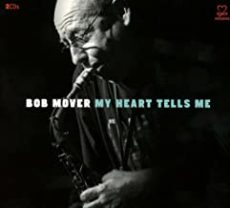
Bob Mover was born March 22, 1952 in Boston, Massachusetts into a musical family as his father played professionally with among others the Charlie Spivak Orchestra. Starting on the alto saxophone at age 13, he studied with Phil Woods at a summer music camp and took private lessons with Ira Sullivan.
In 1973, at the age of 21, Mover was a sideman for Charles Mingus for a five-month period at New York City’s 5 Spot Café. By 1975 he was working regularly in New York City jazz clubs with Chet Baker and he made his first European appearances with Baker at La Grande Parade du Jazz in Nice, France, Jazz Festival Laren in the Netherlands, and the Middelheim Jazz Festival in Antwerp, Belgium.
By late 1975, Bob started leading his own groups around the New York area and made his first two albums as a leader for Choice and Vanguard in 1976 and 1977 respectively: On the Move (Choice) and Bob Mover (Vanguard). Weekly gigs at the Sweet Basil in Greenwich Village included Tom Harrell, Jimmy Garrison, Kenny Barron, Albert Dailey, Ben Riley, Mike Nock, and Ron McLure.
Reuniting with Chet Baker in 1981 for a European tour and landing in Germany they recorded Chet Baker Live at Club Salt Peanuts Koln, Volumes 1 and 2 for the Circle label. Mover recorded two more albums as a leader in 1981 and 1982, In the True Tradition and Things Unseen, both issued by Xanadu.
Moving to Montreal, Canada in 1983 he taught at Concordia University. Three years later he recorded his fifth album as leader, The Nightbathers, with pianist Paul Bley and guitarist John Abercrombie, which was an experiment in free improvisation. From 1987 to 1997, Mover lived in Toronto and toured Europe and with Don Thompson and Archie Alleyne, he helped found the Toronto Jazz Quartet. He accepted a teaching position at York University, giving saxophone master classes and teaching a course called Musicianship for Jazz Singers. Alto saxophonist, bandleader and educator Bob Mover has recorded ten albums as a leader, eight as a sideman and continues to perform, record and teach.
More Posts: bandleader,history,instrumental,jazz,music,saxophone
Requisites
Newport In New York ’72: The Jam Sessions, Vols. 1 & 2 ~ Various Artists | By Eddie Carter
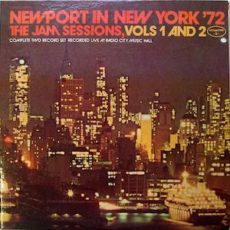
If you love music as I do, I’m sure you’ve attended several live concerts, festivals, and performances in your lifetime. I’m also certain that there’s at least one that stands out and is so special, it’s become a truly unforgettable experience and a timeless memory. For me, that date was July 3, 1972, and I remember it like it was yesterday. I got the opportunity to visit Radio City Music Hall for a thrilling summit that was the ultimate jam session and the greatest jazz concert I’d ever seen. The night only got better when the audience learned that our show was being recorded to be released and enjoyed on LP. This morning’s choice from the library is Newport In New York ’72 – The Jam Sessions, Vols. 1 & 2 (Cobblestone CST 9025–2) featuring highlights of that night’s performance alongside two tunes from the July 6 concert.
The personnel reads like an encyclopedia of jazz luminaries: Cat Anderson (tracks: A1, B1), Dizzy Gillespie (tracks: C1, D1), Jimmy Owens (tracks: A1, B1) on trumpet, Benny Green (tracks: C1, D1) on trombone, Charles McPherson (tracks: A1, B1) on alto sax, Stan Getz (tracks: C1, D1), Buddy Tate (tracks: A1, B1) on tenor sax, Milt Jackson (tracks: C1, D1) on vibes, Roland Hanna (tracks: A1, B1), Mary Lou Williams (tracks: C1, D1) on piano, Milt Buckner (tracks: A1, B1) on organ, Kenny Burrell (tracks: C1, D1) on guitar, John Blair on violin (track: C1), Percy Heath (tracks: C1, D1), Charles Mingus (tracks: A1, B1) on bass, Alan Dawson (tracks: A1, B1), Max Roach (tracks: C1, D1) on drums, Big Black (tracks: C1, D1) on congas. My copy used in this report is the original US Stereo album.
Side One kicks off with Count Basie’s 1938 classic, Jumpin’ at The Woodside, co-written with Eddie Durham and Jon Hendricks. It’s one of his band’s signature tunes and the title comes from Harlem’s old Woodside Hotel, a popular spot for jazz musicians of the era and Negro baseball teams to stay. Buckner starts with a lively introduction segueing into the melody. Buddy opens with a joyful statement, then Jimmy swings with compelling strength. Charles takes an exciting joyride on the third reading. Cat then wails into the stratosphere next. Milt ignites an energetic fuse including a few notes of the wedding march on the fifth solo. Roland swings consistently on a short statement, then Charles takes his bass for a brief brisk walk. Alan has a quick exchange with Mingus before applying the finishing touches with a concise comment into the ending theme.
Lo-Slo Bluze by Jimmy Owens gets Side Two underway with the composer showing tasteful restraint on the opening chorus and first solo. Tate personalizes the second statement with a graceful, heart-melting interpretation. Anderson raises the temperature significantly on the third reading soaring to a very high level. McPherson takes over to touch the audience with a soulfully satisfying performance, then Buckner starts the next presentation feeling at ease, then gradually builds the tension steadily to a riveting climax. Hanna turns in a superb effort on a rhythmically infectious reading and Mingus gets the final spot for a sensuously smooth improvisation leading to the ensemble’s reprise and coda.
Bags’ Groove by Milt Jackson was written in 1952 and first heard on Wizard of The Vibes that year. It starts the second record, and the title is from Milt’s nickname given to him by a Detroit bass player, referring to the bags under his eyes after one night of heavy drinking. The group brings the song to life with a collective theme at a leisurely tempo. The beat turns upward for Bennie’s opening chorus, then Stan taps into a creative vein on the second reading. Bags follows with a breathtaking presentation. John puts himself into his only interpretation with boundless energy and unbridled passion. Dizzy steps up next, opening the throttle a little further with a stunning showcase. Mary Lou handles the next performance with zestful virtuosity. Percy gives a brief impression that he’s soloing next, but steps aside for Max who provides a thunderous finale ahead of the out-chorus.
Night In Tunisia by Dizzy Gillespie and Frank Paparelli is off to the races from the first notes of the introduction by the rhythm section leading to the ensemble’s theme. Gillespie launches into an electrifying lead solo setting the tone. Burrell charges the next spot with a jolt of high-voltage energy, then Getz provides an infectious enthusiasm on the third statement. Green takes an enjoyable romp into the next presentation propelled by Big Black’s congas. Jackson is firing on all cylinders during his turn, then Williams takes charge with authority on the next solo complemented by Heath’s brilliant bass and Roach’s vigorous brushwork. Big Black adds some spicy sauce to the next reading, receiving the crowd’s approval before the closing ensemble. Roach provides the exclamation point with radiant intensity culminating a thoroughly satisfying set to a thunderous ovation from the crowd.
Both concerts were produced by Don Schlitten who co-founded Cobblestone Records with Joe Fields and later founded Xanadu Records. Fields founded the jazz labels, Muse, Onyx, and High Note. Michael DeLugg is the man behind the dials. His work offers a wealth of wonderful detail from each instrument and the energy of the crowd. It also possesses a solid soundstage placing the listener in a great seat to enjoy the musicians. There are a total of six records in this series and all are worthy of consideration for your library. If you’re a fan of live jazz, I invite you to reserve your seat for Newport In New York ’72 – The Jam Sessions, Vols. 1 and 2. I guarantee you’ll hear some truly great performances that’ll leave an indelible imprint you won’t soon forget!
~ Newport In New York ’72 – The Jam Sessions, Vols. 3 and 4 (Cobblestone CST 9026-2), Newport In New York ’72 – The Jimmy Smith Jam, Vol. 5 (Cobblestone CST 9027), Newport In New York ’72 – The Soul Sessions, Vol. 6 (Cobblestone CST 9028), Newport In New York ’72 – The Complete Six Record Set, Vols. 1–6 (Cobblestone CST 9032–6), Wizard of The Vibes (Blue Note BLP 5011) – Source: Discogs.com ~ Night In Tunisia – Source: JazzStandards.com ~ Bags’ Groove, Jumpin’ At The Woodside – Source: Wikipedia.org © 2021 by Edward Thomas Carter

More Posts: choice,classic,collectible,collector,history,instrumental,jazz,music
Daily Dose Of Jazz…
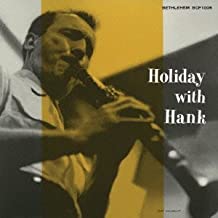
Hank D’Amico was born on March 21, 1915 in Rochester, NY and was raised in Buffalo, New York. He began playing professionally with Paul Specht’s band in 1936. That same year, he joined Red Norvo.
1938 saw Hank begin his radio broadcasts with his own octet before returning briefly to Norvo’s group in 1939. He played with Bob Crosby’s orchestra in 1940 and 1941, then had his own big band for about a year. He had short stints in the bands of Les Brown, Benny Goodman and Norvo again before working for CBS in New York.
D’Amico found time to play with Miff Mole and Tommy Dorsey, and spent ten years as a staff musician for ABC, before playing with Jack Teagarden in 1954. From that point he mostly worked with small groups, infrequently forming his own band. He played at the 1964 World’s Fair in New York with The Morey Feld trio.
Clarinetist Hank D’Amico passed away on December 2, 1965.
More Posts: bandleader,clarinet,hitory,instrumental,jazz,music
Daily Dose Of Jazz…
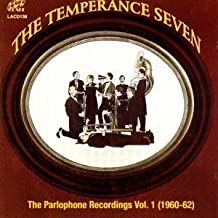
John R. T. Davies was born John Ross Twiston Davies on March 20, 1927 in Wivelsfield, Sussex, England. A trombonist, trumpeter and alto saxophonist, in the early 1950s he was a member of the Crane River Jazz Band led by Ken Colyer which spearheaded interest in the original New Orleans jazz style. Later he achieved chart success with the 1960s jazz revival band The Temperance Seven. The group’s recording of You’re Driving Me Crazy reached the top of the charts in 1961.
Considered by many as the world’s leading specialist in the art of sound restoration, he specifically focused on jazz and blues existing on pre-magnetic tape media such as shellac 78s. He was particularly interested in recordings from 1917 to 1940. Davies developed many methods for restoring old recordings and disliked modern techniques for removing surface noise.
While he appreciated attempts to clean up recordings and to create new versions of old recordings for modern audiences (e.g. the stereophonic remastered recordings by Robert Parker), in general he said he preferred remasterings which “keep everything and do as little as possible” to the original recording, and thought the remastering engineer should “Add nothing, take nothing away”. The presence of his name on the credit of a reissue is generally considered the mark of a quality product. He started his own record label called Ristic in the late 1940s which produced reissued recordings from 1949 to 1972.
Davies was always generous with his time and his collection and wanted it to be available for other people to use for research and reissues after his death. The Borthwick Archive at York University have accepted the entire collection and are housing it in ideal conditions, and making a transfer suite available so that his wish can be carried out. Information about the collection collated from the collection catalogue is also now available online from the University of York Digital Library and a small selection of the tracks have been made available to listen online.
Alto saxophonist and audio engineer John R. T. Davies, who specialized in restoring classic jazz records, passed away on May 25, 2004.
More Posts: audio engineer,history,instrumental,jazz,music,saxophone