

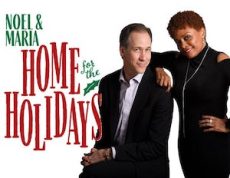
MARIA HOWELL & NOEL FRIEDLINE
Home For The Holidays! Noel & Maria take tothe stage once again to bring you hoiday cheer in song. Charlotte knows they are a favorite, so if you’re staying in Charlotte a few days after the Thanksgiving meal and family visit, don’t miss experiencing a great performance. Check them out! They’ve been together for years and have a great conversation on stage as well as with the audience.
More Posts: adventure,album,club,festival,genius,jazz,museum,music,piano,preserving,restaurant,travel,vocal

Daily Dose Of Jazz…
Robert Conti was born November 21, 1945 in Philadelphia, Pennsylvania and was an autodidact, first performing locally at age fourteen and mentoring with Pat Martino. In 1966, after four years on the road touring North America, he settled in Jacksonville, Florida.
In 1970, he dropped out of the music business to work in the securities field. Six years later he picked up his guitar and by 1979, he signed with Discovery Records. Conti released Solo Guitar as his debut as a leader and his sophomore project Latin Love Affair. By 1982 he left music again for the business world but again in 1985 he released another album. The following year he headlined the Florida National Jazz Festival, with Jimmy McGriff and Nick Brignola as his sidemen.
In mid-1988 he was offered a position under filmmaker Dino De Laurentiis in Beverly Hills, California. After a lengthy recovery from a back injury in late 1988, he was offered a position as resident jazz guitarist at the Irvine Marriott, a job he held until 1998.
Since starting his website in 2000, he has released 30 educational DVDs on jazz guitar, including pro chord melody and improvisation using his No Modes No Scales approach to teaching jazz guitar. Guitarist and educator Robert Conti, who has his own line of solid spruce thinline archtop jazz guitars since 2009, continues to teach, and perform.

More Posts: bandleader,educator,guitar,history,instrumental,jazz,music

PONCHO SANCHEZ COMES HOME
A Thanksgiving Celebration
Poncho Sánchez is an American conguero, Latin jazz band leader, and salsa singer. In 2000, he and his ensemble won the Grammy Award for Best Latin Jazz Album for their work on the Concord Picante album Latin Soul.
More Posts: adventure,album,club,conga,festival,genius,jazz,museum,music,preserving,restaurant,travel
Requisites
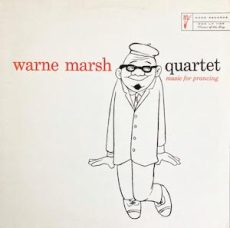
Music For Prancing ~ Warne Marsh Quartet | By Eddie Carter
Tenor saxophonist Warne Marsh steps into the spotlight for this morning’s discussion with the 1957 album, Music For Prancing (Mode Records MOD-LP 125). Marsh was a student of pianist Lennie Tristano and a graduate of the Cool Jazz school. He possessed a sweet tone that could be captivating and energetic but could also touch someone’s heart and soul when he played a ballad. For his sixth album, Warne’s leading a great quartet with Ronnie Ball on piano, Red Mitchell on bass, and Stan Levey on drums. My copy used in this report is the 1985 V.S.O.P. Records US Stereo reissue (Mode Records VSOP 8 – MOD LP-ST-125).
The quartet launches Side One with a song by Richard Rodgers and Lorenz Hart, You Are Too Beautiful. The group’s rendition is a catchy tune that’s full of good spirits as Warne begins the melody and relaxing opening solo. Red walks with great ease on the second statement, next Ronnie follows with a neatly paced reading. Stan adds the finishing touches in a brief exchange with Marsh and Ball leading to the closing chorus. Autumn In New York by Vernon Duke is the first of three jazz standards the ensemble performs from The Great American Songbook. The pianist introduces the song discreetly, segueing into Marsh’s tender melody and delicate lead solo. Ball and Mitchell continue the mood with two interpretations that are warm and beautiful ahead of the leader’s return to close out the song gently.
The first side closes on an upbeat note with Playa del Ray by Warne Marsh, beginning with a cheerfully buoyant theme in unison. Warne is up first with a lively interpretation; next Ronnie shows off his light and airy touch on the keys. Red takes over for a few soulful grooves and Stan speaks last with some spirited brushwork into the leader’s closing chorus and soft ending. Side Two gets underway with Ad Libido, an original by Ronnie Ball that’s built on the progressions of Long Ago and Far Away by George and Ira Gershwin. The ensemble starts the song at a laid-back pace for the collective melody. Ronnie opens the conversation with a mellow performance. Warne swings casually during the next reading, then Red adds a happy comment to the closing chorus before the leader wraps it up.
Up next is Everything Happens To Me by Matt Dennis and Thomas Adair. Warne is having a two-instrument conversation with Red as the song opens. Ronnie and Stan enter a little later to complete the lovely melody. Warne continues making melodic magic in the first reading, then Red mines a rich vein of sentimentality from his bass. Ronnie offers a deeply emotional statement next, and Warne makes an additional comment leading to the theme’s reprise. It’s All Right With Me by Cole Porter is a swinging affair from the opening chorus. Marsh takes flight first and speeds through the skies. Ronnie moves just as rapidly on the second solo. Red’s fingers flow swiftly on the bass next, then Stan gives his drums a vigorous workout in the finale ahead of the song’s conclusion.
Music For Prancing was produced by Red Clyde, and the recording engineer was Dayton Howe. The sound quality of this reissue is excellent with a superb soundstage that emerges from your speakers vividly. Warne Marsh recorded for many labels during his long career and has an extensive discography. He suffered a heart attack during a performance at Donte’s Jazz Club in Los Angeles and passed away on December 18, 1987. If you’re a Cool Jazz fan or are just discovering his music, I offer for your consideration, Music For Prancing by The Warne Marsh Quartet on your next vinyl shopping trip. It’s an excellent album that’s perfect to enjoy with your favorite beverage, and one I can recommend to any jazzophile’s library!
~ Postscript: Producer, Red Clyde’s name doesn’t appear on the original Mono LP or my Stereo reissue, but the 1992 V.S.O.P. Records CD album (V.S.O.P. #8 CD – Mode 125) – Source: Discogs.com ~ Autumn In New York, Everything Happens To Me, It’s All Right With Me – Source: JazzStandards.com ~ You Are Too Beautiful – Source: Wikipedia.org © 2022 by Edward Thomas Carter
More Posts: choice,classic,collectible,collector,history,instrumental,jazz,music,saxophone

Daily Dose Of Jazz…
Julian Fuhs was born on November 20, 1891 in Berlin, Germany. After attending the Stern Conservatory he emigrated to the United States in 1910 and got his American citizenship in 1916. Returning to Berlin in 1924 he put together his Follies Band, whose American-influenced jazz and light music was extremely successful.
He made a significant contribution to the establishment of jazz in Germany in the 1920s. Fuhs was the first to use a three-part saxophone section and was considered the German counterpart to Paul Whiteman after his recording of George Gershwin ‘s Rhapsody in Blue. Fuhs was the first to record it in Europe.
In 1931, as a result of the global economic crisis, he was forced to disband his orchestra and earn his living as the owner of a bar. In 1933 he was repeatedly the victim of violent attacks because of his Jewish origins. He emigrated first to Austria, then to Czechoslovakia and France. In 1937 he returned to America, where he worked as a salesman.
Pianist and bandleader Julian Fuhs transitioned in poverty on February 4, 1975 in Miami, Florida.
More Posts: bandleader,history,instrumental,jazz,music,piano