

Requisites
A Date With Jimmy Smith, Volume Two ~ Jimmy Smith | By Eddie Carter
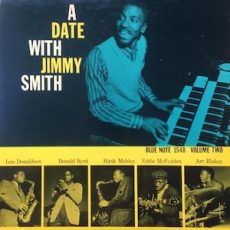
This morning’s subject brings us back to The Manhattan Towers Hotel Ballroom for A Date With Jimmy Smith, Volume Two (Blue Note BLP 1548/BST 81548). Jimmy Smith was an accomplished pianist who began playing the organ at the age of twenty-eight. He made the instrument popular for jazz improvisation and would lead me to discover the other organists who followed him. Joining the organist again are Donald Byrd (tracks: A1, B2) on trumpet, Lou Donaldson (tracks: A1, B1, B2) on alto sax, Hank Mobley (tracks: A1, B2) on tenor sax, Eddie McFadden (tracks: A1, B2) on guitar, and Art Blakey (tracks: A1, B2) on drums. The copy used in this report is a friend’s 1984 Toshiba-EMI Limited Japanese Mono reissue sharing the original catalog number.
Side One is occupied by an extended version of I Let A Song Go Out Of My Heart by Duke Ellington, Irving Mills, Henry Nemo, and John Redmond. The rhythm section swings easily into the melody stated by Lou. Donald sets the pace with a relaxed attitude on the first solo, next Hank gives a cheerfully buoyant reading. Eddie follows with a simple, bluesy statement, then Lou brings a good deal of enthusiasm to his interpretation. Jimmy is just a pleasure in the finale leading to Lou’s closing chorus and Jimmy’s ending. Side Two opens with I’m Getting Sentimental Over You by George Bassman and Ned Washington. This is a duet by Donaldson and Smith who embrace the jazz standard with elegant simplicity on the melody and during two touching interpretations before a pretty finale.
Hank Mobley’s Groovy Date is a blowing session that coaxes everyone to great heights and allows each member a chance to shine. Lou wastes no time getting down to business on the first solo, then Donald takes us on an eventful ride. Hank makes an indelible imprint on the third interpretation. Eddie responds with a spirited contribution and Jimmy offers a zestful joy on the next reading. Art gets the last word in a lively conversation with the front line into the close. A Date With Jimmy Smith, Volume Two was produced by Alfred Lion and the man behind the dials was Rudy Van Gelder. This Toshiba-EMI reissue is a wonderful recording with an impressive soundstage that brings the group to your listening room with superb definition. If you’re a fan of jazz organ, make A Date With Jimmy Smith, Volume Two on your next vinyl hunt. Like its companion, it’s a solid album with a superb ensemble that gives a glimpse into what was to come from Jimmy Smith in the next few years!
~ A Date With Jimmy Smith, Volume One (Blue Note BLP 1547/BST 81547) – Source: Discogs.com ~ I Let a Song Go Out of My Heart, I’m Getting Sentimental Over You – Source: JazzStandards.com © 2022 by Edward Thomas Carter

More Posts: choice,classic,collectible,collector,history,instrumental,jazz,music,organ

MONTCLAIR JAZZ FESTIVAL
AKIKO TSURUGA QUARTET
Raised in Osaka, Japan, this talented musician began studying the organ at the age of three, at the famed Yamaha Music School. After discovering her passion for jazz very early on in her musical journey, Akiko launched her career immediately after graduating from the Osaka College of Music. While living and playing in Osaka, she performed with several world- renowned jazz musicians from the United States.
WALLACE RONEY JR.
JAZZ HOUSE alum by the talented young trumpeter Wallace Roney, Jr. opens the evening as he continues to forge new paths on the legacy of his late parents Geri Allen and Wallace Roney, Sr.
Actual Showtime: 6:00 pm~9:00 pm | Rain Date: July 28, 2022
~ No Tickets Required | Suggested Donation: $10
~ Beach and Lawn Chairs: Welcomed
~ Pop-Up Tents: Prohibited
More Posts: adventure,album,club,genius,jazz,museum,music,organ,preserving,restaurant,travel,trumpet
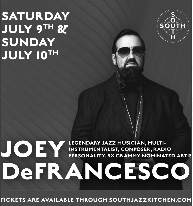
JOEY DEFRANCESCO
Legendary Jazz Musician, Multi-Instrumentalist, Composer, Radio Personality, Grammy Nominated Artist. Born and raised in Philadelphia, Joey DeFrancesco may have single handedly revived the organ jazz genre.
Please Note: Your ticket reserves a table in the Jazz Club where you can also dine. All food and beverage purchases are additional to ticket price.
Showtimes:
7:00 pm | Sat, Sun ~ $44.00 + $3.95 fee
9:30 pm | Sat, Sun ~ $44.00 + $3.95 fee
More Posts: adventure,album,club,genius,jazz,museum,music,organ,preserving,restaurant,travel
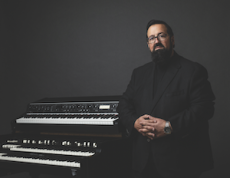
JOEY DEFRANCESCO TRIO
Joey DeFrancesco Trio: “Bright Moments” Celebration of Todd Barkan’s 76th Birthday w/ Anwar Marshall on drums and Lucas Brown on guitar/keys!
Legendary Jazz Musician, Multi -Instrumentalist, Composer, Radio Personality, Grammy Nominated Artist Joey DeFrancesco has recorded and/or toured with his own groups as well as numerous renowned artists that include Ray Charles, Van Morrison, Diana Krall, Nancy Wilson, George Benson, James Moody, John Scofield, Bobby Hutcherson, Jimmy Cobb, John McLaughlin, Larry Coryell, David Sanborn and many more. The four time Grammy® Award-nominee, with more than 30 recordings as a leader under his belt, has received countless Jazz Journalist Association awards and other accolades worldwide, including being inducted into the inaugural Hammond Organ Hall of Fame in 2014, the Philadelphia Music Walk of Fame in 2016 as well as topping the Critics Polls in DownBeat Magazine eleven times over the past fifteen years and the Readers Polls every year since 2005. DeFrancesco also hosts a weekly program on SiriusXM Radio’s Real Jazz channel titled “Organized.”
Showtimes:
Fri, Sat, Sun | August 12~14, 7:30 pm & 10:00pm
$35 – $45 + $3.46 – $4.16 fee
More Posts: adventure,album,club,genius,jazz,museum,music,organ,preserving,restaurant,travel

Three Wishes
Sun Ra had three wishes for the Baroness when she inquired what his would be:
- “A flexible instrument which could reflect every mood of any being, even a cat’s or a bird’s.”
- “A center where I would be free to present what I am actually doing to the world in the proper manner. Lights, shadows, colors, music would all be working at the same time, and it would be a synopsis of cosmic things so concentrated that, in an hour, you could be enlightened about the entire universe.”
- “The means to do things precisely, directly, and unhampered.”
*Excerpt from Three Wishes: An Intimate Look at Jazz Greats ~ Compiled and Photographed by Pannonica de Koenigswarter

More Posts: baroness,history,instrumental,jazz,music,organ,pannonica,percussion,piano,three,vocal,wishes