

Daily Dose Of Jazz…
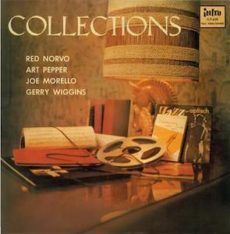
Gerald Wiggins was born on May 12, 1922 in New York City. He started classical piano lessons when he was four but by his teenage years became interested in jazz. He doubled on bass while attending High School & Art and for a period in the 40s accompanied Stepin’ Fetchit. Following this he worked and toured with the big bands of Les Hite, Louis Armstrong and Benny Carter. Stationed in Seattle while in the military he played in the local jazz clubs.
By the mid 40s Wiggins relocated to Los Angeles and played music for television and film. He has worked with Lena Horne, Kay Starr, Nat King Cole, Lou Rawls, Jimmy Witherspoon Helen Humes, Joe Williams, Ernie Andrews and Eartha Kitt to name a few. He also worked at the Hollywood studios as a vocal coach and worked with Marilyn Monroe and others.
Always a highly flexible pianist, Wiggins was comfortable in swing and bop settings with a consistently witty style filled with catchy riffs became his distinctive signature. His best-known recording as an organist was Wiggin’ Out but it was Wiggins’ trio work with Andy Simpkins and Paul Humphreys that is legendary. Pianist Gerald Wiggins passed away at the age of 86 on July 13, 2008.

More Posts: bandleader,history,instrumental,jazz,music,organ,piano
Three Wishes
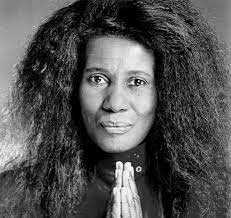
When the ladies took a moment for themselves, Nica inquired of Alice Coltrane what her three wishes would be if they were able to be given and she told her:
-
-
“I’d like to see my little daughter graduate from the University in Paris.”
-
“I would dig an artist’s colony. Like one block of buildings, or area, where artists and musicians could get together, and teach, and study. Artists could display their art. Writers ~ we’d allow them in, too, but it’d be mostly artists and musicians. We’d have a library, concerts, and sessions, and rooms for tapings. Artists could come in and record. You know, you’ve got it!”
-
*Excerpt from Three Wishes: An Intimate Look at Jazz Greats ~ Compiled and Photographed by Pannonica de Koenigswarter

More Posts: baroness,harp,history,instrumental,jazz,music,organ,pannonica,piano,three,vocal,wishes
Daily Dose Of Jazz…
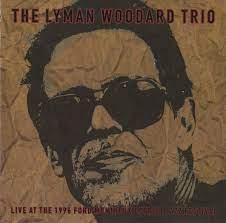
Lyman Woodard was born on March 3, 1942 in Owosso, Michigan. He started his musical career with a trio with drummer Melvin Davis and guitarist Dennis Coffey. They recorded the album Hair And Thangs that was released under Coffey’s name, however a single with It’s Your Thing and River Rouge was released under the name of Dennis Coffey and the Lyman Woodard Trio.
From the late 1960s, Woodard recorded with Motown acts, and served as musical director for Martha and the Vandellas. Establishing the jazz~funk band, the Lyman Woodard Organization in 1975 recorded Saturday Night Special, and in 1979, he recorded Don’t Stop The Groove, for the Corridor label. His 1987 recording, Dedicacion, featured violinist Regina Carter.
In March 2009, Wax Poetics Records reissued a limited pressing of his Saturday Night Special as a double LP on 180-gram vinyl.
Organist Lyman Woodard, who was based in Detroit, Michigan and was known for his ability to fuse Latin and Afro~Cuban inspired rhythms, transitioned on February 25, 2009 in his hometown of Owosso.

More Posts: bandleader,history,instrumental,jazz,music,organ,piano
Daily Dose Of Jazz…
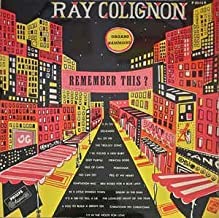
Raymond Colignon was born on February 7, 1907 in Liège, Belgium. He initially was active as an accompanist for silent films, then went on to tour Switzerland, France and Algeria. In the early 1930s, he joined the Lucien Hirsch and His Orchestra who made the first recordings for Columbia Records. Between 1931 and 1934 he worked in a nightclub in his native town. From 1935 to 1940 he played and wrote big band arrangements with Fud Candrix.
As a soloist, he recorded under his own name for the Brussels Jazz Club record label. In 1939 he recorded Honeysuckle Rose for Telefunken and Swinging Through the Style, accompanied by bassist Camille Marchand and drummer Armand Dralandts. The early Forties saw him playing in Brussels, Belgium with Jack Lowens and His Swing Quartet, in Berlin, Germany with Kurt Widmann and his dance orchestra, and in Adolf Steimel ‘s Organum dance orchestra.
In 1941/42 further recordings were made in Brussels under his own name, with trumpeter and singer Billy West recording I Hear A Rhapsody and with Tony Jongenelen Gute Nacht, Mutter (Good NIght , Mother) sung in German. In the post World War II period he worked mainly as an organist in the genre of dance and entertainment music, recording Surprise Party – Calling All Dancers or Come Dance with Me for Philips.
Pianist, organist and arranger Coco Colignon, who was involved in 53 jazz recording sessions between 1931 and 1961, transitioned on February 10, 1987 in Wavre, Belgium.
More Posts: arranger,bandleader,history,instrumental,jazz,music,organ,piano
Requisites
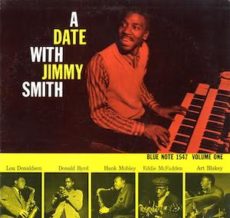
A Date With Jimmy Smith, Volume One~ Jimmy Smith | By Eddie Carter
Jimmy Smith steps into the spotlight for this morning’s discussion with his 1957 album, A Date With Jimmy Smith, Volume One (Blue Note BLP 1547/BST 81547). This is the first of three large group recordings the organist made for Blue Note, the other two were in 1958, producing the albums, Houseparty and The Sermon and 1960, resulting in Open House and Plain Talk. It’s also the only time he recorded with Donald Byrd (tracks: A1, B1) on trumpet and Hank Mobley (tracks: A1, B1) on tenor sax. Also featured is Lou Donaldson (tracks: A1, B1) on alto sax, Eddie McFadden on guitar, Art Blakey (tracks: A1, B1), and Donald Bailey (track: A2) on drums. The copy used in this report is a friend’s 1966 Liberty Mono reissue sharing the original catalog number.
Falling In Love With Love by Richard Rodgers and Lorenz Hart opens the album with the sextet’s collective uptempo melody. It was first heard in the musical, The Boys From Syracuse (1938). Hank leads off with a smokin’ opening solo, then Eddie puts together a swinging statement. Jimmy dispenses enthusiastic energy on the next presentation. Donald shifts into high gear on the fourth reading. Lou cooks on a delicious solo and Art shares a brief exchange with the front line ahead of the closing chorus. How High The Moon by Nancy Hamilton and Morgan Lewis is a gorgeous jazz standard from the Broadway revue, Two For The Show (1940). This is a trio tune with Bailey taking over the drum chair. Jimmy embraces the melody tenderly and gives two thoughtfully passionate solos. McFadden also has a very gentle reading and Bailey compliments both with elegant brushwork.
Funk’s Oats is a bluesy midtempo original by Jimmy beginning with the sextet stating the melody. Lou leads off this time with a joyously carefree interpretation. Donald extends the happy mood on the second statement. Hank delivers some excellent blowing with an easy swing next. Eddie unfolds the fourth reading as smooth as velvet, and Jimmy takes us into the ensemble’s reprise and exit with a delightful groove. A Date With Jimmy Smith, Volume One was recorded by Rudy Van Gelder, and this Liberty reissue has an outstanding soundstage. The vinyl is quiet for a pressing of this vintage and the instruments emerge from your speakers as if the group is in your listening room. If you’re a jazz fan who enjoys the swinging organ of Jimmy Smith, I offer for your consideration A Date With Jimmy Smith, Volume One. It’s a vibrant, inspired album with everyone in top form that’s sure to make a nice addition to any jazz library!
~ Houseparty (Blue Note BLP 4002/BST 84002), Open House (Blue Note BLP 4269/BST 84269), Plain Talk (Blue Note BST 84296), The Sermon (Blue Note BLP 4011/BST 84011) – Source: Discogs.com ~ Falling In Love With Love, How High The Moon – Source: JazzStandards.com © 2021 by Edward Thomas Carter
More Posts: choice,classic,collectible,collector,history,instrumental,jazz,music,organ