


GLASS CITY JAZZFEST
Lineup: Each set is 1:15
12:00 pm ~ Brick Bar All-Stars Josh Silver on piano, Ray Parker on bass, Scott Kretzer on drums, with vocalists Kim Buehler, Deborah Gardner, Theresa Harris, and Lori Lefevre
1:35 pm ~ Latin Jazz Players of Lima, Ohio
3:10 pm ~ Larry Fuller Trio
4:45 pm ~ Joey Sommerville, Trumpet
6:20 pm ~ Lindsey Webster, Vocal
7: 50 pm ~ Marcus Johnson, Keyboards
The event includes a preamble of music being scheduled starting with free shows at Toledo Spirits on Aug. 23, and followed by other free ones on Aug. 24 at the Brick Bar, Aug. 25 at Peacock Cafe, and Aug. 26 at Ottawa Park. The only paid event connected to Glass City JazzFest will be a VIP show being scheduled for Aug. 27 at Lucille’s Jazz Lounge
More Posts: adventure,album,club,genius,jazz,museum,music,piano,preserving,restaurant,travel,trumpet,vocal
Daily Dose Of Jazz…
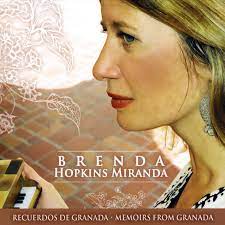
Brenda Hopkins Miranda was born July 14th, and raised in San Juan, Puerto Rico. Her childhood was filled with sounds from all over the world and from an early age her profound sensibilities led her to intuitively reject stylistic boundaries. She began her musical path at the age of five with piano, ballet and painting lessons at Bonneville School. Her remarkable talent got her admission to the Conservatorio de Música de Puerto Rico to begin undergraduate studies in Classical Piano at 16 while still attending high school.
Holding a Bachelors Magna cum Laude degree in Classical Piano from the Conservatorio, she was awarded a Berklee School of Music scholarship, received a Masters degree with honors in Contemporary Improvisation from New England Conservatory, and completed Doctoral Studies in Musicology at the Universidad de Granada in Spain.
As a bandleader Hopkins Miranda has released six recordings between 1998 and 2017 with her last four albums making the top 20, with three of them in the top 10 and two in the top 5 album list. A recognized composer and artist on several short films and documentaries, throughout her professional career she has been active as a first call pianist on international tours for a host of Latin American artists like Ricardo Montaner, Gilberto Santa Rosa, Marco Antonio Muñiz, Pandora, Ednita Nazario, Glenn Monroig, Yolandita Monge and many others.
In 2006 Brenda moved to Granada, Spain for two years to pursue a PHD in musicology at the Universidad de Granada. She successfully auditioned. Brenda is also a groundbreaking pioneer in education. She was the winner of the Gilles Boulet 2014 first prize and medal awarded in Florianopolis, Brazil by the Interamerican Organization for Higher Education and has created over 300 creativity exercises for musicians. Brenda gives music creativity workshops all over the world.
Pianist, composer, arranger, improviser, bandleader, and producer Brenda Hopkins Miranda currently is a professor at the Universidad Interamericana Recinto Metropolitano Music Program. She continues to perform.

More Posts: arranger,bandleader,composer,educato,history,instrumental,jazz,music,piano

Daily Dose Of Jazz…
Milton Brent Buckner was born July 10, 1915 in St. Louis, Missouri to parents who encouraged him to learn to play piano, but they both died when he was nine years old. Milt and his younger brother Ted were sent to Detroit where they were adopted by members of the Earl Walton band, trombonist John Tobias, drummer George Robinson fostered Milt and reedplayer Fred Kewley fostered Ted. He studied piano for three years from the age 10, then at 15 began writing arrangements for the band. He and his brother went on to become active in the Detroit jazz world in the 1930s.
He first played in Detroit with the McKinney’s Cotton Pickers and then with Cab Calloway. In 1941, he joined Lionel Hampton’s big band, and for the next seven years served as its pianist and staff arranger. Buckner was part of a Variety Revue of 1950 organized by Lionel Hampton at the Cavalcade of Jazz concert held at Wrigley Field in Los Angeles, California. He led a short-lived big band of his own for two years, but then returned to Hampton’s in 1950.
In 1952, Milt formed his own trio and pioneered the use of the electric Hammond organ. He often played in Europe in the late 1960s. His last studio session took place in Paris. France on July 4, 1977. He is also known for the use of his song The Beast in the title menu of the video game, Battlefield: Bad Company.
Pianist and Hammond B3 organist Milt Buckner, who pioneered the parallel chords style that influenced Red Garland, George Shearing, Bill Evans, and Oscar Peterson, transitioned from a heart attack on July 27, 1977, in Chicago, Illinois, at the age of 62.
More Posts: bandleader,hammond b3,history,instrumental,jazz,music,piano
The Quarantined Jazz Voyager
As the virus is continuing to evolve the Jazz Voyager is staying close to home, especially since the country has lifted the masking mandate and it appears that everything is “back to normal”, even though it is not yet. Supply chain is still limiting production and delivery of items. As you travel around your city, state, country, and internationally please continue to be careful and protect yourself and others.
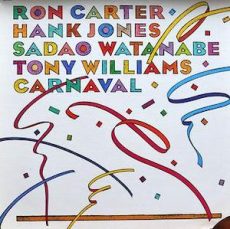
Carnaval is an album recorded Live Under The Sky in Denen Coliseum in Tokyo, Japan on July 30, 1978 by bassist Ron Carter, pianist Hank Jones, saxophonist Sadao Watanabe and drummer Tony Williams. The album was produced by Ed Michel and released five years later in 1983 on the Galaxy record label.
he art direction for the album was performed by Phil Carroll, the recording engineer was Jim Stern, mastered by George Horn, and the remix was done by Allen Sudduth.
Tracks | 43:18- Chelsea Bridge (Billy Strayhorn) ~ 10:12
- Manhã de Carnaval (Luiz Bonfá, Antônio Maria) ~ 9:01
- I’m Old Fashioned (Jerome Kern, Johnny Mercer) ~ 8:18
- Confirmation (Charlie Parker) ~ 6:40
- Moose the Mooche (Parker) ~ 8:05
- Ron Carter ~ bass
- Hank Jones ~ piano
- Sadao Watanabe ~ alto saxophone
- Tony Williams ~ drums

More Posts: adventure,album,bass,club,drums,genius,jazz,museum,music,piano,preserving,restaurant,saxophone,travel
MONTCLAIR JAZZ FESTIVAL
LACKAWANNA BLOCK PARTY
FAMILY JAZZ DISCOVERY ZONE | 12:00 pm~5:00 pm
Get in the zone for an afternoon of family fun! Bring your wee be-boppers to the zone, a special place where kids and their families can gather to play, improvise, create, make new friends and of course, share our passion for jazz!
JAZZ HOUSE WORKSHOP STUDENT ENSEMBLES | 1:00 pm~4:00 pm
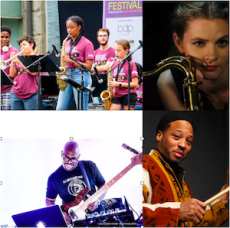
Keeping in the 13 year tradition of the Montclair Jazz Fest, student ensembles from the Jazz House Summer Workshop will take the Lackawanna Block Party stage throughout the afternoon starting at noon on Saturday. Directed by trumpeter and educator Ted Chubb, the award-winning workshop continues on the campus of Montclair State University for two sessions.
NICOLE GLOVER QUARTET | 4:00 pm~7:00 pm
Saxophonist and bandleader Nicole Glover grew up in Oregon, where she was introduced to the music through her father’s record collection and studied in programs dedicated to learning jazz and priming students for touring and performing, such as the award-winning American Music Program and Next Generation Jazz Orchestra. She moved to the East Coast to attend William Paterson University, where she studied with Mulgrew Miller, Harold Mabern and Rich Perry. Assuming permanent residence in NYC in 2015, soon establishING herself as a rising star.
WINARD HARPER + JELI POSSE | 4:00 pm~7:00 pm
Winard Harper was born in Baltimore in 1962 and started like most drummers by beating on cans just after learning to walk. A child prodigy, a five-year-old Winard would sometimes sit in and play his drums in older brother Danny’s rock n roll band after the family moved to Washington D.C. Winard and his younger brother Philip, a trumpeter, would busk in the streets of Georgetown and sit in at jam sessions around the city. For more than a year, Winard worked in a trio with pianist Reuben Brown and bassist Steve Novosel, veterans of the DC jazz scene.
DJ BROTHER MISTER | 7:00 pm~10:00 pm
Dance with DJ Brother Mister who will be capping off the summer series. Join us for an old school funk + soul party featuring DJ Brother Mister aka 7x Grammy winner Christian McBride.
~ Rain Date: August 13, 2022
~ No Tickets Required | Suggested Donation: $10
~ Beach and Lawn Chairs: Welcomed
~ Pop-Up Tents: Prohibited
More Posts: adventure,album,bass,club,drums,genius,jazz,museum,music,piano,preserving,restaurant,saxophone,travel