


EMMET COHEN TRIO
Multifaceted American jazz pianist and composer Emmet Cohen is one of his generation’s pivotal figures in music and the related arts. Downbeat praised the “nimble touch, measured stride and warm harmonic vocabulary” he employs to communicate with other musicians and audiences at what he terms “the deepest level of humanity and individuality.” Leader of the “Emmet Cohen Trio” and creator of the “Masters Legacy Series,” Cohen is an internationally acclaimed jazz artist and dedicated music educator.
Emmet Cohen is the winner of the 2019 American Pianists Awards and the Cole Porter Fellow of the American Pianists Association, and Artist-in-Residence at the University of Indianapolis. He was a finalist in the 2011 Thelonious Monk International Piano Competition. Cohen has appeared at major international jazz festivals and at Lincoln Center’s Rose Hall and Washington’s Kennedy Center, in addition to headlining at the Village Vanguard and other major New York jazz clubs. For many years he was Hammond B-3 Organist-in-Residence at Harlem’s SMOKE jazz club. During the lockdown he created “Live From Emmet’s Place,” a weekly livestream that received millions of internet views worldwide. Cohen is a Mack Avenue artist.
A Suzuki piano student at age three, Cohen holds jazz piano degrees from the Manhattan School of Music (M.M.) and the University of Miami (B.M.). Emmet Cohen has performed, recorded, or collaborated with Ron Carter, Benny Golson, Jimmy Cobb, George Coleman, Jimmy Heath, Tootie Heath, Houston Person, Christian McBride, Kurt Elling, Billy Hart, Herlin Riley, Lea DeLaria, and Bill T. Jones.
Actual Showtimes ~ 7:00 pm & 9:30 pm | Fri, Sat
Front Stage Table ~ $35.00/$20 minimum purchase required
General Admission ~ $25.00/$20 minimum purchase required
Students 17 & under ~ $15.00/$10 minimum purchase required
More Posts: adventure,album,club,genius,jazz,museum,music,piano,preserving,restaurant,travel

JANE MONHEIT
Blessed with “a voice of phenomenal beauty” (Stephen Holden, New York Times), Jane Monheit has had plenty of milestone moments in establishing herself as one of today’s best and most important vocalist-musicians.
With her new album, The Songbook Sessions: Ella Fitzgerald—the first to be released on her own Emerald City Records—the Long Island native has surprised even herself with her artistic leap. Jane had thought about recording an Ella tribute for a long time. Fitzgerald’s beloved songbook albums held “Biblical” importance for her when she was growing up andhave never lost their hold on her.
On this new offering, Monheit pays joyous tribute to Ella while sharing a definitive portrait of herself, guided by her producer, arranger, and trumpet great, Nicholas Payton. Once she decided to make the dream project a reality, she had no trouble choosing titles. She jotted down a list of 25 titles “almost immediately.” She and Payton each narrowed the choices to a dozen and settled on the final list together.
Showtimes:
7:00 pm | Thurs, Sun~$45.00, Fri, Sat~$50
9:00 pm | Thurs, Sun~$45.00, Fri, Sat~$50
$15 food/beverage minimum per person not included in ticket price.
More Posts: adventure,album,club,genius,jazz,museum,music,piano,preserving,restaurant,travel,vocal

EDDIE PALMIERI
The world has long admired the Spanish Harlem born, seven-time GRAMMY® Award winning Palmieri as one of the foremost Latin pianists of the last half-century. His ability to fuse the rhythms of his Hispanic heritage with the jazz influences of Thelonius Monk and McCoy Tyner made him an immediate hit when he played New York’s Palladium Ballroom in the ’50s and ’60s. He has continued to roll on with stylistic innovations over the years, creating classic Tico albums and later mixing salsa with R&B, pop, rock, Spanish vocals and more jazz improvisation.
Known as one of the finest pianists of the past 60 years, Eddie Palmieri is a bandleader, arranger and composer of salsa and Latin jazz.
Showtimes:
7:00 pm | Thurs & Sun ~ $40.00, Fri, Sat~$60.00
9:00 pm | Thurs & Sun ~$40.00, Fri, Sat~$60.00
$15 food/beverage minimum per person not included in ticket price.
More Posts: adventure,album,club,genius,jazz,museum,music,piano,preserving,restaurant,travel
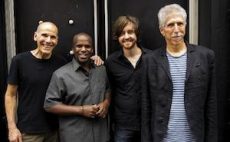
THE YELLOWJACKETS
The Yellowjackets formed in the late 1970’s as the backup band for guitarist Robben Ford. They recorded their first album together in 1980. Shortly after that recording, however, Ford decided to part ways and go in a different musical direction. As a result, the modern day Yellowjackets were formed — a trio with Russell Ferrante, Jimmy Haslip and Ricky Lawson. Since then, and with the addition of Bob Mintzer, the Yellowjackets have gained and maintained prominence as one of jazz’s most influential and loved groups.
The most recent addition to the band adds Australian bass player Dane Alderson in to the mix. With his exceptional rhythmic sensibility and natural disposition toward groove, Dane brings a new energy to the band and adds a youthful approach to the music.
Showtimes:
7:00 pm | Sat ~ $40.00, Sun ~ $30.00
9:00 pm | Sat ~ $40.00, Sun ~ $20.00
$15 food/beverage minimum per person not included in ticket price.
More Posts: adventure,album,bass,club,genius,guitar,jazz,museum,music,piano,preserving,restaurant,saxophone,travel

CYRUS CHESTNUT
“I like to construct melodies that tell stories, based on what I’ve seen, what I feel and what I hear,” Chestnut explains. “If I can connect to what I’m playing, then I’ll be able to share it. That’s why you may think that some of what I do seems simple, but when you get into it, it’s not as simple as you think.” — Cyrus Chestnut
Pianist Cyrus Chestnut appeals to both aficionados and fans alike. Adept enough to perform with Wynton Marsalis, yet hip enough to make the “Peanuts” album swing. Chestnut worked with a number of top-notch musicians including Jon Hendricks, Betty Carter, Terence Blanchard, and Donald Harrison, before recording his first solo CD at the age of 30. Chestnut enjoys mixing styles and resists being typecast in any one niche, though his gospel sound is apparent on a number of his recordings.
Showtimes:
Sat, July 30, 8:00 pm & 10:00 pm ~ $40.00
Sun, July 31, 8:00 pm ~ $40.00 | 10:00 pm ~ $20.00
$15 food/beverage minimum per person not included in ticket price.
More Posts: adventure,album,club,genius,jazz,museum,music,piano,preserving,restaurant,travel