


THE COOKERS
Each member of the Cookers has spent time leading his own series of groups, and each has a keenly individual sound. But it’s the unmistakable power of teamwork that makes this music so commanding and resonates with a kind of depth and beauty that speaks of the seasoned track record of its principals (combined, the group has over 250 years of experience in the jazz world and has been a part of over 1,000 recordings). You can feel the collective weight of that experience in their CDs and especially in their live performances.
David Weiss, trumpet
Eddie Henderson, trumpet
Donald Harrison, alto sax
Billy Harper, tenor sax
George Cables, piano
Cecil McBee, bass
Billy Hart, drums
Showtimes:
Streaming: Fri, Sat, November 18~19, 7:30 pm | Sun, November 20, 5:00 pm
$10 + $1.70 fee
Live: Fri, Sat, November 18~19, 7:30 & 10:00 pm | Sun, November 20, 5:00 pm
$35 – $45 + $3.46 – $4.16 fee
More Posts: adventure,album,bass,club,drums,genius,jazz,museum,music,piano,preserving,restaurant,saxophone,travel,trumpet
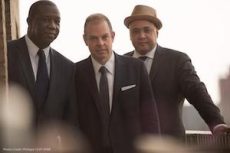
BILL CHARLAP TRIO
Bill Charlap – piano
Peter Washington- bass
Kenny Washington- drums
Grammy Award winning pianist Bill Charlap celebrates his new album, Street of Dreams, featuring his revered long-standing trio with bassist Peter Washington and drummer Kenny Washington. Street of Dreams is a delightful mix of Great American Songbook favorites and songs by great jazz composers including Billy Strayhorn and Duke Ellington, Kenny Burrell, and Dave Brubeck.
Bill Charlap has performed with many of the leading artists of our time including Phil Woods, Tony Bennett, Gerry Mulligan, Wynton Marsalis, Freddy Cole and Houston Person. Born in New York City, Charlap began playing the piano at age three. His father was Broadway composer Moose Charlap, whose credits include Peter Pan, and his mother is singer Sandy Stewart, who toured with Benny Goodman, and was a regular on the Perry Como show. She earned a 1963 Grammy nomination for her recording of “My Coloring Book.” In 2005, Charlap and Stewart released the acclaimed CD, Love Is Here To Stay (Blue Note).
In 1997, Charlap formed his trio with bassist Peter Washington and drummer Kenny Washington, now recognized as one of the leading groups in jazz. In 2000, he was signed to Blue Note Records and received two Grammy Award nominations, for Somewhere: The Songs of Leonard Bernstein and The Bill Charlap Trio: Live at the Village Vanguard. He is known for his interpretations of American popular song. In 2016, Tony Bennett & Bill Charlap: The Silver Lining, The Songs of Jerome Kern, was awarded a Grammy for Best Traditional Pop Album. In April, the Bill Charlap Trio released, Notes from New York, their debut recording for the Impulse label. Alan Morrison’s five-star review in Down Beat stated that the new recording is “a masterclass in class.”
Showtimes:
Streaming: Fri, Sat,October 21~22, 7:30 pm | Sun, October 23, 5:00 pm
$10 + $1.70 fee
Live: Fri, Sat, October 21~22, 7:30 & 10:00 pm | Sun, October 23, 5:00 pm
$35 – $45 + $3.46 – $4.16 fee
More Posts: adventure,album,club,genius,jazz,museum,music,piano,preserving,restaurant,travel
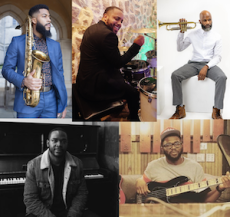
CHARLES WILSON QUINTET
Charles Wilson – Drums
Hope Udobi – Piano
Theljon Allen – Trumpet
Elijah Easton -sax
Mike Saunders – bass
Charles “Charlie” Wilson is a drummer, pianist and bass guitar player. He started playing music at the age of 5, where he began taking lessons taught by Orlando Cotto at Nathan Carter’s School of Music in Baltimore. He attended Archbishop Curley High School under a music scholarship where he won several awards such as the North Texas Jazz Festival Outstanding Soloist Award and the Louis Armstrong Jazz Award. As a teen working under the City’s Youth Works Program, he was assigned at Paul L. Dunbar High School’s Music Program where he worked under the leadership of one of the greatest educators and musicians of all times, Charles Funn.
Actual Show Times:
Streaming: Wed, July 6, 7:30 PM | $10 + $1.70 fee
Live: Wed, July 6, 7:30 PM | $20 – $25 + $2.40 – $2.76 fee
More Posts: adventure,album,bass,club,drums,genius,jazz,museum,music,piano,preserving,restaurant,saxophone,travel,trumpet
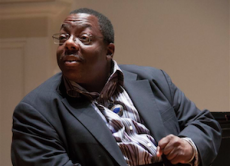
CYRUS CHESTNUT TRIO
The New York Daily News once heralded Chestnut as the rightful heir to Bud Powell, Art Tatum and Erroll Garner. In an interview on National Public Radio (NPR) for All Things Considered, Chestnut remarked, “If I can send one person home after a performance feeling better than when they arrived, then I’ve done my job, and I sleep good at night.”
To this day, Chestnut attends church every Sunday. He told CBS News, “If I’m not working, you’ll find me in somebody’s church.” Chestnut continually tours with his trio, playing live at jazz festivals around the world as well as clubs and concert halls.
His leadership and prowess as a soloist has also led him to be a first call for the piano chair in many big bands including the Lincoln Center Jazz Orchestra, and the Dizzy Gillespie All-Star Big Band.
Showtimes are 7:00 pm & 9:30 pm
More Posts: adventure,album,club,genius,jazz,museum,music,piano,preserving,restaurant,travel
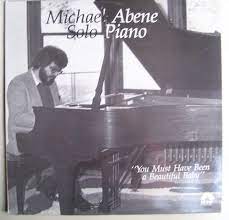
Daily Dose Of Jazz…
Michael Abene ( was born July 2, 1942 in Brooklyn, New York. Growing up in a musical family he was influenced and inspired by his father, grandfather, and aunt who were musicians. He studied composition at the Manhattan School of Music
His reputation for accompanying singers and for arranging music led Michael to accompany Susannah McCorkle, Julius La Rosa, and others. His debut album was a solo piano project recorded in 1984 and released in 1986 titled You Must Have Been a Beautiful Baby.
He recorded with Maynard Ferguson, Dizzy Gillespie, Cal Tjader during the Sixties and Urbie Green in the Seventies. Abene co-produced the album Avant Gershwin, which won the Grammy Award for Best Jazz Vocal Album in 2007.
Pianist Michael Abene continues to perform, produce and conduct.

More Posts: arranger,bandleader,conductor,history,instrumental,jazz,music,piano