

Daily Dose Of Jazz…
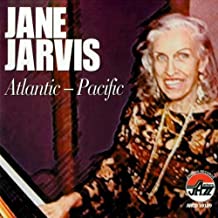
Jane Jarvis, née Louella Jane Nossette on October 31, 1915 in Vincennes, Indiana, to Charles and Luella Nossette. She was recognized as a piano prodigy at the age of five and she studied under a Vincennes University professor as a young girl.
A family move to Gary, Indiana in 1927 soon put her in place to be hired to play the piano at radio station WJKS in Gary. Orphaned at 13 when her parents perished in a train-auto wreck, she returned to Vincennes, graduating from high school in 1932. She continued her studies at the Chicago Conservatory of Music, the Bush Conservatory of Music, Loyola University Chicago and DePaul University.
By 1954, Jane was on television in Milwaukee, hosting a show called Jivin’ with Jarvis while serving as staff pianist and organist. At the time, the Milwaukee Braves had just relocated from Boston and sought her out to be the organist at Milwaukee County Stadium. Jarvis stayed with the Braves for eight seasons and then went to New York City, where she took a position with Muzak Corporation as a staff composer and arranger. She would rise to become a corporate vice-president and its director of recording and programming.
In 1964, she was hired by the New York Mets to play the organ at Shea Stadium, where she is remembered for playing their theme song, Meet The Mets, which debuted in the 1963 season before every home game, followed by the Jarvis composed Let’s Go Mets, as the team took the field.
Leaving Muzak in 1978, the next year she left the Mets to concentrate on her first musical love, jazz piano. She became a fixture at New York City nightclubs, frequently playing alongside bassist Milt Hinton. She became a founding member of the Statesmen of Jazz, a group of jazz musicians aged 65 and older sponsored by the American Federation of Jazz Societies, and was featured on their 1994 album. She performed with this group across the US as well as in Japan and elsewhere.
Jarvis released several albums of her jazz piano work, including Jane Jarvis Jams, and Atlantic/Pacific. In addition to Hinton, she often collaborated with trombonist Benny Powell and bassist Earl May. As a member of ASCAP, she also had over three hundred compositions to her credit.
Living in Cocoa Beach, Florida, where she was honored in 2003 by the Space Coast Jazz Society for her lifetime achievement. Back in New York City in 2008, she was displaced when a construction crane collapsed, damaging her building on East 50th Street. Pianist, composer, baseball stadium organist and music industry executive Jane Jarvis spent her final years of her life at the Lillian Booth Actors Home in Englewood, New Jersey until she passed away on January 25, 2010.
More Posts: bandleader,composer,history,instrumental,jazz,music,piano
Daily Dose Of Jazz…
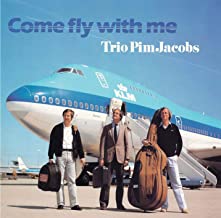
Pim Jacobs was born Willem Bernard Jacobs on October 29, 1934 in Hilversum, the Netherlands to artistic parents and was the older brother to bassist Ruud. With his brother he formed a trio with drummer Wessel Ilcken in 1954 and the band grew with the addition of guitarist Wim Overgaauw and Ilcken’s wife, Rita Reys.
The trio recorded with Herbie Mann in 1956 and following Ilcken’s death in 1957, Pim and Reys performed as a duo or trio with Overgaauw. They often recorded and played jazz festivals in Europe and New Orleans, Louisiana featuring vocal standards and bebop material.
He worked as a producer of non-jazz radio and television programs beginning in 1964, briefly operated the Go Go Club in Loosdrecht from 1967, and recorded with Bob Cooper, Louis van Dijk, and his own trio. For television, he hosted the music show Music for All, composed film music, and in the 1970s and 1980s he presented concerts in schools.
Pianist, composer and television presenter Pim Jacobs, who had a theatre in Maarssen named for him, passed away on July 3, 1996 in Tienhoven, the Netherlands.
More Posts: bandleader,history,instrumental,jazz,music,piano
Daily Dose Of Jazz…
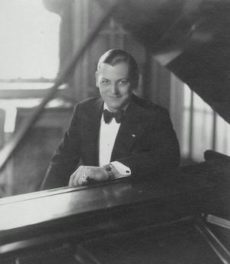
Joseph L. Sanders was born on October 26, 1896 in Thayer, Kansas. Best known for co-leading the Coon-Sanders’ Nighthawks along with Carleton Coon, the pair formed the group in 1920 in Kansas City under the name Coon-Sanders Novelty Orchestra.
Their broadcast for the first time on radio the following year, they became simply known as the Nighthawks because of their frequent appearances on late night radio. They recorded in Chicago, Illinois in 1924 and held a residency at the Blackhawk club in that city from 1926. The ensemble toured as a Midwestern territory band, and after Coon’s death, Joe continued to lead the band under his own name.
During the 1940s Sanders worked mostly in Hollywood studios, and occasionally led performances at the Blackhawk once again. He was a vocalist for the Kansas City Opera in the 1950s.
Pianist, singer, and bandleader Joe Sanders, associated with Kansas City jazz for most of his career, passed away in Kansas City, Missouri on May 14, 1965.
More Posts: bandleader,history,instrumental,jazz,music,piano,vocal
Daily Dose Of Jazz…
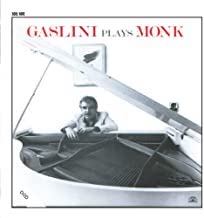
Giorgio Gaslini born October 22, 1929 in Milan, Italy. He began performing aged 13 and recorded with his jazz trio at 16. In the 1950s and 1960s, He performed with his own quartet. He was the first Italian musician mentioned as a “new talent” in the Down Beat poll and the first Italian officially invited to a jazz festival in the USA New Orleans 1976-77.
He collaborated with leading American soloists, such as Anthony Braxton, Steve Lacy, Don Cherry, Roswell Rudd, Max Roach, but also with the Argentinian Gato Barbieri and Frenchman Jean-Luc Ponty. He also adapted the compositions of Albert Ayler and Sun Ra for solo piano, which the Soul Note label issued. He also composed the soundtrack of Michelangelo Antonioni’s 1961 La notte (The Night).
From 1991 to 1995, Gaslini composed works for Carlo Actis Dato’s Italian Instabile Orchestra, and was the first to teach jazz courses at the Santa Cecilia Academy of Music in Rome in 1972. In the Seventies he scored ten films between 1970 to 1977.
Pianist, composer and conductor Giorgio Gaslini, who composed symphonic works, operas, and ballets, passed away on July 29, 2014 at 84 in Borgo Val di Taro, Italy in the province of Parma.
More Posts: bandleader,composer,conductor,history,instrumental,jazz,music,piano
Daily Dose Of Jazz…
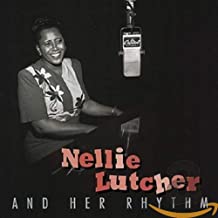
Nellie Rose Lutcher was born on October 15, 1912 in Lake Charles, Louisiana. The eldest daughter of the 15 children, her father was a bass player and her mother a church organist. She received piano lessons and her father formed a family band with her playing piano. At age 12, she played with Ma Rainey, when her regular pianist fell ill and had to be left behind in the previous town. Searching for a temporary replacement in Lake Charles, one of the neighbors told Rainey that there was a little girl who played in church who might be able to do it.
At 15, Lutcher joined her father in Clarence Hart’s Imperial Jazz Band and in her mid-teens also briefly married the band’s trumpet player. In 1933, she joined the Southern Rhythm Boys, writing their arrangements and touring widely. 1935 saw her moving to Los Angeles, California where she began to play swing piano, and also to sing, in small combos throughout the area. At this point she began developing her own style, influenced by Earl Hines, Duke Ellington and her friend Nat “King” Cole.
Not widely known until 1947 when she learned of the March of Dimes talent show at Hollywood High School, and performed. The show was broadcast on the radio and her performance caught the ear of Capitol Records scout Dave Dexter. Signing to the label she made several records, including The One I Love (Belongs to Somebody Else) and her first hit single, the risqué Hurry On Down.
In 1950, Lutcher duetted with Nat “King” Cole on For You My Love and Can I Come In For A Second. The same year, her records were released in the UK and were actively promoted by radio DJ Jack Jackson. She headlined a UK variety tour, emceed by Jackson, with great success, later returning there to tour on her own.
With an orchestra for the first time, Lutcher recorded The Birth of the Blues and I Want to Be Near You in 1951, but losing her appeal with the record-buying public and was dropped by Capitol the following year. She went on to record, much less successfully, for other labels including Okeh, Decca and Liberty, and gradually wound down her performance schedule.
In 1952, Lutcher was contacted to perform on a happy new years television special, however, after she finished her song it was revealed that she was on the set of and the honoree on a This Is Your Life episode.
Pianist and vocalist Nellie Lutcher, most recognizable for her diction and exaggerated pronunciation and was credited as an influence by Nina Simone among others, passed away in Los Angeles on June 8, 2007, aged 94.
More Posts: bandleader,history,instrumental,jazz,music,piano,vocal