

Daily Dose Of Jazz…
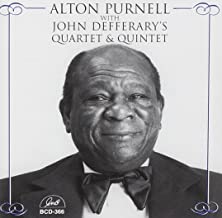
Alton Purnell was born in New Orleans, Louisiana on April 16, 1911. He sang before playing piano professionally, beginning to do so locally in New Orleans in 1928. He played in the 1930s with Isaiah Morgan, Alphonse Picou, Big Eye Louis Nelson, Sidney Desvigne, and Cousin Joe, and with Bunk Johnson in the middle of the 1940s.
Purnell joined George Lewis’s band after Johnson’s broke up in 1946, and remained there well into the 1950s, including for international tours. In 1957 Purnell relocated to Los Angeles. There he worked with Teddy Buckner, Young Men from New Orleans, Joe Darensbourg, Kid Ory, Barney Bigard, and Ben Pollack. He also recorded extensively as a leader, including for Warner Bros. Records, GHB, and Alligator Jazz. He toured internationally as a guest soloist from 1964.
He sang before playing piano professionally, beginning to do so locally in New Orleans in 1928. He played in the 1930s with Isaiah Morgan, Alphonse Picou, Big Eye Louis Nelson, Sidney Desvigne, and Cousin Joe, and with Bunk Johnson in the middle of the 1940s. Purnell joined George Lewis’s band after Johnson’s broke up in 1946, and remained there well into the 1950s, including for international tours.
Pianist Alton Purnell, who was a longtime Dixieland performer, passed away January 14, 1987 in Inglewood, California.
More Posts: bandleader,history,instrumental,jazz,music,piano
Daily Dose Of Jazz…
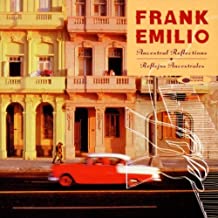
Frank Emilio was born Francisco Emilio Flynn Rodríguez on April 13, 1921 in Havana, Cuba to an American father and Cuban mother. Despite being blinded at birth due to damage to his eyes by the doctor’s forceps, unable to distinguish shapes as a child he became totally blind by his late teens. Orphaned at age five he was raised by his aunt and uncle. At 13 years old, he won an amateur music contest and shortly after began to play danzones by Antonio María Romeu. In 1938 he interrupted his career to complete his studies at a school run by Cuba’s National Association for the Blind.
During the 1940s, Flynn became part of the filin music scene which comprised jazz-influenced bolero composers. He accompanied singer Miguel de Gonzalo. In 1946 he founded the Loquibambia ensemble together with guitarist and composer José Antonio Méndez, and they started to work for the Mil Diez radio station. By 1949 they accompanied the famous Conjunto Casino in the recording of their song Átomo. Two years later he founded Los Modernistas, and played at Radio Cadena Habana, toured the island before disbanding. Flynn then joined a son ensemble, Alejandro y sus Muchachos, and in 1955 he recorded four songs with Arcaño y sus Maravillas.
By the late Fifties he would go on to pioneer small-ensemble Cuban jazz. After the Cuban Revolution, the members of the Quinteto Instrumental remained in Havana, playing and recording. In the late 1970s and 1980s, his band expanded and recorded their debut album. During the 1990s Flynn recorded several albums including Barbarísimo, Tribute to Ernesto Lecuona and A Tiempo de Danzón for Milan/RCA Records, and Ancestral Reflections for Blue Note. In 1998 he made his American debut, with Los Amigos, in a Jazz at Lincoln Center gig and the following year he reunited with his American relatives.
Between 2000 and 2001 he spent much of his time with his relatives in California, where he played live occasionally and gave lectures at California State University, Los Angeles. Pianist Frank Emilio, who played danzas, danzones, filin, descarga, and Afro-Cuban jazz, passed away on August 23, 2001 in Havana.
More Posts: bandleader,history,instrumental,jazz,music,piano
Daily Dose Of Jazz…
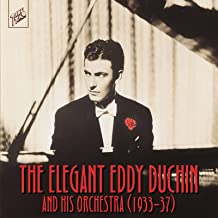
Edwin Frank Duchin was born in Cambridge, Massachusetts on April 1, 1909 to Bessarabian Jewish immigrants. After graduating from Beverly High School he attended the Massachusetts College of Pharmacy and originally took up the profession of pharmacist before turning full-time to music. He began his new career with Leo Reisman’s orchestra at the Central Park Casino in New York City, an elegant nightclub where he became popular in his own right. This would cause strife between him and Reisman.
By 1932, with Reisman’s contract with the Central Park Casino being terminated, it left violinist Leo Kahn as the interim leader of the orchestra. After 6 weeks, Duchin had assumed Kahn’s place as the orchestra’s leader. He became widely popular thanks to regular radio broadcasts that boosted his record sales, and he was one of the earliest pianists to lead a commercially successful large band.
Entering the Navy during World War II, he served as a combat officer in a destroyer squadron in the Mediterranean and Pacific. He attained the rank of lieutenant commander and was highly decorated with several military awards. After his discharge Eddy was unable to reclaim his former stardom in spite of a stab at a new radio show in 1949.
Pianist and bandleader Eddy Duchin, who rose to fame during the 1930s and 1940s, passed away at age 41 on February 9, 1951 of acute myelogenous leukemia.
More Posts: bandleader,history,instrumental,jazz,music,piano
Daily Dose Of Jazz…
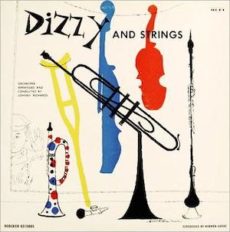
Lavere “Buster” Harding was born on March 19, 1917 to Benjamin and Ada Harding in North Buxton, Ontario, Canada. Raised in Cleveland, Ohio as a teenager he started on his own band.
In 1939 Buster went to work for the Teddy Wilson big band, and then in the early 1940s joined the Coleman Hawkins band. This was followed by his playing with Cab Calloway. He became a freelance arranger and worked with Benny Goodman, Artie Shaw, Roy Eldridge, Dizzy Gillespie, and Count Basie, among others.
In 1949 he became the musical director for Billie Holiday recording sessions. In the early 1960s Harding played with Jonah Jones, though he was known primarily as an arranger and composer.
Pianist, composer and arranger Buster Harding, who never recorded as a leader, passed away on November 14, 1965, in New York City.

More Posts: arranger,composer,history,instrumental,jazz,music,piano
Three Wishes
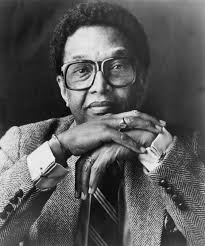
When asked what his three wishes would be, Billy Taylor told Nica he would wish for:
- “Wish I had the time to do all the things that I’m interested in.”
- “Wish I had the time to spend with all the people and things I care about.”
- “I wish I had the time.”
*Excerpt from Three Wishes: An Intimate Look at Jazz Greats ~ Compiled and Photographed by Pannonica de Koenigswarter

More Posts: baroness,history,instrumental,jazz,music,pannonica,piano,three,wishes