

Requisites
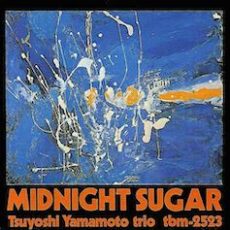
Midnight Sugar ~ Tsuyoshi Yamamoto Trio | By Eddie CarterThis morning’s choice from the library is one of my absolute favorites because each time I hear it, I’m transported back to one of my happiest memories as a young adult. If any of you lived in Cleveland, Ohio during the seventies and eighties, Audio Craft at 3915 Carnegie Avenue was the place to go if you wanted to purchase a quality entry-level, mid-level, or high-end audio system. My uncle Bob Franks was the manager there for many years and I got to help him on Monday and Thursday evenings, and each Saturday. He was instrumental in teaching me about excellent audio equipment, helping me put together my first system, and introducing me to The Tsuyoshi Yamamoto Trio.
Midnight Sugar (Three Blind Mice TBM-23) is the group’s 1974 debut for the Japanese jazz label and has long been a favorite to demonstrate high-end audio equipment at audio shows and audio salons worldwide. It’s also become a collector’s item, a mint original LP or the 1977, 1979, and 1982 Stereo reissues can cost a few hundred dollars. Joining the pianist are two giants in their own right, Isoo Fukui on bass and Tetsujiro Obara on drums. My copy used for this report is the 1977 Japanese Stereo reissue (Three Blind Mice TBM-2523) and LP collectors take note. Only the 1977, 1979 (TBM(P)-2523) and 1982 (Trio Records – Three Blind Mice PAP-2006) reissues list the group’s name as Tsuyoshi Yamamoto Trio. All other LP reissues and the original release show the pianist’s last name first.
Midnight Sugar is a slow tempo blues beginning Side One with a brief bowed bass introduction by Isoo before Yamamoto takes over on the melody. Tsuyoshi is the only soloist and is at his best on a lengthy interpretation that’s sublimely soulful and one of the highlights on the album, thanks to the rhythmic harmony provided by his colleagues. I’m A Fool To Want You was written in 1951 by Frank Sinatra, Jack Wolf, and Joel Herron. Sinatra recorded the song for Columbia Records, making it a hit. It opens with a graceful introduction and wistful delivery of the melody. The pace moves to midtempo for Yamamoto’s solo performance and he responds with a mesmerizing display and emotional depth preceding the closing chorus ending with fingertip delicacy.
The Nearness of You starts Side Two and was written in 1937 by Hoagy Carmichael and Ned Washington. It became a hit for Ray Eberle who recorded it with The Glenn Miller Orchestra in 1940. The trio dresses up this timeless evergreen with a blissful theme treatment and a sentimental swing on the song’s only interpretation by Yamamoto drawing the listener into this beautiful standard at a leisurely pace. It Could Happen To You is by Jimmy Van Heusen and Johnny Burke, this popular song was written in 1943 and was first recorded by vocalist Jo Stafford with the Paul Weston Orchestra. Its first film appearance was in the 1944 musical comedy And The Angels Sing. The trio’s interaction is stunning on the dreamy melody. Tsuyoshi’s reading is skillfully constructed with tender lyricism on one of the most beautiful ballads ever written.
The album closes with Yamamoto’s Sweet Georgia Blues, an uptempo original sharing some similarities with the 1925 jazz and pop classic, Sweet Georgia Brown by Ben Bernie, Ken Casey, and Maceo Pinkard. It opens with a vivacious theme by the trio, then a brief comment preceding Obara giving a short workout of explosive fireworks. Tsuyoshi wraps up the album with a few final remarks of fun leading to the lively closing chorus.
Three Blind Mice began in 1970 with the premise of showcasing emerging jazz artists. The label produced one-hundred thirty albums over thirty years and was known for their outstanding sound. TBM also was instrumental in the development of Japanese jazz. Many of the stars from Japan now known around the world recorded their debut albums on the label. The album was produced by Takeshi Fujii who ran TBM for many years and recorded by Yoshihiko Kannari, the distinguished Japanese engineer who worked for TBM at the time, and now runs his own organization, Studio Lion since 2000.
The sound on Midnight Sugar is spectacular and a perfect choice to demonstrate any mid-level or high-end audio system. Your sweet spot is right in the studio with the musicians because of the incredible lifelike detail coming from the piano, bass, and drums. Tsuyoshi Yamamoto has an incredible discography of music, is still performing today and all of his albums on Three Blind Mice are worth occupying a spot in your library. If you’re looking for a jazz trio album for the library or are a fan of piano jazz specifically, I happily submit for your approval, Midnight Sugar by Tsuyoshi Yamamoto Trio. An album that’s quite a value for the music, sound quality, and a title that’ll provide its owner many hours of listening pleasure.
~ I’m A Fool To Want You (Columbia 39425); It Could Happen To You (Capitol Records 158) ~ The Nearness of You (Bluebird B-10745) – Source: Discogs.com ~ It Could Happen To You, The Nearness of You – Source: JazzStandards.com ~ I’m A Fool To Want You, Sweet Georgia Brown, Three Blind Mice – Source: Wikipedia.org © 2021 by Edward Thomas Carter

More Posts: choice,classic,collectible,collector,history,instrumental,jazz,music,piano

Conversations About Jazz & Other Distractions
Conversations About Jazz Features Scat, Improvisation & The Avant~Garde on January 7
Hammonds House Digital invites you to join us for Conversations about Jazz & Other Distractions hosted by former jazz radio host and founder of Notorious Jazz, Carl Anthony. On Thursday, January 7 at 7:30 pm (EST), Carl’s special guests will be musicians and artists known for their extraordinary skills in improvisation, scat, and the avant-garde. Tune in for a great evening with vocalist and pianist Audrey Shakir, saxophonist Kebbi Williams, and composer and lyricist Fay Victor. The program is free and will stream live on Hammonds House Museum’s Facebook and YouTube.
Audrey Shakir is a jazz-pop vocalist and pianist extraordinaire. Dubbed Atlanta’s First Lady of Jazz, she has entertained throughout the U.S. and internationally. Her scatting talents have been compared to the great Ella Fitzgerald, and she brings a remarkable jazz influence to all the material she performs.
Kebbi Williams is a Grammy award-winning tenor saxophonist and one of contemporary music’s whirlwind improvisers. The imaginative multi-instrumentalist/ composer/producer/arranger/teacher resists categorization. His innovative sound blends avant-garde jazz, hip-hop, afro-beat, gospel, electronica, classical and fiery rock, which he interweaves with passion and edge.
Fay Victor is a musician, composer, lyricist, and educator. Originally a singer in the traditional jazz field, she has been working in jazz, blues, opera, free improvising, avant-garde, modern classical music, and occasional acting since re-settling in New York in 2003. She is an Associate Professor at the School of Jazz and Contemporary Music in New York.
Hammonds House Museum is generously supported by the Fulton County Board of Commissioners, Fulton County Arts and Culture, the City of Atlanta Mayor’s Office of Cultural Affairs, The Community Foundation for Greater Atlanta, The National Performance Network, AT&T and WarnerMedia.
Hammonds House Museum’s mission is to celebrate and share the cultural diversity and important legacy of artists of African descent. The museum is the former residence of the late Dr. Otis Thrash Hammonds, a prominent Atlanta physician and a passionate arts patron. A 501(c)3 organization which opened in 1988, Hammonds House Museum boasts a permanent collection of more than 450 works including art by Romare Bearden, Robert S. Duncanson, Benny Andrews, Elizabeth Catlett, Jacob Lawrence, Hale Woodruff, Amalia Amaki, Radcliffe Bailey and Kojo Griffin. In addition to featuring art from their collection, the museum offers new exhibitions, artist talks, workshops, concerts, poetry readings, arts education programs, and other cultural events throughout the year.
Located in a beautiful Victorian home in Atlanta’s historic West End, Hammonds House Museum is a cultural treasure and a unique venue. During the COVID-19 pandemic, they continue to observe CDC guidelines, but look forward to welcoming in-person visitors soon! For more information about upcoming virtual events, and to see how you can support their mission and programming, visit their website: hammondshouse.org.
MEDIA: For more information, contact Karen Hatchett at Hatchett PR, karen@hatchettpr.com.
More Posts: conversations,history,instrumental,jazz,musicians,piano,saxophone,vocal
The Quarantined Jazz Voyager
It’s a new year and it’s been ten months since the quarantine and social distancing has been instituted. Some of us, unfortunately, are still not fully adapting to life with the virus, desiring their comfort zone to be as it was before the pandemic. For those of us who have taken this life interruption to no longer be an inconvenience, we relax and find new engagements for our senses.
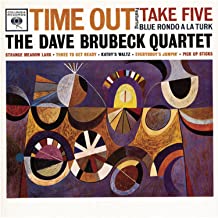
With that in mind, this week I’ve selected the classic studio album Time Out by the Dave Brubeck Quartet. Recorded at Columbia’s 30th Street Studio in New York City on June 25, July 1, and August 18, 1959, it was released on December 14, 1959 on Columbia Records. It is based upon the use of time signatures that were unusual for jazz and is a subtle blend of cool and West Coast jazz.
The producer on the album was Teo Macero, and Fred Plaut engineered the sessions. S. Neil Fujita had the responsibility for creating the cover artwork, and Seth Rothstein was the project director.
The album peaked at No. 2 on the Billboard pop albums chart, and was the first jazz album to sell a million copies. The single Take Five off the album was also the first jazz single to sell one million copies. By 1963, the record had sold 500,000 units, and in 2011 it was certified double platinum by the RIAA, signifying over two million records sold. The album was inducted in the Grammy Hall of Fame in 2009.
Columbia president Goddard Lieberson took a chance to underwrite and release the album. Although it received negative reviews from critics upon its release, it became a popular recording by fans globally. In 2005, it was one of 50 recordings chosen that year by the Library of Congress to be added to the National Recording Registry. It was also listed in the book 1001 Albums You Must Hear Before You Die. In 2009 the album was inducted into the Grammy Hall of Fame.
Track List | 38:30
All pieces composed by Dave Brubeck, except Take Five by Paul Desmond.
Side One- Blue Rondo à la Turk ~ 6:44
- Strange Meadow Lark ~ 7:22
- Take Five ~ 5:24
- Three to Get Ready ~ 5:24
- Kathy’s Waltz ~ 4:48
- Everybody’s Jumpin’ ~ 4:23
- Pick Up Sticks ~ 4:16
- Dave Brubeck – piano
- Paul Desmond – alto saxophone
- Eugene Wright – bass
- Joe Morello – drums
As you all know, the moment the world becomes safe and opens back up for Americans to travel, I will be back jet setting around the globe. In the meantime, stay vigilant, wear masks and remain healthy.

More Posts: adventure,club,genius,jazz,museum,music,piano,preserving,restaurant,travel
Daily Dose Of Jazz…
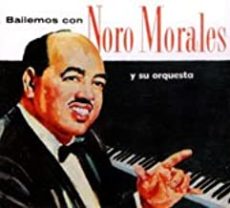
Noro Morales was born into a family with a long musical tradition in Puerta de Tierra, San Juan, Puerto Rico on January 4, 1911. As a child, he studied trombone, saxophone, and drums, finally settling on the piano. In 1935 he moved to New York City in search of a professional career and played with different bands including Alberto Socarras and Augusto Coén.
1937 saw him creating his own orchestra together with his brother Ismael, featured flutist, which competed with the likes of Tito Puente, Machito Grillo, the brothers Tito and Johnny Rodríguez, Davilita, and José Esteves known as Joe Loco. They began to record their first disc for Columbia and Decca Records and in a short time, Noro and their band became a staple on the New York City Latin music scene. The orchestra frequently performed in important clubs such as El Morocco, the Conga, and Copacabana. In 1942 with the Xavier Cugat Orchestra popularizing rumba, Morales got the opportunity to play for the first time, the prestigious dance of Harvest Moon organized by the Daily News newspaper.
At the time of the great mambo and swing bands, Morales was able to consolidate a unique style and original, and in the late 1940s and early 1950s, he achieved commercial success with several albums produced by the CODA label. His most famous compositions recorded were Rumba Rhapsody, Cute Woman, Nothing Is True, Palm Trees, Ponce, Cursed Jealousy, Rhythmic Serenade, and 110th Street & 5th Avenue.
Suffering from glaucoma, diabetes, and joint problems, in 1960 he decided to return to Puerto Rico, where he put together another band, consisting among others percussionist Ana Carrero and singer Vitín Avilés.
Composer, arranger, and pianist Noro Morales, who was a pioneer in the introduction of the Latin musical element in New York City, passed away on January 14, 1964 in San Juan.
More Posts: bandleader,composer,history,instrumental,jazz,music,piano
Three Wishes
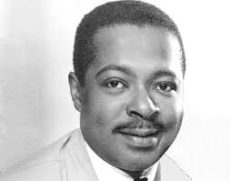
Having asked Wynton Kelly of his three wishes he responded to Nica with these answers:
- “To make some money.”
- “More money.”
- “To get around my instrument a little more.”
*Excerpt from Three Wishes: An Intimate Look at Jazz Greats ~ Compiled and Photographed by Pannonica de Koenigswarter

More Posts: baroness,history,instrumental,jazz,music,pannonica,piano,three,wishes