


The Quarantined Jazz Voyager
My social distancing and masks continues amidst the on-going vaccinations. This week the album I’m puting on the turntable is an album from a member of a family who are vocal royalty. The album is a 2018 titled My Mood Is You by Freddy Cole.
Recorded on the HighNote label The album features Cole’s working band. Arrangements are by Randy Napoleon and John DiMartino. This album received a nomination for a Grammy Award for Best Jazz Vocal Album on December 7, 2018.
Track List | 47:08- My Mood Is You ~ 5:47
- Temptation ~ 4:55
- Almost In Love ~ 5:39
- I’ll Always Leave The Door A Little Open ~ 5:45
- First Began ~ 6::21
- The y Didn’t Believe Me ~ 4:34
- My Heart Tells Me ~ 6:32
- The Lonely One ~ 5:12
- Love Like This Can’t Last ~ 4:17
- Marie ~ 3:20
- Freddy Cole ~ piano, vocal
- Randy Napoleon ~ guitar
- Elias Bailey ~ bass
- Quentin Baxter ~ drums
- John DiMartino ~ piano
- Joel Frahm ~ tenor saxophone
This pandemic is here for the long haul. In the meantime, stay vigilant, wear masks and remain healthy and we’ll all be jet setting sooner than we think.

More Posts: adventure,album,club,genius,jazz,museum,music,piano,preserving,restaurant,travel,vocal
The Quarantined Jazz Voyager
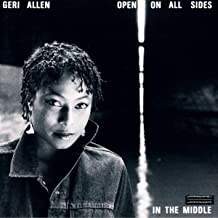
OPEN ON ALL SIDES IN THE MIDDLE
Having settled into a routine over the past year of wearing masks and social distancing life is so much easier for this jazz voyager. So continuing my uninterrupted time to kick back, relax and listen to music, I have selected the album Open On All Sides In The Middle, the 1986 recording by pianist Geri Allen. The recording session was in December 1986 at Sound Suite Recording Studio in Detroit, Michigan. The album was produced by Allen, who also composed all the songs, and released on the German Minor Music label.
Track List | 43:47
- “Open on All Sides / The Glide Was in the Ride…” – 6:45
- “Forbidden Place” – 4:24
- “The Dancer” – 2:33
- “In the Middle” – 4:01
- “Ray” – 4:17
- “I Sang a Bright Green Tear for All of Us This Year…” – 12:46
- “Drummer’s Song” – 2:24
- “In the Morning” – 5:03
- “The Dancer Part 2” 1:34
The Players
- Geri Allen – piano, keyboards, backing vocals
- Rayse Biggs – trumpet, flugelhorn
- Robin Eubanks – trombone
- David McMurray – soprano saxophone, flute
- Steve Coleman – alto saxophone
- Jaribu Shahid – bass
- Tani Tabbal – drums
- Shahida Nurullah – lead vocals
- Marcus Belgrave – flugelhorn (track 8)
- Mino Cinelu – cymbals, bells, congas, timbales, electronic drums, udu
- Lloyd Storey – tap dance
This pandemic is here for the long haul. In the meantime, stay vigilant, wear masks and remain healthy and we’ll all be jet setting sooner than we think.
More Posts: adventure,album,club,genius,jazz,museum,music,piano,preserving,restaurant,travel
Three Wishes
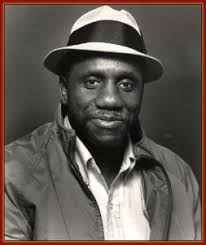
Nica asked Buddy Montgomery what his three wishes were and he simply said:
- “I can use a whole lot of things! One thing I would like is to get my mind and my hands attached to what I am trying to do, musically. I need to think some more about the others.”
*Excerpt from Three Wishes: An Intimate Look at Jazz Greats ~ Compiled and Photographed by Pannonica de Koenigswarter

More Posts: baroness,history,instrumental,jazz,music,pannonica,piano,three,vibraphone,wishes
Daily Dose Of Jazz…
Ray Santisi was born on February 1, 1933 in Boston, Massachusetts and grew up in Jamaica Plain. He won an honors scholarship to attend Schillinger House and by the time he graduated it had been renamed Berklee School of Music, and later became Berklee College of Music..
He played as featured soloist with Charlie Parker, Stan Getz, Dexter Gordon, Mel Torme, Irene Kral, Herb Pomeroy and Natalie Cole to name a few. He performed with Buddy DeFranco, Joe Williams, Gabor Szabo, Milt Jackson, Zoot Sims & Al Cohn, Carole Sloane, Clark Terry and Bob Brookmeyer. As a leader he performed with his own ensemble, The Real Thing and in the 1960s performed with the Benny Golson Quartet.
As an educator, in 1957 Ray became a professor of piano and harmony at Berklee College of Music. His students include many notable jazz musicians, including Diana Krall, Makoto Ozone, Joe Zawinul, Keith Jarrett, Jane Ira Bloom, Jan Hammer, Alan Broadbent, Arif Mardin, Gary Burton, John Hicks, Danilo Perez and Hiromi. Fourteen of his students received Grammy awards.
He was awarded grants from the National Endowment for the Arts in composition and performance. He taught at Stan Kenton’s summer jazz clinics throughout the United States, performed in Europe, Scandinavia, and Asia. He performed at the first Jazz Workshop, and in 2008 was nominated to IAJE Jazz Education Hall of Fame.
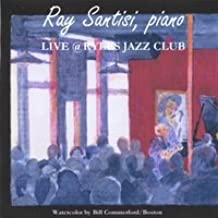
He authored two books, Berklee Jazz Piano, and his instructional book, Jazz Originals for Piano. His trio played the first Sunday of each month for eleven years at Ryles Jazz Club until the month of his death. Pianist, composer, arranger, and educator Ray Santisi passed away on October 28, 2014 in his hometown.
More Posts: arranger,bandeader,composer,educator,history,instrumental,jazz,music,piano
Requisites
Soul Hits ~ Les McCann | By Eddie Carter
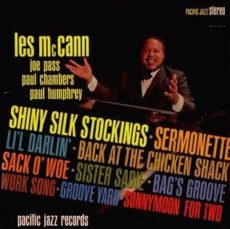
In 1972, I was in my senior year at Glenville High School and starting my first year at Cuyahoga Community College’s Metro Campus in Cleveland, Ohio. I studied radio and had an hour-long program titled Edward Carter and All That Jazz playing albums from my library for the students and faculty on school stations, WGHS and WCCC. My goals at that time were to work at Record Rendezvous once I graduated, get my broadcast license, and become a disc jockey at Cleveland’s then jazz station, WCUY 92.3 FM. Sadly, neither of these came to fruition, but I mention it because a few nights ago, I listened to the album that became the inspiration for this morning’s discussion, and it brought back some great memories. Soul Hits (Pacific Jazz PJ-78/ST-78) by pianist Les McCann hit the stores in 1964 and is his ninth record for Richard Bock and Roy Harte’s label. His bandmates are Joe Pass on guitar, Paul Chambers on bass, and Paul Humphrey on drums. My copy used in this report is the original Stereo album.
Jimmy Smith’s Soul-Jazz classic, Back At The Chicken Shack starts Side One at a lively tempo for the quartet’s melody. Joe kicks off the solos swinging easily, then Les gives the next performance a carefree groove ahead of the closing chorus and slow fade. The beat moves upward for Sack O’ Woe by Julian Cannonball Adderley. I first heard it on The Cannonball Adderley Quintet at The Lighthouse. The ensemble crackles with energy on the opening chorus, then Pass swings like mad on an invigorating solo. McCann takes over, fanning the flames with fire on the closing statement into the out-chorus and quick fadeout. Groove Yard is by pianist Carl Perkins and was the song I used to end each radio show with. It’s a very pretty melody that’s a centerpiece for Joe on the melody, reprise, and the respectful grace he demonstrates on the song’s only solo. The trio’s interaction behind him is subtle and beautifully detailed.
Sermonette by Nat Adderley is an infectious tune with an attractive gospel-flavored rhythm by the foursome in unison. The solo order is Pass, Humphrey, and McCann, and each musician preaches an irresistible abbreviated lesson designed to have the listener clap their hands and tap their toes before a soft fade into nothingness. The first side concludes with a brisk workout of Sonnymoon For Two by Sonny Rollins. The quartet’s collective opening chorus is a sheer delight for the ears. Joe is first in the spotlight with an emotionally charged interpretation, then Les performs impressively on a brief closing statement with Chambers and Humphrey providing firm support into the coda.
Milt Jackson’s 1954 standard, Bags’ Groove (pronounced Bag’s Groove here) opens Side Two with McCann opening the song with a spirited statement of optimistic joy. Joe cruises into the melody at a comfortable speed, then the foursome disappears into darkness on a short ending. Shiny Silk Stockings aka Shiny Stockings was written by Frank Foster in 1955 and the quartet treats this young lady to a lovely night on the town with Joe delivering a relaxing theme treatment. Les takes over for a delightfully, dazzling performance preceding the foursome’s reprise and affectionate finale.
The beat moves to mid tempo for Horace Silver’s 1959 standard, Sister Sadie that premiered on Blowin’ The Blues Away that year. The quartet’s rendition is pure fun from first note to last with a danceable beat that compels you to move your feet. Joe is up first and engages the ear with a delightful performance of vivacious licks that’s a pleasure to listen to. Les gets down to business on the second solo with some home cooking that builds nicely into the closing chorus by Paul who executes a flawless interpretation convincingly before the quartet takes the tune out.
The final two tracks on the album are Neal Hefti’s 1957 timeless standard Li’l Darlin’ and Nat Adderley’s contemporary classic Work Song. On Li’l Darlin’, McCann is the featured soloist, and he delivers a deeply thoughtful presentation of warm beauty with Pass providing the perfect punctuation culminating into an intimate ending. Work Song was written in 1960 and is one of Nat Adderley’s finest works as a composer. It’s also the title tune for what many feel is his best studio album. Oscar Brown, Jr. added lyrics to the instrumental and recorded it on his LP, Sin & Soul, making the song a favorite jazz standard among musicians and vocalists around the world. Pass leads the foursome through a very strong opening chorus raising the temperature to a cooking tempo on Joe’s lead solo. Paul’s bass is impeccable on the second reading and Les wraps up the album with a robust exuberance that you can move to.
Richard Bock produced and engineered Soul Hits and the sound is stunning with the incredible definition of each instrument that surrounds your perfect place to listen with sweet sounds throughout the treble, midrange, and low end. The quartet communicates a wonderful sense of delight and sheer pleasure in the music they’re making. Though out of print since the 1981 US reissue by Liberty Records, Soul Hits by Les McCann is an album of great music that’ll delight the fan discovering his music for the first time, the seasoned collector who’s a fan of piano jazz, or if you already own the record as I do, it’ll bring back some great memories!
~ Back at The Chicken Shack (Blue Note BLP 4117/BST 84117); Blowin’ The Blues Away (Blue Note BLP 4017/BST 84017); Sin & Soul (Columbia CL 1577/CS 8377); Soul Hits (Liberty Records LN-10079); The Cannonball Adderley Quintet at The Lighthouse (Riverside RLP 344/RLP 9344); Work Song (Riverside RLP 12-318/RLP-1167) – Source: Discogs.com
~ Shiny Stockings, Li’l Darlin’ – Source: JazzStandards.com
~ Bags’ Groove, Work Song – Source: Wikipedia.org
© 2021 by Edward Thomas Carter
More Posts: choice,classic,collectible,collector,history,instrumental,jazz,music,piano