

Daily Dose Of Jazz…
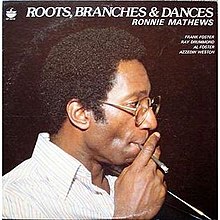
Ronald Mathews was born on December 2, 1935 in New York City and in his twenties, he toured internationally and recorded with Max Roach, Freddie Hubbard and Roy Haynes. He was a member of Art Blakey’s Jazz Messengers in the late Fifties through the 1960s. By age thirty, he was teaching jazz piano and leading workshops, clinics and master classes at Long Island University in New York City.
During the 1970s Ronnie recorded with Dexter Gordon and Clark Terry, toured and recorded on two Louis Hayes projects, the Louis Hayes~Woody Shaw Quintet and the Louis Hayes~Junior Cook Quintet. One of his longest associations and a highlight of his career was with the Johnny Griffin Quartet. For almost five years, from 1978~1982, he was an integral part of this band, forging lasting relationships with Griffin, drummer Kenny Washington, and bassist Ray Drummond.
The Eighties saw Mathews honing his role as a frontman, performing as a leader in duo, trio, and quartet configurations around the world. He again toured with Freddie Hubbard and Dizzy Gillespie’s United Nations Band, was the pianist for the Tony Award~winning Broadway musical, Black and Blue in 1989, and, in 1990, he was one of the artists who recorded for Spike Lee’s movie, Mo’ Better Blues.
After a stint touring and recording with the Clifford Jordan Big Band in the early 1990s, Mathews joined T.S. Monk for eight years of touring and recording three albums with the band. In 1998, Hal Leonard Books published his collection of student arrangements: Easy Piano of Thelonious Monk.
As both a mentor and musician with Generations, a group of jazz musicians headed by veteran drummer Jimmy Cobb, he contributed two new compositions for the album that was released posthumously to his death by San Francisco State University’s International Center for the Arts on September 15, 2008.
Pianist Ronnie Matthews recorded 14 albums as a leader and more than three dozen as a sideman during his career, passing away on June 28, 2008 in Brooklyn, New York.
More Posts: bandleader,composer,educator,history,instrumental,jazz,music,piano
Three Wishes
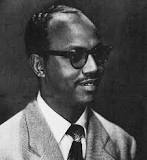
Nica inquired of Adriano Acea what his three wishes would be and he told her:
- “I would like to play music as it should be played.”
- “I’d love to have money to make my family happy. I thinkI could enjoylife from there.”
*Excerpt from Three Wishes: An Intimate Look at Jazz Greats ~ Compiled and Photographed by Pannonica de Koenigswarter

More Posts: baroness,history,instrumental,jazz,music,pannonica,piano,three,wishes
Daily Dose Of Jazz…
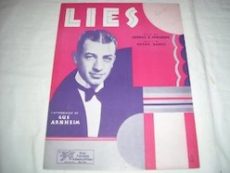
Harry Barris was born on November 24, 1905 in New York City to Jewish parents. Educated in Denver, Colorado. he became a professional pianist at the age of 14. He led a band that toured the Far East at the age of 17.
The same year, he played the piano and occasionally sang in the Paul Ash Orchestra, while Al Rinker and Bing Crosby became members of the Paul Whiteman Orchestra as a singing duo. However, while the duo was appearing at the vast New York Paramount in 1927, sans microphones, they could not be heard by the audience. They were promptly dropped from the bill. However, a band member who knew Barris suggested that they add him to make a trio and The Rhythm Boys was formed in April 1927.
In 1930, The Rhythm Boys left Whiteman and joined Gus Arnheim’s Cocoanut Grove Orchestra. They made one more recording together, Them There Eyes but the boys decided to quit in 1931 agoing their separate ways. Harry however, changed his mind and returned to the Cocoanut Grove to complete his contract. Joining Arnheim’s singing group The Three Ambassadors.
Barris appeared in 57 films between 1931 and 1950, usually as a band member, pianist or singer. Seven of those films had Bing Crosby as the star. In 1932, Barris signed a contract to star in six shorts for Educational Pictures.
During World War II, along with Joe E. Brown, he went overseas to entertain troops. Having a lifelong drinking problem, sustaining a fall that fractured his hip in 1961, and despite a series of operations, he developed a cancerous tumor. Vocalist, pianist, and composer Harry Barris, who was one of the earliest to utilize scat singing in recordings passed away on December 13, 1962 at the age of 57 in Burbank, California.
Share a dose of a New York City composer to inspire inquisitive minds to learn about musicians whose legacy lends their genius to the jazz catalog…
More Posts: composer,history,instrumental,jazz,music,piano,vocal
Requisites
A Tribute To Cannonball – Don Byas and Bud Powell | By Eddie Carter
This next album from the library was recorded in 1961 but remained shelved until its release in 1979, four years after the death of the musician it honors. A Tribute To Cannonball (Columbia Contemporary Master Series JC 35755) brings together Don Byas on tenor sax and Bud Powell on piano for a program of standards and two original tunes. Completing the ensemble are Idrees Sulieman (tracks: A5, B1, B2, B4) on trumpet, Pierre Michelot on bass, and Kenny Clarke on drums. My copy used in this report is the 1979 US Stereo album.
The quartet begins Side One with the Cole Porter classic, Just One of Those Things that made its debut in the 1935 musical comedy, Jubilee. The trio opens with a scintillating conversation in the opening chorus. Don adds some fierce dialogue on the second verse, then continues traveling at breakneck speed on the first solo. Bud’s nimble fingers fly over the keys at a brisk pace on the finale towards the quartet’s enthusiastic ending.
Jackie My Little Cat is a pretty ballad by Pierre Michelot that slows the tone to a softer tempo. From the first phrase of the elegantly tranquil theme, the quartet creates a warmly affectionate atmosphere for Byas who infuses the lead statement with tasteful subtlety. Powell also produces a reading of extraordinary tenderness that compliments the rhythm section’s graceful groundwork into a sensuous finale. Cherokee, also known as Indian Love Song, was written in 1938 by Ray Noble as the first movement of his five-part Indian Suite. It became a hit for bandleader Charlie Barnet in 1939 and a jazz standard after Charlie Parker’s blistering rendition in 1941 with The Kansas City Band. The song begins with a brisk duet by Don and Pierre on the introduction, then proceeds with a lightning-fast melody. Byas begins his first solo with a sizzling performance, then Powell flexes his muscles with incredible virility. The saxophonist is completely energized on the closer with fiery intensity before the out-chorus.
I Remember Clifford by Benny Golson is a 1957 jazz standard honoring Clifford Brown who perished in an auto accident the year before with pianist Richie Powell and his wife Nancy. It became a huge hit for Golson after appearing on the albums, Jazz Lab and Lee Morgan, Volume 3 (1957), and Jon Hendricks wrote lyrics for it the same year. The quartet is beautifully disciplined on the melody, and Don taps a well of serenity, bringing out the most intimate feelings in every note of the lead solo. Bud closes with a warmly affectionate reading leading to a tender finale. Good Bait is by Tadd Dameron and Count Basie and was written in 1944. It became a significant part of Basie’s repertoire and Idrees Sulieman makes his first appearance. Kenny’s drums make the introduction, and the front line leads the quintet to establish the melody. Don starts the solos with long, flowing tenor phrases. Idrees follows with a fierce flow of notes from his trumpet. Bud comes next with a deliciously spry statement. Pierre makes a brief reading with an unrestrained flow of bass lines in between a few final remarks by both horns.
Side Two starts with the 1960 jazz standard, Jeannine by Duke Pearson. A brief workout by Clarke introduces the tune, segueing into the ensemble’s medium-fast melody. Don digs into the lead statement with a smoldering groove of vibrant verses. Idrees’ sentimental choruses on the second solo are tightly voiced and executed smoothly. Bud flies high on the third reading with a muscular drive. Kenny delivers a satisfying finale before the horns return to drive Jeannine home. All The Things You Are by Jerome Kern and Oscar Hammerstein II was originally written in 1939 for the unsuccessful Broadway musical Very Warm For May that year. The song survived, becoming one of Kern’s most cherished and recorded compositions. Byas and Sulieman exchange a peppy dialogue with the trio on the melody. Idrees says something special with a firm tone on the first solo. Don delivers the next message confidently in an authoritative manner. Bud also displays his virtuosity in an invigorating reading. Both horns split the next few choruses and Clarke provides a passionate showcase on a brief statement ahead of the coda.
Let me stop for a moment to describe this next tune. On the Side Two label, track three is listed as Jackie by pianist Hampton Hawes. It isn’t Hawes’ tune at all, it’s actually an alternate take of Pierre Michelot’s Jackie My Little Cat. Like the song on Side One, it’s a quartet piece with Byas and Powell as the featured soloists. After a beautiful theme statement, Don delivers an absolutely gorgeous opening solo. Bud follows with a haunting melodic interpretation ahead of the compassionate climax. The album ends with the second original by bassist Michelot, Myth is a cheery little tune full of fun and good spirits as evident by the sprightly introduction by the trio, ahead of the front line’s opening chorus. Byas starts the solos with a compelling performance that holds your attention from start to finish. Sulieman follows with a beautifully articulated presentation. Powell swings with exhilarating verses on the closing statement that bounces happily to the superb foundation by Michelot and Clarke.
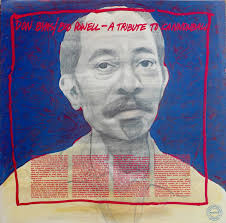
A Tribute To Cannonball was produced by Cannonball Adderley and the engineer was Russ Payne who worked on many other Columbia LP’s. The music is excellent, and the sound quality is superb with the musicians surrounding your sweet spot providing some amazing jazz. The only issue I have with this album has nothing to do with the music, but the cover design. To read the liner notes by Gary Giddins, you need a high wattage light bulb or a well-lighted room because the words are small and dark blue on a red background. This is particularly notable on the back cover where the picture of Bud Powell is. Whoever thought this was a good idea, I hope they’ve never been allowed to design another record cover. That issue aside, I hope you’ll seek out A Tribute To Cannonball by Don Byas & Bud Powell on your next vinyl hunt. If you’re a fan of Hard-Bop, it’s an overlooked jewel that’s worthy of your consideration for a spot on your shelf!
~ Jazz Lab (Columbia CL 988); Lee Morgan, Volume 3 (Blue Note BLP 1557) – Source: Discogs.com
~ Cherokee, Indian Love Song, I Remember Clifford, All The Things You Are – Source: JazzStandards.com
~ Just One of Those Things – https://www.youtube.com/watch?v=9Gg0Md1geMw ~ Jackie My Little Cat – https://www.youtube.com/watch?v=9JmZCGKjrc0 © 2020 by Edward Thomas Carter
More Posts: choice,classic,collectible,collector,history,instrumental,jazz,music,piano,saxophone
Daily Dose Of Jazz…
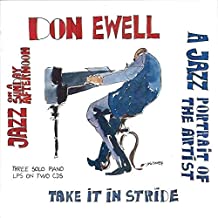
Donald Tyson Ewell was born in Baltimore, Maryland on November 14, 1916. He played with Bill Reinhardt’s Jazz, Ltd. band in Chicago, Illinois in 1947, 1948, and 1949. From 1956 to 1962, he was a member of the Jack Teagarden band and after Teagarden’s death, he went on tour in Europe.
Returning to New Orleans, Louisiana he performed in clubs and hotels. From 1976 to 1978 he performed in concert while battling alcoholism, he lived with his friend King Denton, the manager of a jazz club where Don was Artist in Residence.
He worked with Sidney Bechet, Kid Ory, George Lewis, George Brunis, Muggsy Spanier, and Bunk Johnson. He recorded twenty-one albums as a leader and seven as a sideman with Barbara Dane, Doc Evans, Bunk Johnson, Jack Teagarden. Moving back to Maryland. After his daughter’s death from cancer and after two strokes, stride pianist Don Ewell passed away on August 9, 1983.
More Posts: bandleader,history,instrumental,jazz,music,piano