

Daily Dose Of Jazz…
Sonny White was born Ellerton Oswald White on November 11, 1917 in Panama City, Panama. He took the nickname Sonny while a member of Jesse Stone’s band in the middle of the 1930s. Later in the decade, he played with Willie Bryant, Sidney Bechet, Frankie Newton, and Teddy Hill alongside Dizzy Gillespie and Kenny Clarke.
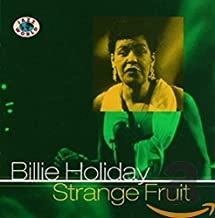
He recorded several sessions with Billie Holiday, with whom he had a yearlong affair in 1939, and their engagement was announced in Melody Maker that May. A member of different line-ups backing Holiday in New York between January 1939 and October 1940, Sonny performed on the classic recording of Strange Fruit.
The 1940s saw him spending time in the bands of Artie Shaw, Benny Carter, with whom he played before and after his World War II military service. He would play again with Carter, Dizzy Gillespie, Big Joe Turner, Lena Horne, Dexter Gordon from 1944 to 1946, and Hot Lips Page in 1947.
In the 1950s he played with Harvey Davis and then with Wilbur De Paris, remaining with the latter until 1964. In the 1960s he freelanced with Eddie Barefield, among others, and was working with Jonah Jones at the time of his death. Pianist Sonny White passed away on April 28, 1971 in New York City.
More Posts: history,instrumental,jazz,music,piano
Daily Dose Of Jazz…
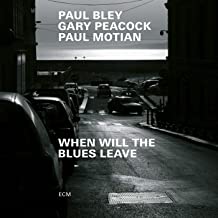
Paul Bley was born Hyman Paul Bley on November 10, 1932 in Montreal, Quebec. His adoptive parents were Betty Marcovitch and Joe Bley, who owned an embroidery factory. When he was five years old he studied violin, but by seven he took up the piano. He received a junior diploma from the McGill Conservatory in Montreal when he was 11 and at thirteen he formed a band which played at summer resorts in Ste. Agathe, Quebec. His teenage years saw him he played with touring American bands, including Al Cowan’s Tramp Band. In 1949 at the start of his high school senior year, Oscar Peterson asked him to fulfill his contract at the Alberta Lounge in Montreal. The next year he left Montreal for New York City and Juilliard.
The Fifties saw Paul returning to Montreal, establishing the Jazz Workshop and inviting Charlie Parker, he played and recorded with him. Returning to New York City he hired Jackie McLean, Al Levitt, and Doug Watkins to play an extended gig at the Copa City on Long Island. He did a series of trio recordings with Al Levitt and Peter Ind, toured as Lester Young and the Paul Bley Trio, and performed with tenor saxophonist Ben Webster at that time. He then conducted for bassist Charles Mingus on the Charles Mingus and His Orchestra album and in 1953, Mingus produced the Introducing Paul Bley album for his label, Debut Records with Mingus on bass and drummer Art Blakey. A 1954 call from Chet Baker put him with the quintet at Jazz City in Hollywood, California that led to a tour with singer Dakota Staton.
Staying in Los Angeles he evolved his trio into a quintet with young avant~garde musicians Dave Pike, Don Cherry, Ornette Coleman, Charlie Haden, and Billy Higgins. Through the Sixties, he worked with Jimmy Giuffre, Sonny Rollins, Coleman Hawkins, Bill Dixon, Roswell Rudd, Cecil Taylor, Archie Shepp, Carla Bley, Michael Mantler, Sun Ra, and others. The Seventies had him and Carol Goss founding the production company Improvising Artists. The label issued Jaco, the debut recording of Pat Metheny on electric guitar and Jaco Pastorius on electric bass, with Bley on electric piano and Bruce Ditmas on drums. The label would release IAI records and videos of Jimmy Giuffre, Lee Konitz, Dave Holland, Marion Brown, Gunter Hampel, Lester Bowie, Steve Lacy, Ran Blake, Perry Robinson, Naná Vasconcelos, John Gilmore, two solo piano records by Sun Ra, and others. Bley and Goss are credited in a Billboard cover story with the first commercial music video.
Through the Eighties and Nineties, he continued to record, tour prolifically through Europe, Japan, South America, and the United States. in 1993 a relative from the New York branch of the Bley family walked into the Sweet Basil jazz club in New York City and informed him that his father was actually his biological parent. In the new millennium, he became a part-time faculty member of the New England Music Conservatory.
His last public performances were in 2010 playing a solo piano concert at the La Villette Jazz Festival in Paris, followed by a duo with Charlie Haden at BlueNote in New York City during a full moon. Pianist Paul Bley passed away of natural causes on January 3, 2016, at home in Stuart, Florida, at the age of 83.
More Posts: bandleader,composer,history,instrumental,jazz,music,piano
Daily Dose Of Jazz…
Jan Bertil Allan was born on November 7, 1934 in Falun, Sweden and at 17 began his career in 1951 as a pianist. After moving to Stockholm, he switched to the trumpet as his main instrument, playing in Carl-Henrik Norin’s orchestra. From 1954–55 he worked with Lars Gullin and Rolf Billberg and again with Norin from 1955–59 while earning a Ph.D. in physics.
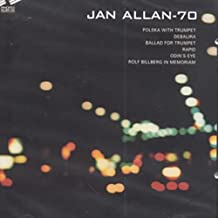
In the early Sixties, he led a quintet with Billberg and throughout the decade worked with Arne Domnérus, Georg Riedel, and Bengt Hallberg, among others. From 1968 to 1975 he was a member of the Swedish Radio Jazz Group. His album Jan Allan~70, featuring Rolf Ericson, Nils Lindberg, Bobo Stenson, Jon Christensen, and Rune Gustafsson, won a Grammis Award for Jazz of the Year in 1970.
Allan played with the same group and Georg Riedel on the trio-album Sweet And Loverly. His 1998 album Software has an affinity with the West Coast jazz genre of Gerry Mulligan and Stan Getz.
Over the course of his career, Allan also recorded albums with Bosse Broberg, Benny Carter, Dorothy Donegan, Lars Gullin, Jan Johansson, Thad Jones, Roger Kellaway, Lee Konitz, Nils Lindberg, Georg Riedel, George Russell, and Monica Zetterlund.
In 2000, his Bach trumpet, which was engraved with his name and he played for 35 years, was stolen. A movie about the theft and missing trumpet was broadcast on Swedish television in 2015 and had 1.1 million viewers. In 2009 he was honored with a Swedish Golden Django as a Master of Jazz. He composed for several films such as The Adventures of Picasso, Sopor, and Trollkarlen. He recorded eight albums as a leader and forty-six as a sideman.
Trumpeter and pianist Jan Allan, is considered among the most important modern jazz musicians in Sweden, continues to compose and perform.
More Posts: bandleader,history,instrumental,jazz,music,piano,trumpet
Daily Dose Of Jazz…
Johnny Parker was born on November 6, 1929 in Beckenham, Kent, England. In 1940, his family moved to Wiltshire where he was exposed to American Forces Network broadcasts and first heard boogie-woogie piano at a U.S. Air Force base. He returned to Beckenham after the Second World War and worked a paper round to be able to buy records by pianists such as Pete Johnson and Albert Ammons.
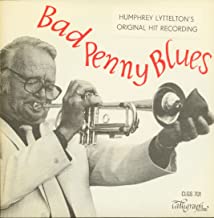
While in Beckenham, he regularly watched George Webb’s Dixielanders perform, joined the Catford Rhythm Club, played at regular sessions, and became the resident pianist, until 1948. At this point, he was called up for National Service with the Royal Army Ordnance Corps as an ammunitions examiner, while accompanying jazz musicians. After his armed service Parker enrolled at Regent Street Polytechnic, and from 1950 to 1951 played in Mick Mulligan’s band. He would later join Humphrey Lyttelton’s band and was the pianist on the trumpeter’s 1956 hit record Bad Penny Blues. Staying with Lyttleton for six years, he also performed with Sidney Bechet, Louis Armstrong, Eddie Condon, and Big Joe Turner.
After a failed attempt to start his own band, Johnny took a position inspecting components at an aircraft assembly plant. He continued playing in jazz bands alongside Alexis Korner, Diz Disley, Cyril Davies, and Long John Baldry among others. Early 1969, he joined Kenny Ball’s Jazzmen, but undergoing a spinal operation in December that year, he recovered within months and returned to regular touring.
He performed with Ball until 1978 and subsequently led his own jazz groups around London and toured the Middle East. Retiring in 2005 due to long-term health problems, pianist Johnny Parker passed away on June 11, 2010.
More Posts: bandleader,history,instrumental,jazz,music,piano
Daily Dose Of Jazz…
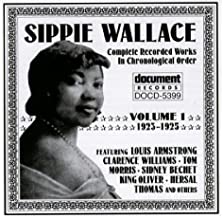
Sippie Wallace was born Beulah Belle Thomas on November 1, 1898 in Plum Bayou, Jefferson County, Arkansas, one of thirteen children. Coming from a musical family, two of her brothers and a niece had prolific music careers. As a child, her family moved to Houston, Texas, and growing up she sang and played the piano in Shiloh Baptist Church but at night she and her siblings would sneak out to tent shows. By her mid-teens, they were playing in those tent shows, performing in various Texas shows, building a solid following as a spirited blues singer.
Along with her brother Hersal, Wallace moved to New Orleans, Louisiana in 1915 and two years later she married Matt Wallace and took his surname. She followed her brothers to Chicago, Illinois in 1923 and worked her way into the city’s bustling jazz scene. Hersal died three years later, but her reputation led to a recording contract with Okeh Records that same year with her first recorded songs, Shorty George and Up the Country Blues, sold well enough to make her a blues star in the early 1920s. Moving to Detroit, Michigan in 1929, she would lose her husband and her brother George in 1936.
For some 40 years, Sippie sang and played the organ at the Leland Baptist Church in Detroit. From 1945 she basically retired from music until launching a comeback in 1966, recording an album, Women Be Wise, on October 31st in Copenhagen, Denmark, with Roosevelt Sykes and Little Brother Montgomery playing the piano. Over the course of her career, she worked with Louis Armstrong, Johnny Dodds, Sidney Bechet, King Oliver, and Clarence Williams.
Singer, songwriter, pianist, and organist Sippie Wallace, who was nominated for a Grammy Award in 1982 and was posthumously inducted into the Michigan Women’s Hall of Fame in 1993, passed away at Sinai Hospital in Detroit, Michigan from complications of a severe stroke suffered post~concert in Germany on November 1, 1986. She was 88.
More Posts: history,instrumental,jazz,music,organ,piano,songwriter,vocal