


Daily Dose Of Jazz…
Terry Pollard (August 15, 1931 in Detroit, Michigan and began her career by collaborating with other Detroit musicians, such as Billy Mitchell and Elvin Jones, in the house band at the Blue Bird Inn. Johnny Hill, and the Emmitt Slay Trio.
Discovered by Terry Gibbs, she toured with him in the early 1950s, playing piano and vibraphone. They recorded several albums, including Terry Gibbs Quartet – Featuring Terry Pollard. Pollard appeared with Gibbs on an episode of The Tonight Show hosted by Steve Allen. Her collaborations with Gibbs from 1953 to 1957 marked the height of her career.
Pollard also performed with John Coltrane, Charlie Parker, Miles Davis, Chet Baker, Nat King Cole, Dinah Washington, Duke Ellington and Ella Fitzgerald
Recording a self-titled solo album for Bethlehem Records in 1955, Terry won Down Beat magazine’s New Artist award in 1956. She retired from her full-time music career shortly thereafter in order to raise a family, but she continued to play locally in Detroit and performed with Yusef Lateef, Dorothy Ashby, Don Fagerquist, and Diana Ross and the Supremes among others.
Her contributions to the mid-century Detroit jazz scene were recognized in the book Before Motown: A History of Jazz in Detroit 1920-1960, by Lars Bjorn and Jim Gallert. Pianist, vibraphonist Terry Pollard, who was inducted into the Michigan Jazz Hall of Fame, passed away on December 16, 2009 in Detroit.

More Posts: bandleader,history,instrumental,jazz,music,piano,vibraphone
Daily Dose Of Jazz…
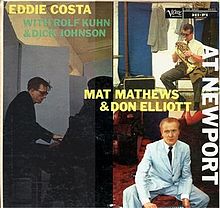
Edwin James Costa was born on August 14, 1930 in Atlas, Pennsylvania, near Mount Carmel, in Northumberland County. He was taught and influenced on piano by his older, musically trained brother, Bill, and a local piano teacher. He took paid jobs as a pianist from the age of 15, and in contrast to his piano training, he was self-taught on vibes.
In 1949 he played and toured for a few months with violinist Joe Venuti. He then worked for his brother in New York until 1951, when Eddie was drafted into the army. During this time in the armed forces, he performed in Japan and Korea. After his discharge, he returned home and worked around the New York area, including for bands led by Kai Winding, Johnny Smith, and Don Elliott.
n 1957 he was chosen as Down Beat jazz critics’ new star on piano and vibes – the first time that one artist won two categories in the same year. He became known for his percussive, driving piano style that concentrated on the lower octaves of the keyboard.
Costa had an eight-year recording career, during which he appeared on more than 100 albums, with five of them were under his own leadership. As a sideman, he appeared in orchestras led by Manny Albam, Gil Evans, Woody Herman, and others; played in smaller groups led by musicians including Tal Farlow, Coleman Hawkins, Gunther Schuller, and Phil Woods; and accompanied vocalists including Tony Bennett and Chris Connor. Costa died, aged 31, in a car accident in New York City.
His first recording as a leader was in 1956, with his trio featuring bassist Vinnie Burke and drummer Nick Stabulas. Around this time, he was nicknamed The Bear by Burke for his powerful playing. He and Burke joined Tal Farlow and became the resident trio at the Composer Club. In 1957 Costa was again leader, recording Eddie Costa Quintet with Woods, Art Farmer, Teddy Kotick, and Paul Motian. He would go on to record 1958’s Guys and Dolls Like Vibes with Bill Evans, Wendell Marshall, and Motian.
Late at night on July 28, 1962, pianist, vibraphonist, composer, and arranger Eddie Costa passed away in a car crash, involving no other vehicles, on New York’s Westside Highway at 72nd Street in New York City.
More Posts: arranger,composer,history,instrumental,jazz,music,piano,vibraphone
The Quarantined Jazz Voyager
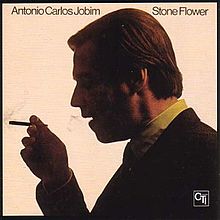
Stone Flower is the sixth studio album by Antônio Carlos Jobim. Recorded over a period of seven sessions in 1970 on March 16, April 23, 24, 29, and May 8, 20, and 22nd by Rudy Van Gelder at Van Gelder Studio in Englewood Cliffs, New Jersey. The album was produced by Creed Taylor, the album was released on July 7, 1970 on CTI Records. The album peaked at #18 on the Jazz Albums chart in 1971 and #196 on the Billboard 200.
Track Listing | 33:47 All tracks composed by Antônio Carlos Jobim, except where noted- Tereza My Love ~ 4:24
- Children’s Games ~ 3:30
- Choro ~ 2:10
- Brazil (Ary Barroso) ~ 7:25
- Stone Flower ~ 3:21
- Amparo ~ 3:41
- Andorinha ~ 3:32
- God and the Devil in the Land of the Sun ~ 2:23
- Sabiá ~ 3:58
- Antônio Carlos Jobim – piano, electric piano, guitar, vocals
- Harry Lookofsky – violin
- Joe Farrell – soprano saxophone
- Urbie Green – trombone
- Hubert Laws – flute
- Ron Carter – double bass
- João Palma – drums
- Airto Moreira – percussion
- Everaldo Ferreira – percussion
- Eumir Deodato – guitar, arranger

More Posts: adventure,club,genius,guitar,jazz,museum,music,piano,preserving,restaurant,travel,vocal,voyager
Daily Dose Of Jazz…
Dave Lee was born on August 12, 1926 in Newington, London, England and took lessons as a child. When his photographer father was transferred during the war to the North East to work on camouflaging military equipment, it was here that he started to perform in local groups. His big break came in 1942 when he won the Melody Maker poll for Best New Jazz Pianist.
A move to South Africa in 1947 had him working as a resident musician for night clubs in Port Elizabeth and Johannesburg. He went on to study at the Johannesburg Conservatory of Music gaining a Mus.Bac. By 1954 Lee invited Johnny Dankworth to perform in South Africa, and it was Dankworth who persuaded him to return to England as a pianist/arranger for the Johnny Dankworth band. From 1955 to 1959 he played on all of the recordings made by the Johnny Dankworth Orchestra.
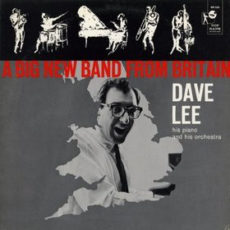
David performed with Terry and McGhee, the Buddy Tate Quartet and Jack Parnell. He also arranged for Norman Wisdom, Benny Hill, Cleo Laine and Judy Garland. From 1959 he led a trio who recorded a number of successful albums, including A Big New Band from Britain, which was in The Cashbox Top Ten for six weeks. The trio also produced music for the 1960s TV series The Avengers, for which John Dankworth had written the original theme music, and the Trio features prominently in the 1962 episodes The Removal Men. They would go on to appear in several other episodes.
With his composing career beginning in the 1950s, he was writing jingles for television ads, then teamed up with lyricist Herbert Kretzmer and wrote hit songs Bangers and Mash, Goodness Gracious Me, and Kinky Boots and music for the West End stage musical Our Man Crichton in 1964.
His film music career began in 1960 with low-budget features, but gradually he progressed to fine orchestral scores for important movies. In 1983, Lee was elected BBC Jazz Society Musician of the Year, and in 1990 was one of the founders of jazz-only radio station 102.2 Jazz FM. Still busy in his 90s, pianist, arranger, orchestra leader, songwriter and film composer David Lee’s novel Nothing Rhymes with Silver about a fictional jazz pianist was published in 2007.
More Posts: arranger,bandleader,history,instrumental,jazz,music,piano
Requisites
Blue Hour ~ Stanley Turrentine With The Three Sounds | By Eddie Carter
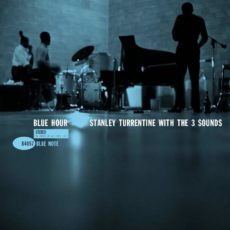
In the hands of Stanley Turrentine, the tenor saxophone was an instrument of soulful creativity and immense power. From his 1960 debut, Look Out to his biggest hit, Sugar in 1971, Turrentine’s credentials were second to none as a giant of Hard-Bop, Modal, and Soul-Jazz. This morning’s choice from the library joins him with Gene Harris on piano; Andrew Simpkins on bass and Bill Dowdy on drums who were collectively known as The Three Sounds. Blue Hour (BLP 4057/BST 84057) was released in 1961 and is the second record where The Three Sounds backed a saxophonist, the other is 1959’s LD + 3 with Lou Donaldson. My copy used in this report is the 2015 Music Matters 33 1/3 Stereo audiophile reissue (MMBST-84057). I Want A Little Girl, written by Murray Mencher and Billy Moll in 1930 starts Side One. This infrequently heard ballad opens with an angelic introduction illustrating Harris’ attentiveness to the lyric and melody. Stanley brings a beautifully expressive sound and delicate sincerity to the opening chorus, then adds a graceful sensitivity to his solo. Gene’s interlude is brief but lovely and the closing by the quartet is captivating.
Gee Baby, Ain’t I Good To You was written in 1929 by Don Redman and Andy Razaf. Its first recording was by The King Cole Trio in 1943 and a year later, it became a hit for Nat King Cole and a jazz standard with numerous recordings to its credit. The Three Sounds provide a respectful treatment with a pensive introduction, allowing Turrentine to deliver the evocative theme with warm and affectionate feelings. The saxophonist also weaves a reverent spell of subtle lyricism on the opening solo. Harris is up next for the closer with a thoughtfully tender interpretation that speaks to the soul. The only original on the album ends the first side, Gene Harris’ Blue Riff takes the tempo to a medium beat during the first statement moving with a finger-popping, toe-tapping groove. The threesome states the melody, then Stanley takes over for a jubilant solo of vivacious spontaneity. Gene takes the next turn for a bouncy, bright presentation with a youthful spirit. Stanley returns for a few final compulsive choruses before the pianist takes the threesome into the fade-out.
Since I Fell For You by Buddy Johnson opens Side Two. He composed both the music and lyrics, introducing it in 1945 with his sister Ella on vocals. The Three Sounds start the song with a stylishly soft, slow-paced introduction as natural as if it was written for this quartet exclusively. This segues into a soothing opening melody by Turrentine who solos twice, putting his stamp on both interpretations displaying tranquil restraint on the first and closing statements. Harris contributes a tender reading that’s lovingly stated, anchored by Simpkins and Dowdy’s voluptuous foundation. Willow Weep For Me, written by Ann Ronell in 1932 begins with the exquisitely mellow tone of Stanley’s tenor sax having an intimate conversation with the rhythm section on the opening chorus. Gene’s first solo is elegant and laid-back, revealing its true beauty with gorgeous verses preceding an alluring climax. Stanley’s closing performance is soulful and bluesy like a leisurely walk on a warm summer evening with the trio proving the ideal companion to take the tune into a luscious coda.
Gene Harris, who was known for his gospel jazz style formed The Three Sounds in 1956 with Andy Simpkins and Bill Dowdy. The group became a hit with the public and when Blue Hour was recorded, the trio was amid a four-year run (1958-1962) recording a total of twelve albums for Blue Note including four in 1960 alone. The other three are Feelin’ Good, It Just Got To Be, and Moods. I believe that’s why Alfred Lion didn’t release the additional eight songs of this session on another album. The Three Sounds’ were together until 1970 when Harris left to embark on a successful solo career. Stanley Turrentine was a veteran of the Soul-Jazz style since the fifties and he recorded a total of seventeen LP’s for the label as a leader, plus several as a sideman with Donald Byrd, Kenny Burrell, Jimmy McGriff, Ike Quebec, Horace Parlan, Duke Pearson, Shirley Scott (who he was married to at the time), Jimmy Smith, and Art Taylor.
In his liner notes, noted author, jazz historian and journalist Ira Gitler offers one definition of the Blue Hour as that early morning time “when you reach across the pillow where your Baby used to lay” and find him (or her) not there. The sound quality is stunning, the remastering of Rudy Van Gelder’s original tapes by RTI Record Technology Incorporated is superb and the gatefold photos of each musician during the session compliments the music marvelously. This record is nearly thirty-nine minutes of enjoyable jazz by Stanley Turrentine and The Three Sounds that adds weight to any jazz library. It’s well worth auditioning for a spot in your library and an LP that’s perfect to enjoy any time of the day, evening, or early morning during the Blue Hour.
~ Feelin’ Good (Blue Note BLP 4072/BST 84072); Gee Baby, Ain’t I Good To You (Capitol 169); It Just Got To Be (Blue Note BLP 4120/BST 84120); LD + 3 (Blue Note BLP 4012/BST 84012); Look Out (Blue Note BLP 4039/BST 84039); Moods (Blue Note BLP 4044/BST 84044); Sugar (CTI Records CTI 6005) – Source: Discogs.com
~ I Want A Little Girl, Gee Baby, Ain’t I Good To You, Since I Fell For You, Willow Weep For Me – Source: Wikipedia.org
© 2020 by Edward Thomas Carter
More Posts: bass,choice,classic,collectible,collector,drums,history,instrumental,jazz,music,piano,saxophone